We tend to think of back pain as a modern affliction—born of laptops, long commutes, and the glow of late‑night screens. Yet a timely project making the rounds online, a book of old photographs of male couples curated by authors Hugh Nini and Neal Treadwell, quietly reminds us of something profound: bodies have always carried stories, and pain has always lived between the lines of what’s seen and what’s hidden.
As these intimate photographs from the 1850s to 1950s resurface and spread across today’s social feeds, we are witnessing history not only through faces and emotions, but through posture: the tilt of a head, the curve of a spine, the protective rounding of shoulders. These images—meant to capture tenderness—also reveal the physical habits of entire eras. And they invite a timely question for anyone living with back pain right now: what stories is your body quietly telling every day, and how can you rewrite them with intention?
Below are five refined, practical insights for discerning readers who want to treat back care not as damage control, but as an ongoing, elegant ritual—one that acknowledges the weight of history while choosing a different, more comfortable future.
1. Posture Is a Silent Archive—Edit It Deliberately
In Nini and Treadwell’s collection, you can almost date a photograph by how people hold themselves: Victorian rigidity, early‑20th‑century formality, mid‑century casual ease. Their bodies are archives of social norms. Yours is, too—only your archive also includes hours of emails, rideshares, and handheld screens.
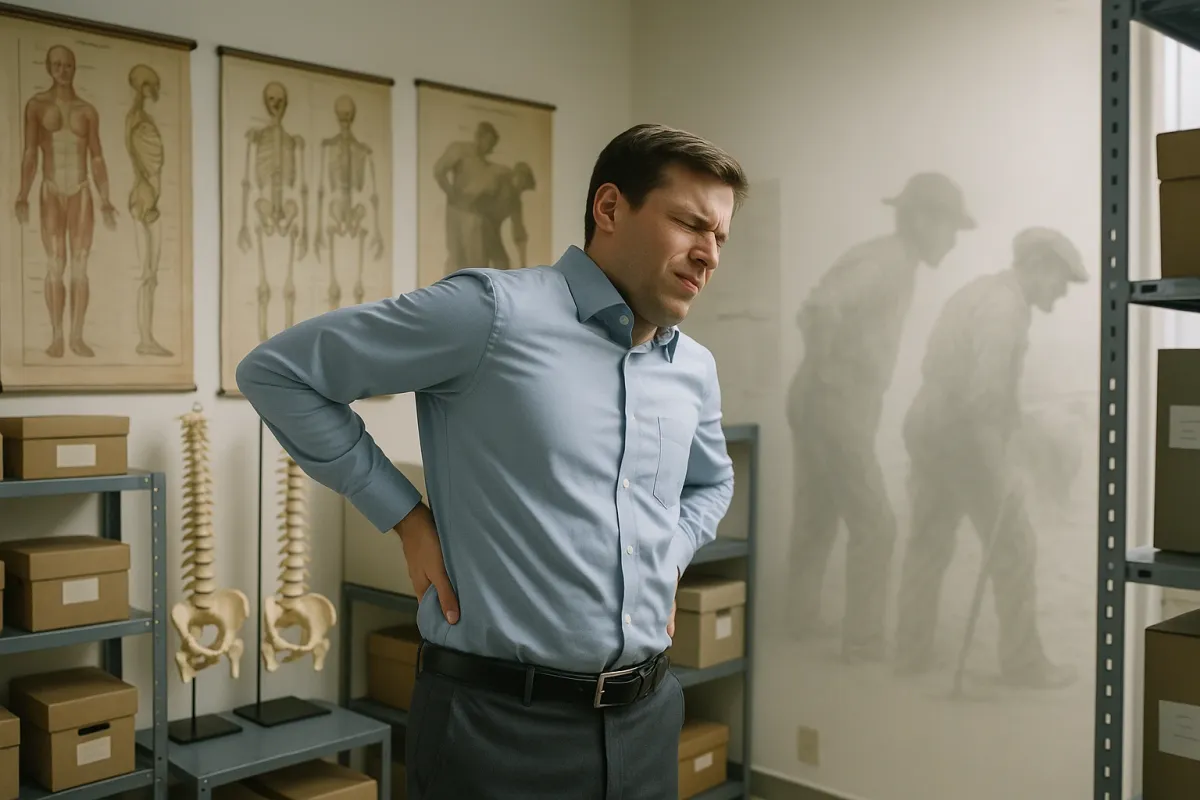
Back pain often begins not with a dramatic injury, but with years of “ordinary” stances and sitting positions that compress, strain, and fatigue the spine. Think of your posture as a living manuscript: every slouch, every forward‑jutting neck is a line of text your muscles must recite, all day long. Editing that manuscript doesn’t require perfection; it requires gentle, consistent refinement.
Practical refinement for today:
- Imagine a silk thread from the crown of your head, lightly drawing you upward.
- Let your shoulders melt down rather than yanking them artificially back.
- Keep screens at eye level so your neck doesn’t drift forward like a question mark.
- When sitting, feel your weight on your sit bones, not collapsed into your lower back.
One or two intentional “edits” repeated throughout the day are far more powerful than a single heroic effort at the gym.
2. Intimacy, Isolation, and the Hidden Side of Pain
Those rediscovered photographs of male couples are as much about emotional courage as visual beauty. Many of those relationships existed in private, unspoken spaces. Likewise, chronic back pain often lives inside a similar quiet—hidden behind professional composure, family obligations, or the fear of “complaining.”
We now know, through a growing body of pain science research, that isolation can amplify pain perception. When stress and loneliness rise, pain signaling pathways in the nervous system can become more reactive and less forgiving. Conversely, feeling seen—by a partner, a friend, a therapist, or a skilled clinician—can quite literally change how your brain interprets pain.
For someone living with back issues right now, this means:
- Your pain is not just mechanical; it is also relational.
- Withdrawing entirely tends to make symptoms feel louder, not quieter.
- Calm, validating conversations about your pain can reduce its emotional “sharpness.”
Consider creating your own small “archive of support”: a short list of people and professionals with whom your pain story can be shared in full sentences rather than vague hints. A premium approach to pain management always includes curated relationships, not just curated products.
3. The Art of Posed Stillness vs. the Luxury of Thoughtful Movement
Look closely at those historic photos: subjects arranged in perfect stillness, holding a pose for the camera. Our modern world has created its own version of this—only now the “pose” is hours at a desk, in a car, or on a sofa. The body, however, was designed for rhythm, not stasis.
Elegant back care is not about constant activity; it is about intelligent alternation between movement and rest. Extended stillness—no matter how luxurious the surroundings—can quietly starve spinal discs of nutrition and overburden certain muscle groups, leading to stiffness and ache.
A refined movement strategy for your day:
- Treat every 45–60 minutes of sitting as a full “exposure” on your body’s internal photograph.
- Stand, walk, or perform a 60–90 second reset: gentle spine rotations, shoulder rolls, a few controlled hip hinges.
- Think in micro‑sessions, not workouts: five or six small movement interludes can rival one intense session in impact for chronic back comfort.
You are not trying to “burn calories” in these moments—you are nourishing your spine, much like a conservator preserving a rare photograph.
4. Curating Your Environment Like a Gallery, Not a Storage Room
The photographs that inspired this reflection were not discovered pristine in a museum; they were pulled from flea markets, attics, shoeboxes, and estate sales, then carefully curated into a beautiful, cohesive collection. Your environment may currently feel more like a shoebox than a gallery when it comes to back health—but that is an opportunity, not a flaw.
A premium back‑care lifestyle begins with environmental curation:
- Seating: Prioritize firm, supportive chairs with a defined lumbar contour over soft, collapsing cushions that swallow your pelvis.
- Work surfaces: Adjust desk height so your forearms rest parallel to the floor and your screen meets your gaze without a downward craning of the neck.
- Daily objects: Place frequently used items (laptop, bag, kettle, laundry basket) at heights that don’t require constant bending and twisting.
Think of each adjustment as framing a photograph: the subject—your spine—does not change, but the presentation becomes markedly more sophisticated, precise, and sustainable.
5. Pain Narratives: Rewriting Your “Before and After”
The viral Reddit thread revealing what 18th‑century figures looked like in early photographs fascinated millions because it collapsed distance: these weren’t abstract “historical characters” anymore; they were real, aging, imperfect humans. In the same way, your back pain story is not an abstract “condition”—it is a sequence of before‑and‑after moments, each worthy of attention.
For many, the narrative sounds like this: “Before the injury, I was fine. After, everything changed.” Pain science now encourages a more nuanced story—one that acknowledges cumulative stressors, emotional load, sleep quality, and movement patterns that built, slowly, toward the moment symptoms became impossible to ignore.
Refining your narrative is not a mere mindset exercise; it is a strategic tool:
- It helps clinicians pinpoint drivers of your pain beyond a single MRI finding.
- It reminds you that there are multiple levers to adjust—stress, sleep, strength, ergonomics—rather than one “broken” structure to lament.
- It creates space for a different kind of “after”: not a return to an impossible past, but a deliberate, upgraded version of how you relate to your body.
Take time to write a one‑page, elegantly honest account of your back story: what your days looked like before pain, when you first noticed subtle changes, what helped briefly, what worsened things. This written narrative becomes your personal archive—one that can guide far more tailored, effective care.
Conclusion
As old photographs of forgotten couples circulate widely in 2025, the internet is having an emotional conversation about the lives we failed to see clearly the first time. Your back pain deserves the same reconsideration. It is not simply “wear and tear” or the inevitable cost of growing older; it is the visible surface of a deeper story involving posture, emotion, environment, and identity.
Sophisticated pain management is not about chasing the next miracle gadget or surviving each flare until the weekend. It is about curating your daily life with the same care a collector gives a rare print: noticing the small distortions, protecting what is fragile, enhancing what is beautiful, and accepting that preservation is an ongoing act, not a one‑time fix.
Your spine is not a problem to solve; it is a narrative to be respectfully edited, thoughtfully supported, and, ultimately, lived in with quiet, confident ease.
Key Takeaway
The most important thing to remember from this article is that this information can change how you think about Pain Management.