The internet is laughing today at a viral thread where people share the most bizarre reasons they’d call in sick—from “my horoscope said stay home” to “my cat sat on my lap and I can’t disturb him.” Behind the humor, though, sits a quieter, less photogenic reality: millions of people staying home not because of quirky excuses, but because their backs simply can’t face another day at their desks.
As “strange sick-day reasons” trend across social media, they’re inadvertently spotlighting a gap in how we talk about work: we will joke about anything except the very real physical strain our jobs impose. Back pain remains one of the leading causes of missed work globally, yet it’s rarely the headline. At Back Care Insights, we’re using this cultural moment to redirect the conversation—from performative excuses to precise ergonomics, from throwaway memes to thoughtful spine health.
Below, you’ll find five refined, research-aligned insights that move beyond “sit up straight” and into the realm of truly elevated, 2025-level ergonomics—designed for those who expect more from their workday, their environment, and their spine.
1. The New Luxury at Work: Micro-Rest, Not Marathon Sitting
The trending “I’d call in sick because…” posts capture a sentiment many people are too wary to admit: some days, being upright at a desk for eight straight hours feels almost impossible. Biomechanics backs this up. Human spines are not engineered for static, load-bearing endurance; they are built for variation and micro-movement.
Premium ergonomics in 2025 is moving away from the fantasy of the “perfect chair” and toward the reality of micro-rest cycles. Instead of chasing a single optimal posture, you’re curating a rotation of acceptable postures and brief breaks: 20–30 minutes of focused sitting, followed by 1–3 minutes of subtle movement or standing. Think of it as interval training for your spine. This doesn’t mean walking laps around the office; it can be as understated as standing to read an email, placing a foot on a low rail while you think, or gently shifting weight as you type. The most advanced workplaces are codifying these cycles into culture—using subtle prompts, adjustable desks, and meeting design (short, stand-capable check-ins over hour-long marathons) to normalize movement. At home, you can recreate this “micro-rest luxury” with a simple timer, a height-adjustable surface, and a personal rule: no posture becomes a prison.
2. The Chair Is Not the Hero: Why Your Back Needs a “Support Ecosystem”
As memes circulate of people inventing increasingly absurd reasons not to go into the office, many quietly stay home because they know the office chair will undo them by lunchtime. The problem is that we tend to treat the chair as the sole protagonist of ergonomics—when, in reality, your body needs an ecosystem, not a throne.
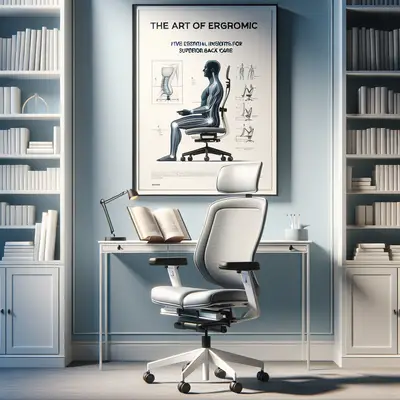
A genuinely sophisticated setup distributes support across multiple points: chair, desk height, screen position, foot placement, and even lighting. For example, a perfectly engineered task chair is undermined the moment your monitor sits just a little too low, pulling your head forward into a slow-motion slump. Likewise, if your feet don’t rest fully on a stable surface, your pelvis subtly tilts, loading your lumbar discs inefficiently. A thoughtful ecosystem means your hips are level or slightly higher than your knees, your elbows rest at roughly 90 degrees without shrugging your shoulders, your screen top sits near eye level, and your feet are grounded on either the floor or an understated footrest. The true marker of a premium ergonomic environment is this: you rarely have to “hold” yourself in position. Instead, the environment catches you—quietly, consistently, and without fuss.
3. The Discreet Power of “Invisible Strength” in Your Daily Routine
Those joking sick-day posts often circle around a shared truth: people are exhausted. But exhaustion isn’t only emotional; it’s biomechanical. A spine that is constantly compensating for weak support muscles will feel “tired” long before the workday ends. Modern ergonomics increasingly acknowledges what high-level athletes and dancers have known for years: equipment can assist, but only strong, well-coordinated musculature truly sustains posture.
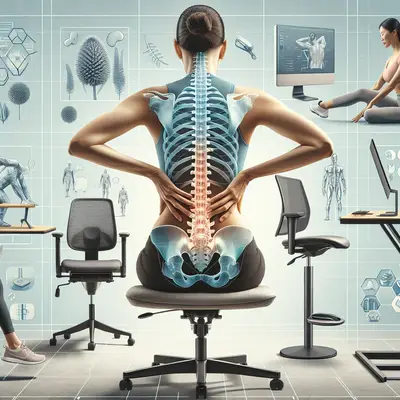
Rather than dramatic gym routines, consider cultivating what we call “invisible strength”: low-key, spine-friendly exercises that fit seamlessly into an elegant daily rhythm. Controlled pelvic tilts while waiting for a kettle to boil, gentle standing calf raises at your standing desk, subtle shoulder blade squeezes between meetings, and short, precise core engagement drills woven into your morning ritual. These micro-practices strengthen the deep stabilizers around the spine—the multifidi, transverse abdominis, and lower trapezius—without turning your life into a fitness boot camp. Over weeks, you’ll notice something quiet but profound: it takes less effort to sit, to stand, to turn, to lift. Those are the moments when you realize that true ergonomic luxury is not just in what you buy, but in how you inhabit your own body.
4. The Art of Saying “No” to Toxic Tasks (Before Your Spine Says It for You)
One of today’s trending threads features people sharing the precise instant they realized their workplace was “toxic.” While those stories often highlight emotional red flags, there is a physical corollary that rarely surfaces: toxic workloads create toxic movement patterns. Always being the one who carries the boxes, stays late at the laptop, or works from a couch while traveling doesn’t just drain your mood—it literally imprints strain patterns into your spine.
High-level back care requires boundary-setting as much as back support. That might mean declining to lift something that clearly should be handled by two people—or by a cart. It might mean insisting that a “quick catch-up” meeting be a walking call instead of another hour at a screen, or requesting a monitor, keyboard, and chair that match your anthropometrics instead of accepting a one-size-fits-none setup. In many organizations now being called out online for toxic culture, the unspoken expectation is endurance: stay, carry, cope. Premium ergonomics offers a different standard—one where you treat your spine as non-negotiable infrastructure, not expendable hardware. “No” becomes a clinical boundary, not a personal failing.
5. Turning Workdays Into Recovery Days: Designing a Spine-Conscious Schedule
As people share whimsical reasons they might call in sick, a quieter question emerges: what if our regular workdays were inherently less damaging—so we needed fewer days off to recover? Traditional ergonomics has focused on furniture and posture; the new frontier is schedule design. When you plan your day without any reference to your body’s mechanical needs, you’re left managing pain reactively. When you embed ergonomics into your calendar, you transform ordinary days into low-key recovery sessions.
This can be as refined—and as subtle—as stacking cognitively intense but physically light tasks together, then interspersing them with duties that naturally change your posture: a brief walk to a colleague’s office, a short standing video call, handwritten notes at a higher surface, or stretching while listening to audio-only briefings. Align deep-focus screen work with your body’s more resilient hours (often mid-morning) and reserve late afternoon, when slumping tends to creep in, for tasks that let you move more freely. Some leaders in progressive companies are already experimenting with “posture-balanced” meeting design—alternating seated, standing, and walking conversations across the week. At home, you can do the same: treat sitting, standing, and walking as ingredients to be balanced thoughtfully, not accidents that happen around your inbox.
Conclusion
Today’s viral sick-day confessions may be lighthearted, but they quietly echo a deeper truth: our bodies are negotiating with our work, every single day. Back pain is often the unspoken reason someone stays home, leaves early, or simply disengages. The most advanced ergonomics practices in 2025 are not about gimmicks or exaggerated gadgets; they are about subtlety, integration, and respect—for the spine, for the nervous system, and for the lived reality of modern work.
If the culture online is finally questioning what makes a workplace “toxic,” this is the perfect moment to elevate the conversation from jokes to genuine care. Rethink your micro-rest, reimagine your support ecosystem, invest in invisible strength, draw firmer lines around physically unreasonable tasks, and design your schedule with your spine in mind. You may still call in sick one day for a whimsical reason—but it won’t be because your back quietly gave up before you did.
Key Takeaway
The most important thing to remember from this article is that this information can change how you think about Ergonomics.