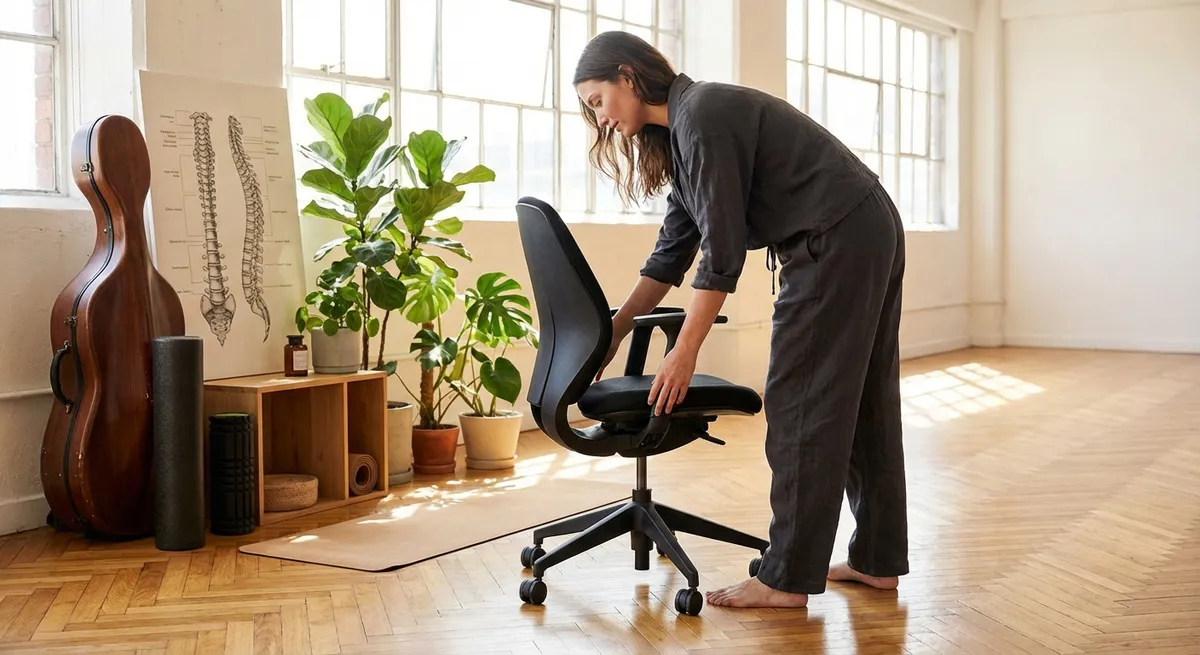
Most people treat back care as damage control. You wait until something hurts, then you negotiate with your calendar, your workload, and your pain threshold. But a well-cared-for back is less a crisis to manage and more a system to refine—quietly, consistently, and with a certain level of discernment.
In an age of relentless sitting, subtle strain, and low-grade stress, your spine responds to thousands of micro-decisions each day. The chair you default to. The shoes you tolerate. The way you exhale when you’re under pressure. Back health is built in those small gestures, not only in dramatic interventions.
What follows is a more elevated view of back care: five exclusive, often-overlooked insights designed for people who expect more than generic advice and are ready to treat their spine as an asset worthy of deliberate investment.
1. Treat Your Spine as a “Load-Bearing Mind” — Not Just a Stack of Bones
Most back advice treats the spine like a mechanical structure: align this, stretch that, strengthen here. Yet every movement pattern you have is also a thought pattern—your nervous system is continuously predicting, protecting, and organizing how you hold yourself in space.
When you’re anxious or rushed, your muscles anticipate threat: your shoulders rise, your lower back stiffens, your breath becomes shallow. This is not “bad posture” in a moral sense; it’s your brain defending you. Over time, however, this defensive strategy becomes your default way of moving, and the spine becomes a monument to accumulated stress.
A more sophisticated approach is to view back care as nervous system care. This might mean deliberately pairing physical micro-rituals with cognitive ones:
- When you open your laptop, you also lengthen your exhale for three slow breaths.
- When you stand from your chair, you consciously feel your feet contact the floor before you start walking.
- When your calendar is full, you pre-emptively schedule two-minute “off-switch” breaks rather than waiting for pain to demand them.
These quiet adjustments do something important: they teach your nervous system that you can move without bracing, sit without clenching, and work without permanently “armoring” your spine. The result is not just less pain—it’s a spine that feels better regulated, more intelligent, and less reactive.
2. Curate Your Daily Friction Points (They Matter More Than Your Mattress)
People obsess over the “big” ergonomics: the perfect mattress, the ultimate chair. These matter, but your back is often undone by smaller, repeating frictions that accumulate silently across the day.
Consider the following less glamorous, often-ignored variables:
- The bag you sling over the same shoulder every day
- The way you twist to grab items from the backseat of your car
- The height of your kitchen counter when you chop or wash dishes
- The way you curl around your phone on the sofa in the evening
None of these moments feels dramatic. But multiplied by weeks, months, and years, these small distortions act like a low, constant tax on your spine.
An elevated back-care practice includes a brief weekly “friction audit”:
- Trace your day in order — morning routine, commute, work, evening habits.
- Identify any moment that feels slightly awkward, twisted, or strained.
- Refine, don’t overhaul. Switch your bag shoulder; reposition a frequently used drawer; bring the trash bin closer; place a box under your laptop instead of craning down; reposition your car seat so you don't twist to reach.
This approach respects your time and your reality. You’re not redesigning your entire life; you’re removing a handful of daily irritants that quietly degrade your back. Over time, that small removal of friction can rival major interventions in impact.
3. Upgrade Your Micro-Movements Instead of Chasing “Perfect Posture”
“Sit up straight” is one of the least intelligent pieces of advice in back care. Holding any position—perfect or not—for hours is what fatiges your spine. Your back thrives on variety, not rigidity.
Sophisticated back health is less about a single ideal posture and more about a repertoire of acceptable ones. Think of posture as a set of “micro-movements” you cycle through rather than a single static pose you must maintain.
You can practice this subtly:
- Dynamic Sitting: Every 15–20 minutes, change something small: shift your weight slightly forward or backward, uncross your legs, place one foot slightly ahead, then the other.
- Micro-Lengthening: Imagine you’re gently creating space between your ribs and pelvis when you exhale—not a dramatic stretch, just a few millimeters of soft length.
- Quiet Shoulder Resets: Let your shoulders rise slightly as you inhale, then melt them down and back without force as you exhale.
These are not gym exercises; they’re refined habits you can perform during calls, flights, or meetings without drawing attention. Over time, your nervous system stops equating “stillness” with “stiffness” and learns that movement can be subtle, elegant, and almost continuous.
The paradox: people who stop chasing perfect posture and instead cultivate micro-movements often end up looking more naturally aligned and poised.
4. Treat Strength as a Luxury Fabric, Not a Heavy Armor
Conventional advice often frames core and back strength as a kind of armor: the stronger you are, the better protected you’ll be. But strength without nuance can be as problematic as weakness. Over-bracing, over-tensing, and moving like you’re wearing a permanent shield can actually increase compressive forces and fatigue.
A more refined strategy is to think of strength as a luxury fabric: it should drape around your frame, not squeeze it. The goal is not maximal tension; it is responsive support—muscles that turn on when needed and release when not.
This involves three subtle upgrades:
- Prioritize endurance over intensity. Your back must support you for hours, not just during a 45-minute workout. Lower-load, longer-duration work (such as controlled holds, slow transitions, or walking with intention) is often more relevant than maximal lifts.
- Train around the spine, not on it. Strengthening hips, glutes, and deep core stabilizers can reduce excess demand on the lumbar spine. Think of these muscles as the “support staff” preventing your back from doing all the labor.
- Pair activation with relaxation. After a set of strength work, deliberately invite tension to drop—gentle rocking of the pelvis, soft side stretches, or lying on your back with knees bent and natural breathing. This teaches your body that support and softness can coexist, rather than living in permanent “clench mode.”
This kind of strength feels different. Instead of feeling armored, you feel quietly capable—less like you are holding your body together and more like your body is holding you with ease.
5. Design an Evening Descent Ritual for Your Spine
Most people expect their backs to recover overnight by default. Yet you cannot go from high output to complete stillness without a transition and assume your spine (or your nervous system) will cooperate. A premium approach to back health includes a deliberate “descent ritual” in the evening.
Think of this as a curated, 10–20 minute closing sequence for your spine and your day:
- Change the surface. Move from structured seating to the floor or a firm mat. The different feedback from the ground helps your body recalibrate.
- Decompress gently. Simple positions—lying on your back with calves on a chair, or on your side with a pillow between your knees—allow the spine to feel supported and less compressed by gravity.
- Downshift the breath. Slowing your exhale (for example, inhaling for 4 seconds, exhaling for 6) gently signals your nervous system to step out of high alert. This alone can ease muscle guarding around the spine.
- Include one intentional twist or side-bend. Not an aggressive stretch, but a measured lengthening that reminds your tissues they are allowed to move outside the narrow shapes of your workday.
The goal is not a workout; it’s a ritual of closure. You’re giving your spine a clear message: “The load is done for today.” Over time, this small investment can improve sleep quality, reduce morning stiffness, and create a more predictable baseline of comfort—even if your days are demanding.
Conclusion
Back health is rarely transformed by a single dramatic intervention. It evolves through subtle recalibrations: how you sit when no one is watching, the way you lift your bag, the tension you release between emails, the care you take when closing your day.
When you treat your spine as both structure and storyteller—responding to mind, environment, and habit—you unlock a more sophisticated level of comfort. Not the absence of all sensation, but a feeling of quiet readiness: a back that supports your ambitions without constantly asking for attention.
The most refined form of back care is not heroic; it is consistent, discerning, and intentionally designed to fit seamlessly into an already-full life. Your spine is always adapting. These five understated upgrades simply give it something better to adapt toward.
Sources
- [National Institutes of Health – Low Back Pain Fact Sheet](https://www.ninds.nih.gov/health-information/disorders/low-back-pain) – Overview of causes, risk factors, and evidence-based management of low back pain
- [Harvard Health Publishing – Is poor posture to blame for your back pain?](https://www.health.harvard.edu/pain/is-poor-posture-to-blame-for-your-back-pain) – Discusses posture, movement variety, and their relationship to back discomfort
- [Mayo Clinic – Back Pain: Symptoms and Causes](https://www.mayoclinic.org/diseases-conditions/back-pain/symptoms-causes/syc-20369906) – Explores common triggers, lifestyle factors, and prevention principles for back pain
- [Cleveland Clinic – Core Exercises](https://my.clevelandclinic.org/health/articles/14654-core-exercises) – Outlines core-strengthening approaches that support spinal stability and endurance
- [American Academy of Orthopaedic Surgeons – Low Back Pain Exercise Guide](https://orthoinfo.aaos.org/en/recovery/low-back-pain-exercise-guide/) – Provides examples of low-load, spine-friendly movements that can be integrated into daily routines
Key Takeaway
The most important thing to remember from this article is that this information can change how you think about Back Health.