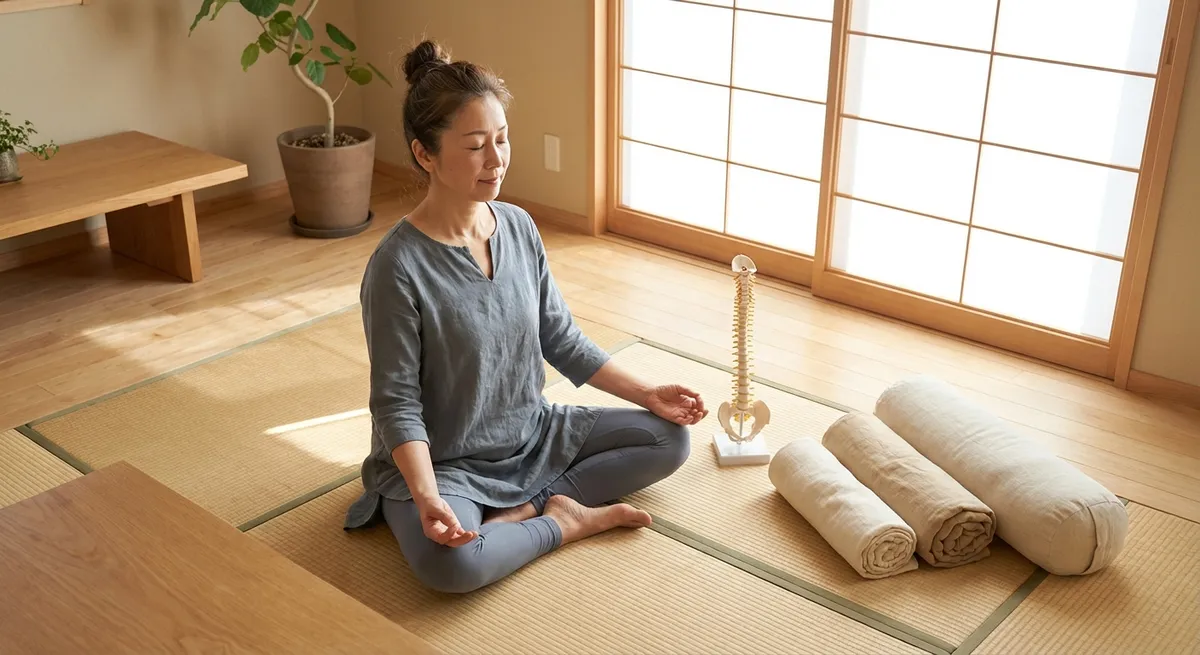
Back health is rarely transformed by grand gestures. More often, it is shaped by small, deliberate choices that compound over months and years: how you transition from sitting to standing, how you breathe when you lift, how you wind down before sleep. For people already living with back issues, the difference between constant negotiation with pain and a quietly capable spine often lies in refined, almost invisible habits. This is not about perfection—it is about precision, consistency, and an elevated standard of care for the structure that carries you through every decision, every demand, every day.
Rethinking “Rest”: Active Recovery as a Daily Baseline
Conventional wisdom often equates back pain with bed rest, stillness, and avoidance. Modern evidence tells a different story: appropriate movement—thoughtful, measured, and consistent—is more therapeutic than extended immobility for most non-specific back pain.
Active recovery does not mean strenuous workouts. It means short, intentional movement windows threaded into your day: a five-minute walk after long calls, gentle spinal mobility drills between tasks, or standing to read email rather than remaining parked in a chair. This low-intensity activity enhances blood flow to spinal tissues, supports disc nutrition, and helps calm the nervous system’s perception of threat.
For someone living with back issues, this reframing is powerful. “Rest” becomes about circulation and gentle activation, not withdrawal. You might adopt a personal rule: no more than 30–40 minutes in one static position without a micro-break. Over weeks, these micro-movements build a protective baseline of resilience. The goal is not to avoid discomfort at all costs, but to maintain a state where your spine is always being quietly cared for—not just “treated” when pain appears.
Exclusive Insight #1: Treat movement as a non-negotiable vital sign, not an optional extra. Your “rest” strategy should include scheduled, deliberate micro-movements that prevent your spine from ever feeling abandoned.
Precision in Transitions: The Overlooked Moments That Shape Your Spine
Many people with back issues pay attention to “big” activities—gym sessions, heavy lifting, or long drives—while completely overlooking the biomechanical impact of transitions: getting out of bed, stepping out of the car, lifting a laptop bag, swiveling at the desk, or reaching into the back seat.
These everyday transitions often happen on autopilot, with awkward twisting, half-bent spines, and rushed movements that repeatedly load sensitized structures. Over months, this accumulation can matter as much as any single heavy lift. The refinement is not about moving like a fragile object; it is about moving as someone who values efficiency and control.
You might practice a “three-second transition rule”: take three seconds to move from one posture to another—rolling to your side before getting out of bed, placing both feet flat before rising from a chair, or turning your whole body rather than twisting from the waist. That brief pause creates space for alignment, engagement of your hips and legs, and a calmer nervous system response.
Exclusive Insight #2: Upgrade your transitions. How you move between positions quietly influences your spine as much as how you stand, sit, or lift. Make every change of posture a small act of precision.
Nervous System Calm: The Missing Layer in Back Care
Back pain is not purely mechanical; the nervous system is an active participant. When it is overloaded—by stress, poor sleep, or constant low-level anxiety—pain signals often amplify. For those with persistent back issues, calming the nervous system can be as crucial as stretching or strengthening.
Instead of thinking only in terms of “strong” or “weak” muscles, consider whether your system is “calm” or “over-alert.” Chronic tension around the spine often reflects protective bracing, not simply tight muscles. Slow, diaphragmatic breathing, practiced several times a day, can reduce this baseline tension. When the diaphragm moves well, the deep stabilizers of the spine tend to coordinate more efficiently, creating a subtle, internal sense of support.
You might integrate brief breathing sets—4 seconds in, 6 seconds out—for three to five minutes at predictable times: before sleep, after a long meeting, or after a commute. This does not replace targeted exercise; it enhances it by giving your nervous system a more stable backdrop in which movement feels safer and less threatening.
Exclusive Insight #3: Think of your nervous system as part of your spine. Regular, deliberate breathing practice is not “nice to have”—it is a structural investment in how your back perceives and processes load.
Evening Architecture: Designing a Spine-Friendly End to the Day
The hours before sleep quietly influence the quality of your back’s recovery. Many people move abruptly from high-stimulation work and screens to bed, bringing residual tension, compressed postures, and mental agitation with them. For those with existing back issues, this often translates into restless sleep, morning stiffness, and a sense of never fully resetting.
An evening routine tailored to your spine can be surprisingly elegant and simple. Begin by evaluating your last 60 minutes of the day: Are you sitting on a soft, collapsed sofa with poor support? Are you craning your neck over a phone in bed? Small upgrades—such as a firm cushion supporting your lower back on the couch, elevating your screen, or briefly lying in a supported position (knees bent, feet on the bed, spine neutral) before sleep—can reduce unnecessary nighttime strain.
Adding a short sequence of gentle, floor-based movements—hip mobility, light hamstring stretches, or pelvis rocks—signals to your body that it is safe to downshift. Combined with a consistent wake-up time and a dark, cool room, this architecture of the evening helps your back enter the night in a more neutral, less guarded state.
Exclusive Insight #4: Treat the last hour of your day as a “reset window” for your spine. The quality of your night posture often determines how your back feels in the first hour of the morning.
Curated Load, Not Complete Avoidance
One of the most damaging narratives in back care is the idea that pain equals fragility and that the safest path is to avoid loading the spine altogether. Over time, this avoidance can erode strength, stiffen joints, and teach your nervous system to fear even normal movements. True refinement in back care is not about living carefully; it is about living intentionally.
Instead of eliminating load, work with a curated spectrum of it. This starts with understanding your current capacity: perhaps you can comfortably carry 5–10 pounds, walk 15 minutes, or perform body-weight hip hinges without symptom flare. From there, you gently but systematically expand that window, under guidance when needed—using controlled resistance, graduated walking distances, or carefully chosen strength exercises that emphasize hips and mid-back as active partners to your lumbar spine.
This approach respects pain signals without being ruled by them. Over time, your tissues adapt, your nervous system learns that load is not always a threat, and your back becomes less reactive. In this model, strength work, when carefully curated, becomes not a risk but a form of long-term insurance for your spine.
Exclusive Insight #5: Do not aim to protect your back from all load; aim to teach it how to carry more, more intelligently. A spine that is gently, progressively challenged is often a spine that becomes steadily more dependable.
Conclusion
Exceptional back care is not a single intervention; it is a design philosophy for how you move, rest, breathe, and recover. For those already navigating back issues, the path forward rarely lies in a single “fix” but in a series of elevated choices: honoring micro-movements, refining transitions, calming your nervous system, architecting your evenings, and curating load rather than fleeing from it.
Over time, these quiet strategies reframe your relationship with your spine—from something to be feared or merely managed into something to be cultivated with respect. When you treat your back as a structure worthy of deliberate design, it often responds in kind: with greater reliability, less volatility, and a steadier capacity to support the life you intend to lead.
Sources
- [National Institute of Neurological Disorders and Stroke – Low Back Pain Fact Sheet](https://www.ninds.nih.gov/health-information/disorders/low-back-pain) – Overview of causes, risk factors, and evidence-based approaches to low back pain
- [NIH / MedlinePlus – Back Pain](https://medlineplus.gov/backpain.html) – Patient-focused guidance on diagnosis, treatment options, and self-care strategies for back pain
- [Mayo Clinic – Back Pain: Symptoms and Causes](https://www.mayoclinic.org/diseases-conditions/back-pain/symptoms-causes/syc-20369906) – Clinical perspective on common mechanisms of back pain and when to seek medical care
- [Harvard Health Publishing – How to Keep Your Back Healthy](https://www.health.harvard.edu/pain/how-to-keep-your-back-healthy) – Practical, research-informed strategies for maintaining and improving back health
- [American College of Physicians – Noninvasive Treatments for Acute, Subacute, and Chronic Low Back Pain](https://www.acponline.org/clinical-information/guidelines/clinical-practice-guideline-for-noninvasive-treatments-for-acute-subacute-and-chronic-low-back-pain) – Clinical guideline summarizing evidence for movement, behavioral, and non-pharmacologic interventions
Key Takeaway
The most important thing to remember from this article is that this information can change how you think about Back Health.