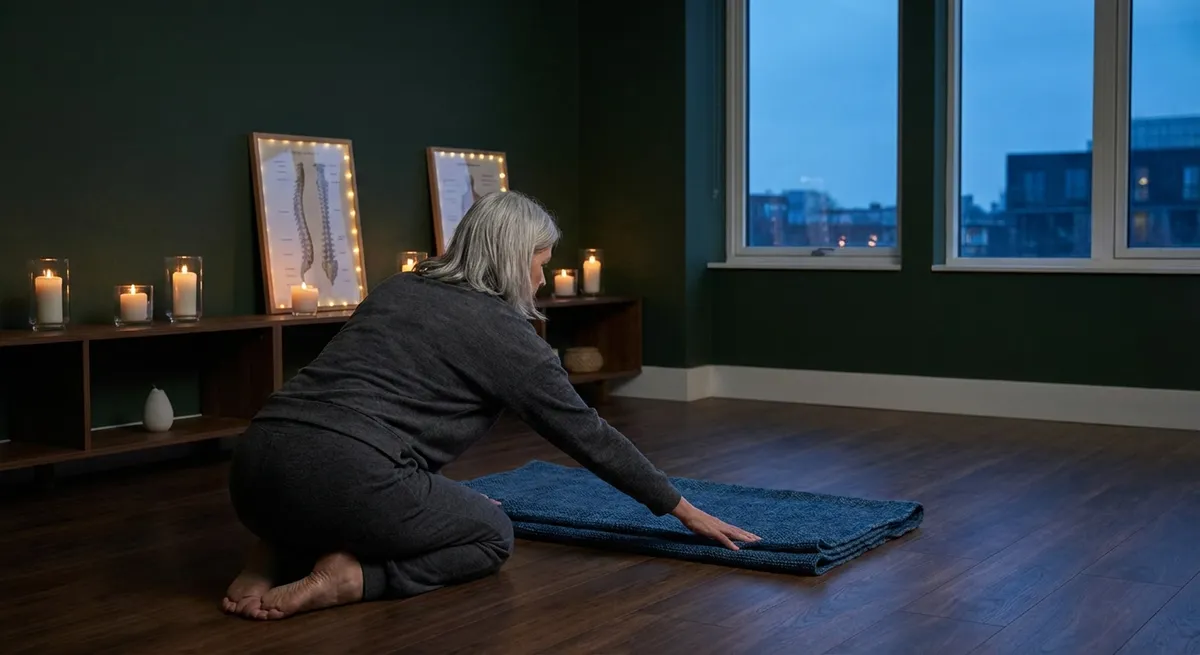
Managing back pain is no longer about merely “getting through the day.” For a discerning, performance-driven life, pain management becomes an exercise in precision—understanding how your nervous system, posture, environment, and habits converse with your spine. When approached thoughtfully, pain relief shifts from crisis response to quiet mastery: the art of creating conditions in which your back can breathe, recalibrate, and thrive.
Below are five refined, under-discussed insights that elevate back pain management from generic advice to an intelligent, highly personalized practice.
Pain as Data: Reframing Discomfort Without Ignoring It
Most people either catastrophize pain or dismiss it. Neither response is sophisticated. A more elevated approach treats pain as nuanced information rather than an emergency or an annoyance.
Pain is the nervous system’s language—an output shaped by tissue status, stress levels, sleep quality, movement history, and even mood. Acute, sharp, or progressively worsening pain may signal a structural problem that warrants medical evaluation. But persistent, fluctuating discomfort often reflects an oversensitized system, not necessarily worsening damage. Learning to “read” your pain—its timing, triggers, and patterns—helps you distinguish what requires intervention versus what calls for modulation.
A practical refinement is to track your pain like you would a key performance metric. Note when it eases (after walking, after a warm shower, after deep sleep) and when it spikes (after long meetings, during stressful deadlines, after heavy lifting with poor form). Over time, this transforms pain from an unpredictable intruder into a pattern you can anticipate and influence. The goal is not to ignore pain, but to understand it well enough that you respond with precision, not panic.
Precision Rest: Crafting Micro-Restorative Moments, Not Just Days Off
For many, “rest” means collapsing on the sofa and hoping for the best. For an intelligent spine, rest is an active, intentional practice that can dramatically change how your back feels within hours—not weeks.
Precision rest is about sprinkling your day with brief, targeted decompression rather than relying on a single long break. Examples include one-minute “unloading” sessions where you lie on your back with your calves supported on a chair, allowing your spine to rest in a neutral position. Or leaning forward with forearms on a desk to gently open space between the vertebrae. Even standing with your back against a wall, heels slightly forward, and gently lengthening through the crown of your head can reset postural fatigue.
Instead of waiting until your back is screaming, you proactively schedule these micro-restorations: before a high-stakes call, after driving, or between creative sprints. Over time, this rhythm shifts your baseline from “managed discomfort” to “background ease,” so flare-ups become the exception rather than the norm. The refinement lies not in how long you rest, but how intentionally and frequently you allow your spine to recalibrate.
Nervous System Luxury: Calming the System That Amplifies Pain
Sophisticated pain management acknowledges that your back is not just a mechanical structure—it is wired into a nervous system that can either amplify or soften pain signals. Stressed, underslept, and overstimulated states make the nervous system hypersensitive, so ordinary sensations are perceived as threatening.
Creating a “luxury environment” for your nervous system does not require a spa retreat; it’s about high-quality, repeatable rituals that tell your body it is safe. Slow, nasal breathing—especially extending the exhale—has been shown to engage the parasympathetic (“rest and digest”) nervous system. Practicing this for three minutes before bed or after a demanding meeting can downshift your body out of the stress state that often magnifies back pain.
Equally important is sleep hygiene with spine-conscious details: a mattress that supports neutral alignment, a pillow that keeps your neck in line with your spine, and a pre-sleep wind-down that avoids screens and heavy work. When your nervous system is consistently calmed, your threshold for pain changes. What once felt unbearable becomes manageable; what was once constant becomes intermittent. This is not placebo—it is your biology operating under less threat, and therefore less pain.
Intelligent Load: Treating Your Spine Like a High-Performance Asset
Too often, pain management is reduced to avoidance: “Don’t bend, don’t lift, don’t twist.” Over time, this deconditions the very structures that need resilience. A more refined strategy treats your spine like a high-performance asset—protected, but also intelligently challenged.
Healthy load, applied with good form and strategic progression, is how discs, muscles, and ligaments maintain strength. This might mean controlled hinging at the hips instead of rounding at the back when picking something up, or performing gentle, well-guided strengthening under professional supervision. The key is not to eliminate all strain, but to eliminate careless strain.
Consider how you manage your most valuable belongings: you don’t lock them away forever; you use them deliberately, maintain them, and avoid reckless handling. Your spine deserves the same logic. Moving confidently within well-understood boundaries—carrying a bag with symmetrical weight, choosing stairs over elevators for light conditioning, standing up and sitting down with awareness—creates a quiet accumulation of strength. Over months, your back becomes less reactive not just because you rest it well, but because you train it wisely.
Discreet Support Systems: Curating Your Back’s Daily Environment
Back pain often persists not because of dramatic injuries, but because of small, unexamined frictions repeated thousands of times: the chair that subtly collapses your posture, the handbag that always pulls one shoulder down, the low coffee table that requires constant forward bending.
A sophisticated pain management approach includes curating a discreet ecosystem that quietly supports your spine throughout the day. This might mean:
- Selecting seating that allows your hips to be slightly higher than your knees, encouraging a more neutral lumbar curve.
- Using an understated lumbar roll in the car or office chair—not as a “gadget,” but as a hidden ally.
- Keeping frequently used items at mid-torso height to reduce repetitive forward flexion.
- Splitting weight between two bags instead of one, or opting for a backpack-style carry for commutes.
None of these adjustments are dramatic, which is precisely their elegance: they remove daily strain without calling attention to themselves. Over weeks and months, this low-friction environment allows your back to recover from past stress while avoiding new accumulations of micro-irritation. The result is not just less pain, but a sense that your life is finally cooperating with your spine, rather than working against it.
Conclusion
Elegant pain management is less about heroics and more about coherence—aligning your habits, environment, nervous system, and movement so they collectively advocate for your back instead of undermining it. When you treat pain as data, rest as a deliberate practice, the nervous system as a key player, load as a tool rather than a threat, and your surroundings as a subtle support system, your spine begins to experience a quieter, more predictable world.
For those living and working at a high level, the true luxury is not simply being pain-free for a moment—it is moving through your days with a back that feels reliably supported, resilient, and at ease.
Sources
- [National Institute of Neurological Disorders and Stroke – Low Back Pain Fact Sheet](https://www.ninds.nih.gov/health-information/disorders/low-back-pain) – Overview of causes, risk factors, and approaches to managing low back pain
- [Mayo Clinic – Back Pain: Symptoms and Causes](https://www.mayoclinic.org/diseases-conditions/back-pain/symptoms-causes/syc-20369906) – Clinical perspective on types of back pain and when to seek evaluation
- [Harvard Health Publishing – Understanding Pain: How the Body’s Alarm System Works](https://www.health.harvard.edu/pain/understanding-pain-and-what-to-do-about-it) – Explains the relationship between the nervous system, perception, and chronic pain
- [Cleveland Clinic – Chronic Pain: Symptoms, Causes & Treatment](https://my.clevelandclinic.org/health/diseases/4798-chronic-pain) – Discusses chronic pain mechanisms and multidisciplinary management strategies
- [American College of Physicians – Noninvasive Treatments for Acute, Subacute, and Chronic Low Back Pain](https://www.acponline.org/acp-newsroom/american-college-of-physicians-issues-guideline-for-treating-nonradicular-low-back-pain) – Evidence-based guideline on conservative care and nonpharmacologic approaches
Key Takeaway
The most important thing to remember from this article is that this information can change how you think about Pain Management.