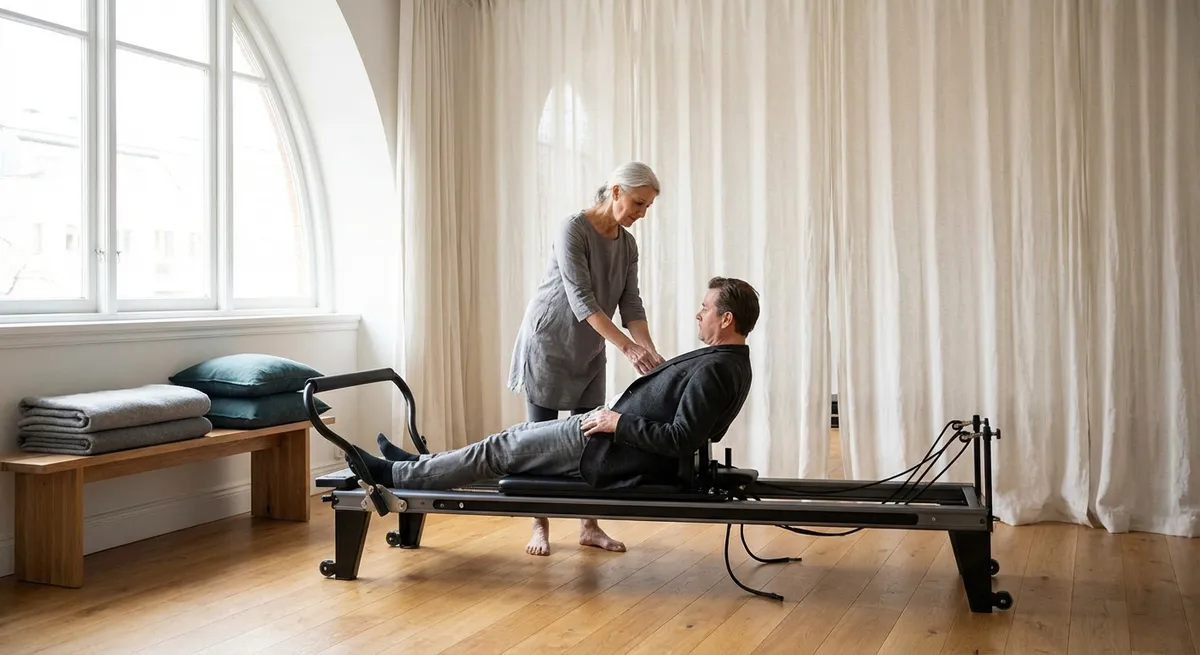
Back pain rarely arrives as a single dramatic event. More often, it accumulates—micro-choices in posture, movement, and tension silently compounding over months or years. Exercise therapy, when executed thoughtfully, offers more than sets and repetitions; it becomes a methodical recalibration of how your spine participates in every moment of your day. This is not about punishing workouts or generic routines. It is about precision: deliberately chosen movements that restore nuance, control, and confidence to your back.
Below are five exclusive, elevated insights into exercise therapy for back care—designed for those who prefer intentional refinement over quick fixes.
Insight 1: Treat Your Spine as a System, Not a Single Structure
Most conventional advice isolates the “low back” as if it were an independent problem area. In reality, the spine is part of an integrated kinetic chain that includes the hips, pelvis, rib cage, and even how your feet meet the ground.
Effective exercise therapy respects this system:
- Hip mobility exercises can reduce the demand placed on the lumbar spine during sitting, standing, and walking.
- Thoracic (mid-back) mobility, often lost in desk-based lifestyles, influences how the lower back compensates during rotation and reaching.
- Strengthening the muscles around the pelvis and glutes can dramatically reduce strain on the spine during everyday activities such as climbing stairs or lifting grocery bags.
A sophisticated program does not chase pain; it evaluates the entire pattern of movement. A skilled clinician or exercise therapist will often assess ankle mobility, breathing patterns, and gait as eagerly as they assess lumbar flexibility. The spine rarely misbehaves in isolation—it is usually responding to a larger imbalance.
Insight 2: Micro-Dosing Movement Is More Powerful Than Marathon Sessions
Many people still imagine “exercise” as a 60-minute block that must be carved out of an already crowded schedule. For the back, particularly when pain is present or lingering, this mindset can be counterproductive.
The spine thrives on frequent, low-intensity input:
- Short, 3–5 minute movement “interludes” dispersed throughout the day tend to be more sustainable and less provocative than a single, intense workout.
- Gentle extension, rotation, and core activation performed multiple times daily provide the nervous system with reassuring, non-threatening signals.
- Accumulated movement volume across the day (standing, walking, controlled mobility drills) often matters more than one perfect workout.
Think of it as “movement hygiene”—not heroic effort. Just as you would not brush your teeth for an hour once a week, your back is better served by consistent, brief doses of carefully selected exercises. This is particularly true for people whose back pain is aggravated by prolonged static postures such as long meetings or extended travel.
Insight 3: The Nervous System Is Your Quiet Co-Author in Exercise Therapy
Back pain is not solely a mechanical issue; it is also a neurological experience. The nervous system decides whether a movement feels safe or threatening, and that perception can amplify or soften pain.
A refined exercise therapy approach acknowledges this by:
- Emphasizing slow, controlled movements over aggressive stretching or forceful strengthening in the early stages.
- Encouraging breath control—especially longer, steady exhales—to downshift the nervous system from a heightened state of alert.
- Gradually exposing the back to previously avoided positions (such as bending or twisting) in a safe, graded manner, rebuilding trust in movement.
This is not “just in your head”—it is about how your brain interprets signals from your back. Calm, predictable, and well-structured exercise sends a clear message of safety. Over time, this can reduce protective muscle guarding and sensitivity, allowing for more generous, confident movement.
Insight 4: Precision Core Work Is More About Timing Than Tension
“Strengthen your core” is common advice, but often misunderstood. A sophisticated back care program avoids constant bracing or rigid planks as a default strategy. Instead, it trains the core to respond at the right time, with the right amount of support.
Nuanced core training for back health focuses on:
- Coordination: teaching deep abdominal and spinal stabilizing muscles to activate just before you lift, twist, or change direction.
- Variability: integrating core activation in different positions—lying, sidelying, quadruped, seated, and standing—so your back is prepared for real-life demands.
- Submaximal effort: using lower-intensity holds and controlled movements that build endurance and fine control, rather than simply chasing fatigue.
The goal is not a rigid, armored torso. It is a quietly reliable support system that adjusts seamlessly to the task at hand—whether that is loading a suitcase into a car or leaning over a laptop for a virtual meeting. Understated, well-timed stability is far more protective than maximal tension.
Insight 5: Your Back’s “Baseline” Is as Important as Your Best Performance
Many people judge the success of exercise therapy by their best day: the longest pain-free walk, the heaviest weight lifted, or the most flexible stretch achieved. A more discerning metric is your baseline—the everyday level of comfort, ease, and function you can depend on.
An elevated back-care strategy asks:
- How easily can you get out of bed on a typical day?
- Can you sit through a standard work session without escalating symptoms?
- What is the minimum activity you must maintain to keep your back feeling stable and reliable?
Exercise therapy shines when it lifts your floor, not just your ceiling. Consistent, thoughtfully designed movement gradually narrows the gap between your best and worst days. Over time, flare-ups become less intense, recovery is faster, and your “new normal” becomes quieter, steadier, and more capable.
This shift—from chasing peak performance to refining the daily baseline—transforms exercise therapy from a temporary intervention into a sustainable lifestyle practice.
Conclusion
Exercise therapy for back care becomes truly powerful when it is treated as a refined craft rather than a checklist. By viewing the spine as part of a sophisticated system, micro-dosing movement throughout the day, respecting the nervous system’s role, emphasizing intelligent core timing, and elevating your everyday baseline, you give your back more than relief—you give it resilience.
For those who value subtlety and precision, the most effective back program will rarely be the loudest or the most intense. It will be the one that is thoughtfully tailored, quietly consistent, and deeply respectful of how your body prefers to move. In that understated discipline lies the real luxury: a back that supports your life with calm reliability.
Sources
- [National Institute of Neurological Disorders and Stroke – Low Back Pain Fact Sheet](https://www.ninds.nih.gov/health-information/disorders/low-back-pain) – Overview of causes, risk factors, and treatment options for low back pain
- [American College of Physicians – Noninvasive Treatments for Acute, Subacute, and Chronic Low Back Pain](https://www.acponline.org/acp-newsroom/american-college-of-physicians-issues-guideline-for-treating-nonradicular-low-back-pain) – Clinical guideline emphasizing exercise and non-pharmacologic care
- [Mayo Clinic – Back Pain: Self-Care and Exercise](https://www.mayoclinic.org/diseases-conditions/back-pain/in-depth/back-pain/art-20043992) – Practical guidance on exercises and lifestyle strategies for back pain
- [Harvard Health Publishing – Core Exercises: Why They’re Important](https://www.health.harvard.edu/healthbeat/the-four-types-of-exercise) – Discussion of core strength, stability, and functional movement
- [NHS (UK) – Back Pain: Treatment and Exercise](https://www.nhs.uk/conditions/back-pain/treatment/) – Evidence-based recommendations for movement, activity, and exercise therapy in back pain management
Key Takeaway
The most important thing to remember from this article is that this information can change how you think about Exercise Therapy.