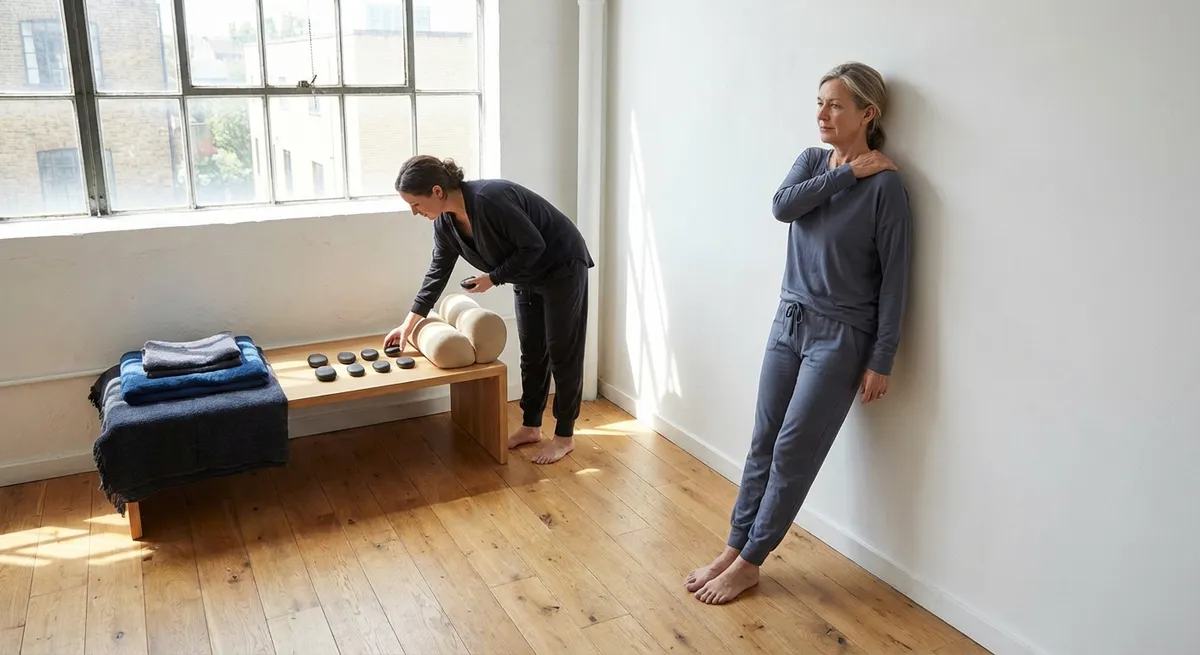
Back pain has a way of quietly rewriting the script of your day—altering how you sit, move, sleep, and even think. Yet the most effective pain management rarely looks dramatic. It’s composed of small, intelligent decisions, repeated consistently, that reduce suffering while preserving your sense of elegance, autonomy, and control.
This guide explores five exclusive, often overlooked insights for managing back pain with discernment. Each is less about “quick fixes” and more about cultivating a refined, sustainable relationship with your spine and your daily rituals.
Pain Management, Reframed: From Suppression to Intelligent Interpretation
For many, pain management begins and ends with “make it stop.” But back pain is not just a nuisance; it’s also data—your nervous system’s nuanced language. Treating pain purely as an enemy to silence can lead to overuse of medication, delayed diagnosis, or a cycle of flare-ups that never truly resolves.
A more elevated approach reframes pain as information to be interpreted. Where is it? When does it peak? What movements soothe it? This observational mindset transforms you from passive sufferer into informed curator of your own experience. You become attuned to the difference between “protective” pain (your body warning you) and “sticky” pain (nervous system overprotection after the original injury has healed).
This does not mean you must endure unnecessary suffering. It means that every method of relief—medication, heat, movement, rest, manual therapy—is chosen with intent, not out of panic. Over time, this shift often leads to better outcomes: earlier medical evaluation when needed, more targeted therapies, and less reliance on blunt tools like high-dose painkillers.
When pain is treated as a signal rather than a failure, you gain back something that pain often steals: a sense of agency.
Insight 1: Building a Personal “Pain Profile” Instead of Chasing Generic Advice
Most advice for back pain is written for the anonymous patient. Your spine, however, lives in a very specific context: your job, your travel patterns, your sleep rituals, your athletic history, your stress load. An elevated pain strategy begins with a personal pain profile—an intimate map of how your body responds to the world.
Creating a pain profile can be as simple as a refined daily log, captured for two to four weeks:
- Timing: When is pain most noticeable—morning, afternoon, late evening, night in bed?
- Triggers: Prolonged sitting, standing, lifting, driving, flights, certain workouts, specific chairs?
- Relievers: Gentle walking, specific stretches, heat, cold, meditation, a particular sleeping position?
- Qualities: Sharp, dull, burning, aching, radiating, localized?
- Companions: Does pain coincide with high-stress days, poor sleep, long screen time, or travel?
This is not a symptom diary out of anxiety; it is a curated archive of clues. When shared with a physician, physical therapist, or pain specialist, your profile sharpens clinical decision-making: Is this mostly mechanical? Inflammatory? Nerve-related? Stress amplified?
The payoff is precision. Rather than adopting generic stretches or generic medications, you receive recommendations that respect your patterns—perhaps structured micro-breaks during long meetings, a specific pre-flight routine, or a tailored wind-down ritual before sleep. Over months, you transform from someone “with back pain” into someone who understands their back pain intimately.
Insight 2: The “Elegant Minimum” Dose of Medication
Medication can be both a lifeline and a liability. Over-the-counter NSAIDs, muscle relaxants, and prescription painkillers have a rightful place in modern back pain management—when used discerningly. A sophisticated strategy asks not, “What can I take?” but, “What is the minimum effective, safest dose and role for this in my overall plan?”
The concept of the “elegant minimum” acknowledges three things:
- Medication is a tool, not a strategy. It can reduce pain enough to let you move, sleep, and participate in rehabilitative exercise—but on its own, it rarely resolves the root problem.
- Timing matters. A carefully timed dose before physical therapy, travel, or important engagements may permit beneficial movement and reduce muscle guarding, without overmedicating all day.
- Risk must be respected. Long-term or high-dose NSAID use can affect the stomach, kidneys, and cardiovascular system; opioids carry the risk of dependence and side effects; sedating medications impair balance and cognition.
A premium approach usually integrates:
- A frank discussion with your clinician about realistic benefits and risks
- A clear plan: which medication, at what dose, for how long, with what exit strategy
- An active search for non-pharmacologic tools (movement, heat, cognitive strategies, targeted exercise) to reduce reliance over time
This is pain management as precision, not excess—where medication supports your spine’s recovery rather than quietly dominating it.
Insight 3: Micro-Movements as Quiet Luxury for the Spine
Many people think in binaries: “I’m working” versus “I’m exercising.” Your spine, however, responds exquisitely to what happens in the in-between—the tiny, almost invisible movements scattered throughout your day. This is where micro-movements become a surprisingly luxurious form of care.
Instead of waiting for a 60-minute workout to “fix” hours of static sitting, you can cultivate a rhythm of brief, deliberate adjustments:
- Gently rolling your shoulders and elongating your spine at red lights
- Standing to take a call and subtly shifting weight from one leg to the other
- Performing a 30–60 second decompression stretch between video meetings
- An intentional “un-hunching” every time you refresh your inbox
- A slow, controlled pelvic tilt while standing in a queue or waiting for your coffee
Each micro-movement is too small to be heroic; collectively, they are transformative. They improve circulation to spinal structures, reduce stiffness, and interrupt the accumulation of strain. Over time, your nervous system begins to expect and welcome this gentle variability instead of bracing for long, rigid postures.
This approach is particularly powerful for high-performing individuals who spend long hours in demanding environments. You may not always control your workload, but you can almost always insert 15–30 seconds of thoughtful, spine-conscious movement. It is the equivalent of hydrating your back throughout the day, rather than drenching it once and hoping that’s enough.
Insight 4: Calming the Nervous System as a Legitimate Pain Intervention
Back pain is not only a mechanical event in muscles, discs, and joints; it is also a nervous system experience. Stress, poor sleep, and emotional strain can amplify pain signals, turning a manageable discomfort into a relentless presence. Calming the nervous system is therefore not “soft” or “optional”—it is a biologically grounded way to reduce pain intensity.
An elevated approach treats nervous system regulation with the same seriousness as core strength:
- Breathwork: Slow, diaphragmatic breathing (for example, inhaling through the nose for 4–5 seconds, exhaling for 6–8) activates the parasympathetic nervous system, which can dampen pain perception.
- Guided relaxation or body scans: These techniques help distinguish between areas that are truly injured and areas that are simply over-braced, allowing muscles to release unnecessary tension.
- Sleep as therapy: High-quality sleep supports tissue repair and modulates pain sensitivity. Protecting sleep—through a consistent schedule, reduced screen time, a supportive mattress, and a mindful evening wind-down—is itself a form of pain management.
- Mind–body disciplines: Gentle yoga, tai chi, or mindful walking blend movement with attention, retraining the body and brain to move without constant threat monitoring.
None of these practices negate the reality of structural back issues. Rather, they address the amplifiers that can make an otherwise manageable condition feel overwhelming. The goal is not stoicism, but serenity: a nervous system that is responsive, not reactive.
Insight 5: Designing “Pain-Resilient Rituals” for Your Most Demanding Moments
Back pain often peaks during very specific scenarios: long flights, high-stakes presentations, extended drives, late nights at the laptop. These moments are rarely random; they are patterns—repeating environments in which your spine is under predictable strain.
Instead of improvising each time, you can design pain-resilient rituals tailored to these recurring situations:
- For travel: A pre-flight mobility routine; a lumbar support you actually like; aisle seats to permit periodic walking; a small, subtle stretching sequence for the hotel room after arrival.
- For high-focus work: A standing or hybrid workstation; scheduled micro-breaks that are treated as non-negotiable; a “meeting posture” check-in every hour to soften shoulders, reposition feet, and realign the spine.
- For evenings: A transition ritual from work to rest—short walk, light stretching, warm shower—so that you are not asking a tense body to suddenly sleep.
- For exercise or sport: A personalized warm-up and cool-down that respects your back’s history, not a generic template.
These rituals function like a private safety net: predictable, rehearsed, and calming. They reduce both the physical load on your spine and the mental load of constantly wondering, “Will this trigger my pain again?” Over time, such rituals convert your most demanding moments from threats into challenges you are prepared to meet.
Conclusion
Elegant back pain management is less about one dramatic intervention and more about a series of intelligent, repeatable choices. You reinterpret pain as information. You distill medication use to its safest, most effective role. You infuse your day with micro-movements. You honor the nervous system as a central player in pain. You architect rituals that anticipate your most demanding moments.
None of this dismisses the importance of medical evaluation, imaging when appropriate, or structured rehabilitation. Instead, it situates these within a broader, more refined philosophy: your back is not a problem to suppress, but a relationship to cultivate with precision, patience, and quiet mastery.
In that space—between urgency and intentionality—you create room not just for less pain, but for a more composed, confident way of inhabiting your body.
Sources
- National Institute of Neurological Disorders and Stroke – Low Back Pain Fact Sheet – Overview of causes, evaluation, and treatment options for low back pain
- American College of Physicians – Clinical Practice Guideline for Low Back Pain – Evidence-based recommendations on noninvasive and pharmacologic treatments for low back pain
- Mayo Clinic – Chronic Pain: Medication Decisions – Discussion of benefits, risks, and strategies for responsible pain medication use
- Harvard Health Publishing – The Power of the Mind to Reduce Pain – Explores how stress, thoughts, and relaxation techniques influence pain perception
- Cleveland Clinic – Diaphragmatic Breathing – Practical explanation of breathing techniques that support nervous system regulation and pain relief
Key Takeaway
The most important thing to remember from this article is that this information can change how you think about Pain Management.