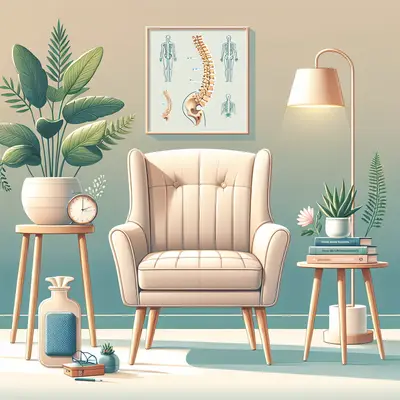
Back pain rarely announces itself with drama. More often, it arrives as a quiet companion: a stiffness as you rise from a chair, a dull ache as the day winds down, a subtle resistance when you bend or turn. While medication and procedures have their place, a truly refined approach to pain management lives in the details of how you sit, move, rest, and recover—day after day.
This is not about quick fixes or “hacks.” It is about thoughtfully upgrading the micro-moments of your routine so that your spine is no longer an afterthought, but a central consideration in how you design your life. The following insights are crafted for those who want more than temporary relief—those who seek a calm, quietly powerful strategy to support their back, long-term.
1. Treat Your Spine Like a Long-Term Investment, Not a Short-Term Emergency
Most people respond to back pain only when it flares, as though they are putting out a fire. A premium approach to pain management treats the spine more like a portfolio: something you protect, adjust, and monitor proactively. Instead of waiting for the next spasm or flare-up, you build in rituals—structured stretching, targeted strength work, movement breaks—that compound over time.
Begin by reframing your mindset: every choice that loads or unloads your spine is a “transaction.” Sitting in a soft, unsupportive chair all afternoon is a withdrawal. Taking five minutes to gently elongate your spine, engage your core, and reset your posture is a deposit. Over weeks and months, these deposits add up to greater resilience and fewer painful episodes. This mindset also tempers the anxiety that often surrounds back pain; you are not passively “hoping” it won’t get worse—you are actively managing a valuable asset with intention and care.
2. Design Your Seating as a Spine-Supporting Ecosystem, Not Just a Chair
For many people with back issues, the chair becomes both the problem and the attempted solution. But a sophisticated seating strategy is less about one “perfect” chair and more about how your environment works together to support your spine. Think of your workspace, living room, and dining area as an ecosystem that either stabilizes your back—or quietly strains it.
Begin by examining seat height: your hips should rest slightly higher than your knees, allowing your pelvis to gently tip forward, encouraging a natural curve in your lower back. Add subtle lumbar support—this might be an adjustable office chair, a small cushion, or a rolled towel placed at the base of your spine. Ensure your feet can rest flat on the floor or a footrest so that your lower back is not left “hanging.” Then consider variety: have at least two seating options in your day (for example, a supportive office chair and a firmer, upright dining chair) and rotate between them. This controlled variety avoids the fatigue of one fixed posture and brings a sense of curated comfort to your environment. Over time, your spine learns to expect gentle support—not constant compromise.
3. Use Micro-Movements as a Discreet, Powerful Pain-Management Tool
Many people believe relief only comes from long exercise sessions, yet the spine thrives on frequent, low-intensity movement. Micro-movements—subtle, low-profile actions you can perform almost anywhere—are an elegant way to manage pain without drawing attention or disrupting your schedule. They are especially valuable for people whose pain flares with prolonged sitting or static standing.
Consider three categories: decompression, circulation, and stabilization. Decompression might be as simple as periodically lengthening your spine by imagining a string gently lifting the crown of your head while you exhale, allowing your shoulders to soften. Circulation can be promoted by ankle pumps, gentle pelvic tilts while seated, or standing weight shifts that keep blood and nutrients flowing to tense tissues. Stabilization micro-movements include lightly engaging your deep core muscles (as though zipping up a snug garment) for a few seconds at a time while sitting or standing. When practiced regularly, these small actions help prevent the build-up of tension that often culminates in evening pain. They are discreet enough for boardrooms, flights, or social events, yet quietly transformative over time.
4. Curate an Evening Wind-Down That Releases the Spine, Not Just the Mind
Many evening routines focus on mental relaxation—dimmed lights, quiet music, a book before bed—yet overlook the physical “unwinding” that the spine needs after a long day of sitting, standing, or commuting. A premium pain-management routine intentionally includes the back in this nightly reset, treating it as a non-negotiable step toward restorative sleep.
Build a brief, consistent sequence that gently addresses your most vulnerable areas: lower back, hips, and upper back. This might include a supported child’s pose with a pillow, a reclining hip stretch, or lying on your back with your calves supported on a chair to allow your spine to settle in a neutral position. Three to ten minutes is often enough, provided you perform the routine with attention rather than haste. This practice signals to your nervous system that the back is “safe” and not under immediate threat, which can dial down pain sensitivity. Over time, an evening spinal release becomes as essential as brushing your teeth: a small, elegant ritual that substantially improves your comfort the next day.
5. Make Pain Data-Driven: Subtle Tracking for Smarter, Calmer Decisions
Back pain can feel unpredictable, which is often as distressing as the pain itself. Yet many patterns remain invisible because they are never recorded. A refined strategy includes discreet, minimal tracking—not to obsess over pain, but to understand it. The goal is clarity, not fixation.
Choose two or three simple variables to note daily: pain level (using a short scale), primary location (lower, middle, or upper back), and one or two contextual factors (sleep quality, sitting hours, stress level, or physical activity). This can be done in under a minute in a journal or app. Over a few weeks, patterns begin to emerge: perhaps pain is reliably higher after poor sleep, certain meetings, or inactivity-heavy days. With this insight, you can adjust your routine—adding micro-movements before those meetings, refining your evening wind-down after stressful days, or reworking your sitting schedule. Instead of reacting to each flare as a mystery, you make calm, evidence-based adjustments. This subtle tracking shifts you from feeling at the mercy of your back to collaborating intelligently with it.
Conclusion
Elevated back care is not defined by dramatic interventions, but by the quiet sophistication of your daily choices. When you treat your spine as a long-term investment, design your seating environment thoughtfully, rely on micro-movements, curate an evening release, and track your patterns with intention, pain management becomes less of a battle and more of a refined practice.
The most powerful changes often feel almost understated: a better chair height, three minutes of decompression before bed, a small note about how your back felt after a particular day. Yet it is precisely these subtle refinements—repeated with care—that transform back pain from a constant intrusion into something you manage with calm authority and deliberate grace.
Key Takeaway
The most important thing to remember from this article is that this information can change how you think about Pain Management.