Back care is no longer a conversation about “no pain, no gain.” For the discerning individual, it is about precision, intention, and cultivating a spine that feels quietly capable in every setting—from the boardroom to the long-haul flight. Exercise therapy, when thoughtfully curated, becomes less of a generic routine and more of a bespoke ritual: tailored, intelligent, and deeply respectful of the complexity of your back. What follows are five exclusive insights that elevate exercise therapy from “doing your stretches” to an artful practice of spinal refinement.
Elevating Assessment: Treat Your Back Like a Custom-Fitted Garment
Sophisticated back care begins well before the first repetition. A premium approach to exercise therapy mirrors the fitting of a tailored suit: every angle, asymmetry, and nuance matters.
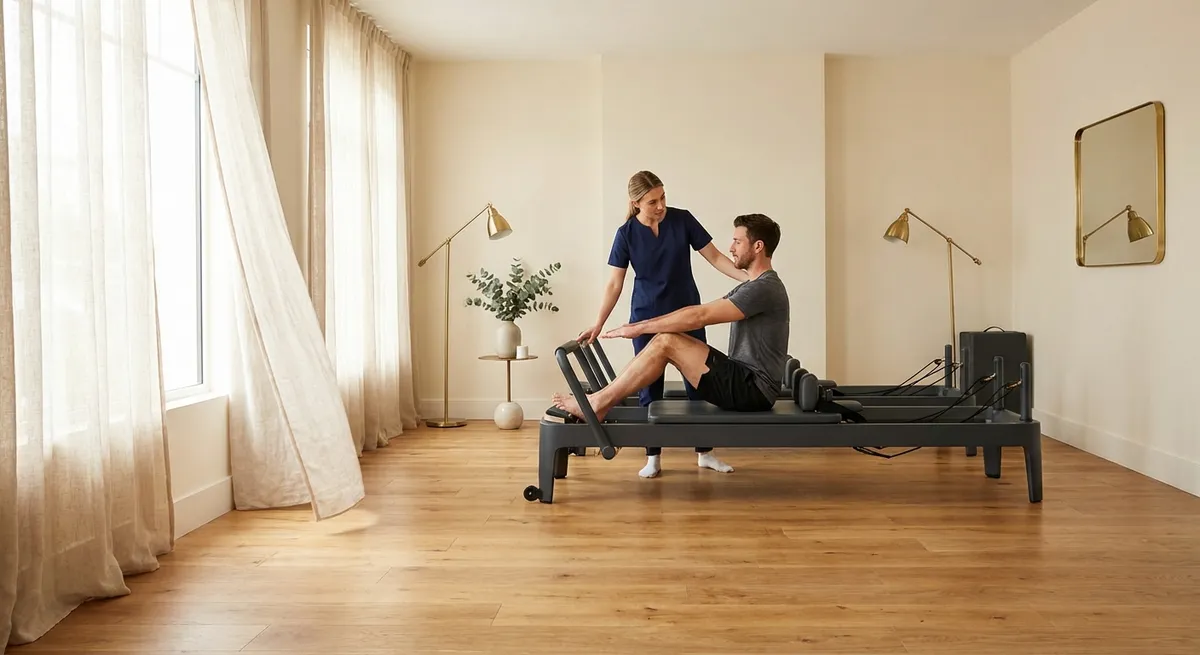
Rather than relying on generic “back exercises,” a physical therapist or movement specialist can conduct a meticulous assessment—observing posture from multiple views, analyzing gait, testing specific muscle groups, and examining joint mobility from your neck to your hips. This reveals patterns often missed in quick consultations: a subtly stiff hip that forces your lumbar spine to rotate too much, a slightly weaker side of the gluteal muscles that causes imbalance, or a thoracic spine that doesn’t rotate well, making your low back overcompensate.
These details matter. Precision assessment allows your exercise program to be calibrated, not crowdsourced: fewer, sharper exercises that directly address your specific vulnerabilities rather than a long list of “good for everyone” moves. The result is less wasted effort, a lower risk of aggravation, and a sense that each exercise truly earns its place in your routine.
The Micro-Intensity Principle: Underwhelm Your Back to Strengthen It
Most people assume that more intensity equals better results. For a sophisticated spine, the opposite is often true: the goal is to underwhelm your back just enough that it has room to adapt, not rebel.
Exercise therapy for back issues often starts with micro-intensity: low load, slow speed, and controlled ranges of motion that feel almost too easy. Think of this as a trust-building phase for your spine. Light isometric holds, gentle activation of deep stabilizers, and exacting control of movement arcs help your nervous system realize: “I can move, and I am safe.”
This is not about being timid; it is about being strategic. Research increasingly supports graded exposure—gradually increasing load and complexity—as a powerful way to reduce pain and fear of movement. In practice, that might look like beginning with precise pelvic tilts before advancing to bridging, or starting with supported hip hinging before adding resistance. Done well, micro-intensity creates the conditions for macro-confidence: your back learns to tolerate more without the defensive spasm, clenching, and bracing that often amplify pain.
Precision Over Volume: Curating a Minimalist Exercise Collection
When it comes to back-focused exercise therapy, more is not always more. A refined approach favors a minimalist “capsule collection” of movements that deliver maximum return with minimal noise.
Consider your exercises as investment pieces, not fast fashion. Each one should have a clearly understood purpose: perhaps one movement improves hip flexion so your low back bends less; another reinforces thoracic extension so your shoulders and neck carry less strain; yet another trains your deep core to stabilize before you lift, twist, or sit for long periods.
Instead of a 45-minute laundry list of stretches and strengthening drills, you might work with 6–8 exquisitely chosen exercises that you can execute impeccably in 10–15 minutes. This makes adherence far more realistic for a demanding lifestyle, and it also encourages better technique. When you are not rushing through dozens of movements, you have the bandwidth to focus on breath, alignment, and the subtle quality of effort—details that transform an adequate routine into an exceptional one.
Integrating Movement into Your Most Demanding Moments
The most elegant exercise therapy plans do not live solely on a yoga mat. They are seamlessly woven into the pressure points of your day—those exact contexts where your back is most vulnerable.
Rather than seeing your “program” as something separate from life, sophisticated back care treats movement as a set of discreet upgrades built into your existing routines. For example, you might rehearse your hip hinge pattern each time you load luggage into a car or pick up a briefcase. You might transform a long meeting into an opportunity to practice subtle postural resets: a small thoracic extension, a gentle scapular retraction, or a mindful deep breath that softens your ribcage and reduces bracing in the lumbar spine.
This integration is not about being performative; it is about strategic repetition in real conditions. High heels, long flights, extended screen time, and stress-heavy days are precisely when your back tends to falter. Integrating exercise therapy principles into these moments—pre-flight mobility sequences, post-commute decompression drills, a two-minute core activation before a presentation—turns your therapy into a quiet but consistent ally.
Refining Perception: Training the Nervous System, Not Just the Muscles
A sophisticated back care practice recognizes that pain is not purely a structural issue; it is also an experience mediated by your nervous system. Exercise therapy at the highest level is therefore as much about refining perception as building muscle.
Gentle, controlled movement can recalibrate how your brain interprets signals from your spine. When you move in ways that are safe, precise, and non-threatening, you teach the nervous system to dial down its alarm response. Breathing techniques layered into movement—slow nasal breaths, extended exhalations—further soften the nervous system’s vigilance. Over time, this can reduce the intensity of pain, even when structural issues remain.
This is why two people with similar imaging results (such as disc degeneration or mild bulges) can have dramatically different pain experiences. Exercise therapy that respects this mind-body interface focuses on movements that feel secure, achievable, and gradually progressive. The intention is not merely to “strengthen your back,” but to cultivate a spine that your nervous system trusts. That trust manifests as less guarding, smoother movement, better tolerance of daily loads—and a quieter, more confident back.
Conclusion
Exercise therapy for back care need not be generic, time-consuming, or punishing. Approached with discernment, it becomes a refined practice: grounded in meticulous assessment, guided by micro-intensity, focused through minimalist precision, integrated seamlessly into your day, and attuned to the subtleties of your nervous system.
For those who expect more from their back than mere absence of pain—those who demand resilience, elegance of movement, and sustainable comfort—exercise therapy offers more than a routine. It offers a ritual: a deliberate, intelligent way of inhabiting your spine so that it supports not only what you do, but how you choose to live.
Sources
- National Institute of Neurological Disorders and Stroke – Low Back Pain Fact Sheet - Overview of causes, treatments, and the role of exercise in managing low back pain
- Mayo Clinic – Back Pain: Self-Management and Physical Therapy - Discusses therapeutic exercise, posture, and movement strategies for back care
- Harvard Health Publishing – How to Strengthen Your Back - Explores evidence-based exercises and principles for maintaining a strong, resilient back
- American Physical Therapy Association – Physical Therapy Guide to Low Back Pain - Details how individualized assessment and tailored exercise can help manage and prevent back pain
- NHS – Back Pain: Treatment and Self-Help - Provides guidance on movement, graded activity, and exercise as key components of back pain recovery
Key Takeaway
The most important thing to remember from this article is that this information can change how you think about Exercise Therapy.