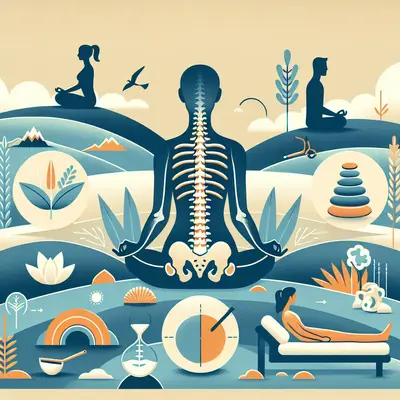
Back health is no longer a matter of mere pain management; it has become a quiet marker of how thoughtfully we live. For those who expect more from their bodies—and from their wellness strategies—the standard advice to “sit up straight” or “stretch more” feels reductive. A truly cultivated approach to back care is precise, informed, and attuned to how we actually move, think, and work in the modern world.
Below are five exclusive, under-discussed insights that speak to a more discerning standard of back health—where the goal is not just relief, but refinement.
1. Treat Your Spine as a Sensory Organ, Not Just a Support Structure
Most people think of the spine as a column: a passive structure that holds us upright. In reality, it is a richly wired sensory hub, constantly feeding information to the brain about balance, position, and safety. When the back is chronically tense or inflamed, this “sensory conversation” becomes distorted, and even minor movements can feel threatening, stiff, or painful.
A refined back-care practice recognizes that comfort depends as much on how the nervous system interprets movement as on the muscles and joints themselves. Gentle, exploratory motions—slow spinal rotations, segmental cat-cow movements, and subtle pelvic tilts—can recalibrate this feedback loop. The focus is not on effort, but on nuance: How does the movement feel at the start, in the middle, at the end? Where does the breath catch? Where does tension quietly accumulate?
This kind of intentional micro-movement helps the brain reclassify motion as safe, gradually dialing down protective muscle guarding. Over time, you are not simply “stretching your back”—you are retraining how your body and brain negotiate ease, stability, and confidence in motion.
2. Curate a “Spinal Climate” Instead of Relying on One Perfect Posture
The pursuit of a single “correct” posture has misled an entire generation into rigid sitting that often feels as exhausting as it is unsustainable. The sophisticated alternative is to curate a “spinal climate”—the overall conditions in which your back lives throughout the day—rather than obsessing over a frozen ideal position.
This climate includes variation, load, duration, and rest. Instead of trying to maintain one posture flawlessly, you orchestrate a rotation of high-quality positions: a supportive chair for deep focus work, a standing desk interval for calls, a perch stool for shorter bursts of concentration, and, when possible, brief walking breaks that reset the entire chain from feet to neck.
The spine thrives on movement diversity. Small changes—shifting weight between feet when standing, alternating leg positions when sitting, adjusting screen height throughout the day—prevent any single tissue from absorbing all the stress. Over the course of a week, the cumulative effect is profound: less stiffness, fewer end-of-day aches, and a back that feels used, not abused, by your routine.
3. Elevate Back Care by Starting at the Ground: Feet, Ankles, and Hips
Sophisticated back care rarely begins at the back. It begins at the ground and works upward. The way your feet contact the floor, the mobility of your ankles, and the strength and alignment of your hips all dictate how generously or harshly your spine is treated with every step and every stance.
Weak foot muscles and restricted ankles often force the knees and hips to compensate, transmitting chaotic loads up the chain. Over time, the lower back becomes an unwilling negotiator, absorbing forces it was never meant to manage alone. The premium solution is not another back stretch, but a more elegant foundation: deliberate foot strengthening, calf and ankle mobility work, and hip stability training that anchors the pelvis.
Simple, precise drills—single-leg balance near a wall or countertop, slow heel raises with control, glute bridges focusing on symmetry, and gentle hip external rotation work—provide the spine with something more valuable than another cushion or brace: a stable yet adaptable base. The result is subtle but unmistakable. Walking feels more fluid, standing more poised, and the back less like the hero and more like an honored guest in a well-organized system.
4. Use Breath as a Structural Tool, Not Just a Relaxation Technique
Breathing is frequently presented as a stress-management tool, but for the discerning back, it is also architecture. The diaphragm, deep abdominal wall, pelvic floor, and spinal stabilizers form a dynamic pressure system—often called the “core cylinder”—that supports the spine from within. When this system is underused or poorly coordinated, the back is forced to rely on surface muscles that fatigue quickly and tighten defensively.
Refined breath work for back health is less about dramatic “deep breaths” and more about balanced, three-dimensional expansion. On inhalation, you invite the ribcage to widen and the abdomen to soften without forcing the shoulders upward. On exhalation, you allow a subtle gathering at the low abdomen, as though gently tightening a wide, soft belt. This creates internal support that is firm but not rigid.
Practicing this in quiet moments—lying down with knees bent, seated with feet grounded, or even during short walks—teaches the body to stabilize the spine with intelligent pressure management rather than brute muscular gripping. Over time, bending, lifting, and rotating become less threatening because the spine is consistently supported from within, by breath that is both elegant and efficient.
5. Design Recovery as Intentionally as You Design Your Workday
Many high-performing individuals micromanage schedules, projects, and output, yet leave recovery to chance. The back, in particular, suffers when rest is treated as an afterthought or something that happens only when pain becomes unignorable. An elevated approach to spinal well-being frames recovery as a deliberate, designed practice, not a passive default.
This does not imply elaborate routines or hours of self-care. Instead, it calls for strategic, well-timed interludes that directly address how the spine has been used that day. After prolonged sitting, this might mean a five-minute walking circuit and two minutes of gentle hip-opening and upper back extension against a wall. Following a day of standing or travel, it could be five to ten minutes lying on the floor with the calves supported on a chair, allowing the spine to decompress in a neutral position.
Sleep also becomes part of this design. Investing in a supportive mattress and pillow combination suited to your natural sleeping posture is not indulgence; it is infrastructure. A carefully arranged night environment—consistent schedule, reduced screens before bed, and a cool, quiet room—gives your back the uninterrupted hours it needs to heal micro-irritations accumulated during the day. The message is clear: when you treat recovery as a core component of your lifestyle, your back responds with quiet reliability rather than noisy protest.
Conclusion
Back health at its highest level is not about chasing quick fixes or tolerating chronic discomfort as the price of ambition. It is about cultivating an informed, subtle relationship with your spine—one that honors it as a sensory organ, supports it from the ground up, stabilizes it from within, and restores it with intention.
For those willing to engage with these finer details, the reward is more than the absence of pain. It is a body that moves with understated confidence, a workday that no longer wages war on your posture, and a spine that feels less like a liability and more like a quiet asset in a well-designed life.
Sources
- National Institute of Neurological Disorders and Stroke – Low Back Pain Fact Sheet - Overview of causes, mechanisms, and management of low back pain
- Harvard Health Publishing – 4 Ways to Turn Good Posture into Less Back Pain - Discusses posture, movement variety, and spine-friendly habits
- Mayo Clinic – Back Pain: Symptoms and Causes - Explains common contributors to back pain and the role of lifestyle factors
- Cleveland Clinic – Core Stability and Back Health - Describes how core engagement and breathing support spinal stability
- National Library of Medicine (NIH) – The Role of the Diaphragm in Core Stability - Research review on breathing, intra-abdominal pressure, and spinal support
Key Takeaway
The most important thing to remember from this article is that this information can change how you think about Back Health.