Back pain rarely arrives as a single dramatic event. More often, it is curated—minute by minute—by chairs that almost fit, screens that are nearly aligned, and habits that feel harmless until they quietly accumulate into strain. Ergonomics, at its most refined, is not about fussy rules or elaborate equipment; it is about designing your environment so that your spine is preserved rather than negotiated with. For those already living with back issues, this is not a matter of comfort alone, but of protecting against flare‑ups, fatigue, and long‑term wear.
Below are five exclusive, detail‑oriented insights that move beyond generic advice and speak directly to people who are serious about exceptional back care.
Insight 1: Treat Your Spine as a Vertical Suspension System
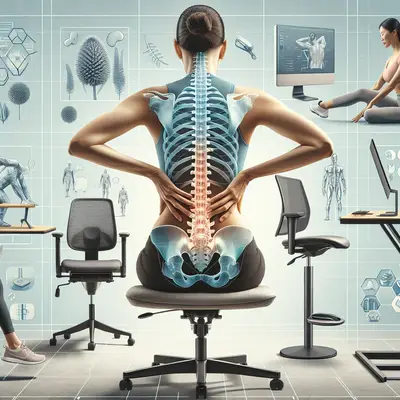
Most ergonomic advice treats the back as a solid column that simply needs “support.” A more precise and protective view is to regard your spine as a suspension system—dynamic, layered, and responsive—much like the suspension in a luxury vehicle.
When seated, your goal is not to freeze the spine, but to allow micro‑movement while guiding it into a neutral, low‑stress configuration. This means:
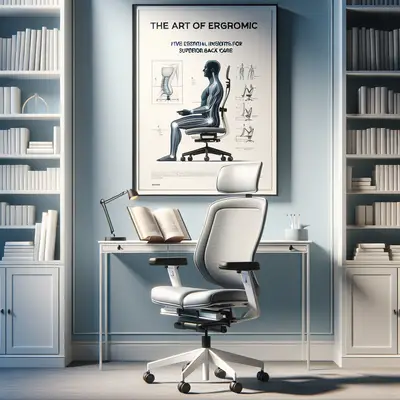
- Lumbar support that contours, not presses: The support should follow the natural curve of your lower back, touching lightly across a broad area rather than poking into one point. A too‑aggressive cushion can actually increase muscle guarding and pain.
- Hip and ribcage alignment: Imagine your pelvis as a shallow bowl. When it tips too far forward or backward, the rest of the “suspension” compensates. Adjust seat height so your hips are slightly above your knees, creating a gentle downward slope from hip to knee.
- Thoracic (mid‑back) freedom: Many chairs over‑support the lower back and neglect the mid‑back. A slightly reclined backrest (about 100–110 degrees) with gentle contact through the mid‑back distributes load more harmoniously along the entire spine.
Viewing your spine as a suspension system invites a more nuanced posture: softly supported, subtly mobile, and never forced into rigid perfection.
Insight 2: Calibrate Your Workspace Around Your Eyes, Not Your Device
Standard ergonomic guidance often begins with the desk or chair. A more refined approach starts with the most sensitive alignment system you have: your eyes. Your visual demand silently organizes the rest of your posture; if your eyes have to chase a poorly positioned screen, your neck and back will follow.
A spine‑conscious visual setup considers:
- Primary screen as your “anchor”: The screen you look at most should sit directly in front of you, not off to the side. Center the middle of that screen at roughly eye level or just below, so your gaze is slightly downward—this relaxes neck extensors and upper‑back muscles.
- Depth over height alone: Place the screen at about an arm’s length away, then fine‑tune. If you have back issues, a slightly closer distance can reduce unconscious leaning.
- Text scaling as a back‑care tool: Increasing font size marginally (and using dark‑on‑light high contrast) can prevent habitual forward head thrusting, which often translates into mid‑back and lower‑back tension over hours.
- Secondary devices as “guests,” not drivers: Laptops, tablets, and phones should be positioned so that your primary screen still governs your posture. External keyboards, stands, and docks are not luxuries in this context—they are protective equipment.
When your work environment is calibrated to your eyes, your neck and back are spared from perpetually rearranging themselves around a misplaced screen.
Insight 3: Redesign Your Transitions, Not Just Your Tasks
Ergonomics is often framed around major activities—typing, driving, meetings. Yet for people with back issues, the transitions between activities can be where strain sneaks in: getting out of a car, twisting to reach a bag, pivoting from laptop to notebook.
Approaching transitions as a distinct ergonomic category yields meaningful relief:
- Neutral before movement: Before you twist, reach, or stand, pause for a half‑second and re‑stack your spine—feet flat, weight evenly distributed, shoulders soft. This neutral reset lowers the risk of moving from a compromised position.
- Two‑step movements: Instead of combining bend and twist (a classic back irritant), separate them. Turn your feet and hips first, then reach or lift. That tiny sequencing shift reduces torque on the lumbar spine.
- Pre‑position frequently used items: Place bags, files, and personal items so that you reach either straight ahead or with a small, comfortable angle—not from behind or far to the side.
- Graceful car exit: Slide the seat back if needed, rotate your entire body to face outward with both legs together, then stand by leaning slightly forward from the hips. This avoids sudden asymmetric twists that can trigger flare‑ups.
When you make transitions intentional rather than incidental, your back is spared dozens of micro‑insults across the day—an invisible but powerful form of protection.
Insight 4: Use Micro‑Adjustments as Ongoing “Spine Maintenance”
For many with back pain, the instruction to “get up every 30 minutes” feels unrealistic. A more sustainable, premium approach is micro‑adjustment ergonomics: subtle position shifts that keep tissues nourished without disrupting your workflow.
These nearly invisible adjustments can be engineered into your day:
- Angle shifts instead of posture resets: Slightly tilt your chair back, then forward again every 15–20 minutes; shift one foot slightly ahead of the other; alternate resting your forearms more heavily on the desk, then lightening them.
- Breath‑anchored resets: A few times an hour, inhale gently and grow a few millimeters taller through the crown of your head, then exhale and soften the shoulders. This restores axial length without forcing rigidity.
- Dynamic foot support: A low footrest (even a firm box) allows you to alternate which leg bears more support, easing sustained tension in the lower back and hips.
- Seated “decompression moments”: While seated, imagine your sit bones gently grounding down while your spine lengthens upward—not a dramatic stretch, just a gentle sense of space between vertebrae for 2–3 breaths.
These micro‑adjustments function like maintenance on a finely tuned instrument: subtle interventions that prevent the need for more drastic repairs later.
Insight 5: Upgrade Your Evening Environment as a Back Recovery Studio
Most ergonomic discussions end at the office door. For those managing back issues, the evening environment is where your spine should recover from the day’s load—not silently accumulate more.
Consider refining your nightly surroundings as deliberately as you do your workstation:
- Sofa strategy: Deep, low couches invite slouching that many irritated backs cannot tolerate. Use a small lumbar cushion and sit closer to the front edge, with feet flat and knees level with or slightly below hips. If reclining, support the mid‑back and neck so your head is not propped forward by oversized pillows.
- Bed as neutral territory: Aim for a mattress that maintains spinal alignment—neither hammock‑soft nor board‑hard. Side sleepers often benefit from a pillow between the knees; back sleepers from a small pillow under the knees to reduce lumbar extension.
- Device positioning in bed: If you must use a tablet or phone, elevate it to eye level using pillows or a stand rather than propping your head forward. This is less about aesthetics and more about sparing your neck and upper back during a time meant for recovery.
- Evening movement rituals: A brief, deliberate sequence—gentle pelvic tilts, knee‑to‑chest holds, or lumbar rotations approved by your clinician—can help reset muscles and joints that have held static positions all day.
When your home environment is curated for spinal restoration, ergonomics becomes a 24‑hour support system rather than an office‑only concern.
Conclusion
Exceptional ergonomics is not a collection of rigid rules, nor is it limited to specialty chairs and standing desks. It is a quiet upgrade to how your spine interacts with every environment you inhabit—from the first email of the morning to the last page you read at night. By treating your spine as a suspension system, centering your setup around your eyes, refining transitions, embracing micro‑adjustments, and elevating your evening environment, you create a lifestyle in which your back is steadily preserved rather than constantly recovered from.
For those already living with back issues, these refined practices do more than ease discomfort; they signal a shift from reactive management to deliberate, daily preservation of the spine—an investment that pays dividends in comfort, capability, and long‑term resilience.
Sources
- National Institute of Neurological Disorders and Stroke – Low Back Pain Fact Sheet - Overview of causes, risk factors, and management strategies for low back pain
- Mayo Clinic – Office Ergonomics: Your How-To Guide - Practical guidance on workstation setup and posture considerations
- Occupational Safety and Health Administration (OSHA) – Computer Workstations eTool - Detailed federal recommendations on ergonomic positioning for computer users
- Harvard Health Publishing – Pain in the Back: What Might Help - Evidence-based overview of back pain management, including posture and lifestyle factors
- Cleveland Clinic – Ergonomics: How to Make Your Workspace More Comfortable - Expert discussion of ergonomic adjustments and their impact on musculoskeletal health
Key Takeaway
The most important thing to remember from this article is that this information can change how you think about Ergonomics.