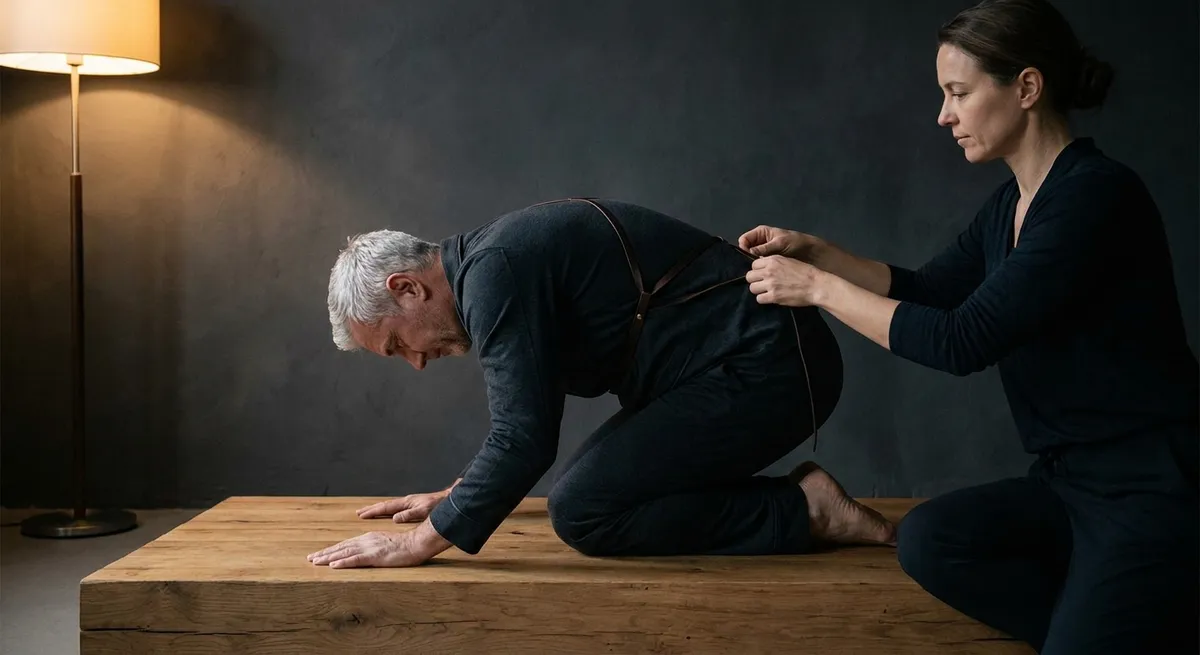
Back care at its best is not loud, dramatic, or punishing. It is quiet, precise, and exquisitely intentional. For those living with back issues, exercise therapy is less about “working out” and more about curating a repertoire of movements that protect, restore, and refine the spine over time. When approached with discernment, each repetition becomes a small, deliberate vote for long-term spinal integrity.
This article explores exercise therapy as a sophisticated practice in spinal stewardship—highlighting five exclusive, under‑discussed insights that elevate movement from routine to artful intervention.
Exercise Therapy as Spinal Language, Not Just Muscle Work
Many people approach exercise as a way to “strengthen the back,” but the spine responds less to brute effort and more to clarity of message. Every movement you perform is interpreted by your nervous system as information: safe or unsafe, stabilizing or destabilizing, efficient or chaotic.
In this sense, exercise therapy becomes a language you use to converse with your spine. Small, controlled motions—such as slow pelvic tilts, segmental bridges, or gentle spinal rotations—teach your brain how each vertebra is meant to articulate. These refined patterns gradually replace the clumsy, compensatory habits that often accompany pain or stiffness.
This neurological re-education is why seemingly modest exercises can have profound effects. When the nervous system perceives clarity and control, it downregulates protective muscle guarding and pain sensitivity. Over time, your back stops behaving like a threatened structure and starts acting like a coordinated system. The elegance lies not in how much you can lift, but in how precisely you can move.
The Luxury of Slowness: Tempo as a Therapeutic Tool
In a culture obsessed with efficiency, slowness in exercise can feel indulgent—even unnecessary. For the back, however, a slower tempo is a luxury with real therapeutic value.
When you elongate each phase of a movement—especially the lowering or “eccentric” phase—you grant your body time to recruit the stabilizing muscles that often remain dormant during hurried exercise. For example, a slow, three-count descent into a hip hinge or squat invites deeper participation from the gluteal and core muscles that safeguard the lumbar spine.
This deliberate pacing also sharpens proprioception: your sense of where your body is in space. As you move slowly, you are more likely to feel when your pelvis tips forward, when your ribs flare, or when your lower back attempts to “help” where the hips should lead. The result is a subtle shift from simply “doing the exercise” to orchestrating it with precision.
Tempo becomes a dial of refinement. On days of heightened pain or stiffness, slowing movements to almost meditative speed allows you to remain in control, never letting momentum dictate your range. On more resilient days, playful variations in tempo can challenge the system without overwhelming it. The spine learns not just to move, but to move with grace under changing demands.
Micro-Stability: The Underrated Elegance of Small Ranges
There is a quiet sophistication in training what most people ignore: the first few degrees of movement, where control is most fragile and habits most revealing.
For a discerning back-care practice, the focus often begins not with deep stretches or maximal ranges, but with micro-movements—subtle shifts just at the edge of motion. Tiny pelvic rocks while lying on your back, low-range hip hinges, or controlled abdominal bracing with barely any visible movement can be more therapeutic than grand gestures.
These micro-movements allow you to explore stability without provoking the nervous system. The deep stabilizers of the spine—the multifidi, transverse abdominis, and pelvic floor—tend to respond best when challenged gently at first. Asking them to organize small ranges builds a foundation upon which larger, more dynamic movements can later rest.
This approach also respects days when your back is irritable. Instead of abandoning movement altogether, you can inhabit this micro-range space—maintaining circulation, joint nutrition, and neuromuscular coordination without aggravating symptoms. Over time, the consistency of these subtle practices quietly upgrades your baseline stability.
The Spine as a Negotiator: Balancing Strength, Mobility, and Endurance
The sophisticated spine is not simply strong or flexible; it is exquisitely balanced across three domains: strength, mobility, and endurance. Exercise therapy that overemphasizes one at the expense of the others often leaves back pain unresolved, or worse, migrates it elsewhere.
Strength offers the scaffolding for posture and load-bearing—particularly in the hips, glutes, and core. Mobility allows segments of the spine and adjacent joints (like the thoracic spine and hips) to move freely so the lower back is not forced to compensate. Endurance enables those refined patterns to be sustained throughout an entire workday, a long flight, or a demanding weekend.
Thoughtful exercise therapy weaves all three into a cohesive program. A session might include controlled strength work (such as supported hip hinges or side planks), gentle mobility (like thoracic rotations or cat-cow variations), and low-intensity endurance training (a brisk walk, or time on a stationary bike with impeccable posture).
For those with back issues, the true luxury is a back that negotiates daily life seamlessly: strong enough to lift a suitcase, mobile enough to twist without protest, and enduring enough to sit through a meeting without stiff rebellion. When your exercise therapy recognizes the spine as a negotiator rather than a single-purpose tool, your results become far more sustainable.
Precision Recovery: How You End a Session Matters as Much as How You Begin
Most people treat the end of a workout as an afterthought. For a back in need of refinement rather than excess, the closing moments of an exercise session are where the nervous system decides what to remember.
A sophisticated back-care practice concludes intentionally. After the last repetition, you might move into a short sequence of decompressive positions: lying on your back with legs supported on a chair, gentle diaphragmatic breathing, or a supported child’s pose that lengthens the spine without strain. These quiet minutes help “file away” the movement patterns you have just practiced under a calm, safe state.
Breath work is especially powerful here. Slow, nasal breathing with extended exhalations can reduce sympathetic nervous system activity, easing muscle guarding and tension around the spine. It signals to your body that the movements you performed were safe, controlled, and non-threatening—making it more likely that those patterns will be accessible tomorrow, and the day after.
Closing with precision also invites reflection: How does your back feel now, compared to the start? Did a particular exercise feel especially nourishing or provocative? This feedback loop allows you, or your clinician, to curate the next session with greater accuracy. Over time, this kind of intentional recovery transforms exercise from a sequence of efforts into a continuous, intelligent dialogue with your back.
Conclusion
Exquisite back care is not about performing the most intense exercise or collecting an endless list of “back-friendly” movements. It is about cultivating a nuanced relationship with your spine—using exercise therapy as a refined tool to teach, reassure, and gradually elevate its capacity.
By treating movement as language, honoring tempo, exploring micro-stability, balancing strength with mobility and endurance, and closing each session with deliberate recovery, you move beyond generic advice into a more cultivated, personal practice.
In this quieter, more discerning approach, your back is no longer a problem to be fixed, but a system to be stewarded—with precision, patience, and a standard of care that feels as considered as the rest of your life.
Sources
- National Institute of Neurological Disorders and Stroke – Low Back Pain Fact Sheet – Overview of causes, risk factors, and treatment options, including exercise-based approaches.
- Harvard Health Publishing – Protect your back and neck with these core-strengthening exercises – Discusses targeted exercise strategies for spinal support and stability.
- Mayo Clinic – Back pain: Self-care – Practical guidance on movement, activity modification, and exercise for back pain management.
- Cleveland Clinic – Physical Therapy for Low Back Pain – Details how structured exercise and therapeutic movement help treat low back pain.
- National Library of Medicine – Exercise therapy for chronic low back pain (systematic review) – Research-based evidence on the effectiveness of exercise therapy in managing chronic low back pain.
Key Takeaway
The most important thing to remember from this article is that this information can change how you think about Exercise Therapy.