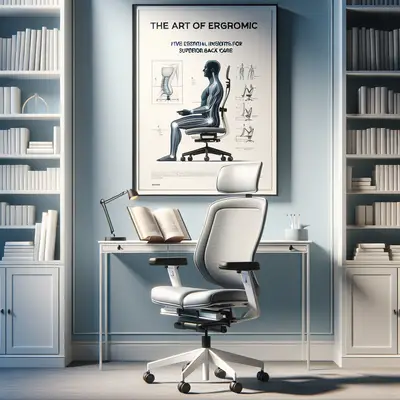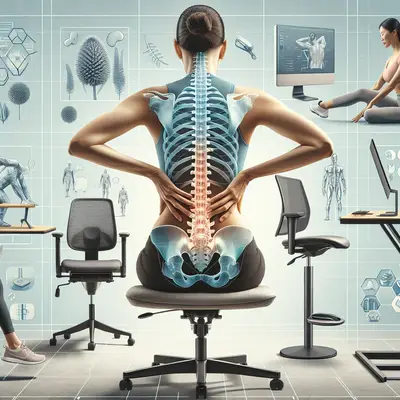
Back comfort is not an accident; it is a design decision repeated hundreds of times a day. The way you stand at the kitchen counter, angle your laptop, place your feet during a meeting, or choose the chair for a late-night email—each moment is either a quiet investment in your spine or a subtle withdrawal. For those who live with a demanding back, ergonomics is less about gadgets and more about the deliberate craft of how your body occupies space. This is where refined back care begins: not with extremes, but with intelligent, elegant adjustments that honor your spine’s architecture.
Ergonomics Beyond the Chair: Designing the Whole Day
Ergonomics is often reduced to a single object—usually a chair—yet your back experiences the world as a continuous sequence, not isolated moments.
From a spinal perspective, your day is a choreography of load, angle, and duration. You may stand with impeccable posture for an hour, then collapse into a sofa that undoes all that precision in minutes. True ergonomic thinking treats the day as a whole system: how you wake, commute, work, cook, unwind, and sleep.
An elevated approach asks: how can each phase of the day gently prepare the back for the next? Morning routines that include a brief spinal mobilization, commute setups that prevent slouching, workspaces that invite subtle movement, and evening environments that respect spinal recovery—all of these are ergonomic decisions. Instead of thinking “perfect posture,” think “intelligent transitions”: small, considered shifts that keep your back from ever getting stuck in one unhelpful position for too long.
Insight 1: The Micro-Posture Principle
For a discerning back, “good posture” is too blunt a concept. The spine thrives on micro-variation—small, frequent changes rather than rigid stillness.
The micro-posture principle treats posture like breath: dynamic, not frozen. Sitting tall for eight hours is as unkind to your back as slouching for eight. The aim is to create a narrow but flexible range of postures that are all acceptable, then glide among them regularly.
Practically, this might mean:
- Slightly adjusting your seat depth every 20–30 minutes
- Alternating between a gentle recline and a more upright position
- Varying where your weight rests—sometimes more on the sit bones, sometimes slightly through the feet
- Shifting your screen angle and keyboard placement periodically to invite different spinal alignments
Over time, micro-postures cultivate resilience. Instead of asking your back to maintain one “correct” shape, you train it to tolerate and navigate several well-organized shapes. For a spine prone to complaint, this nuance can be the difference between manageable fatigue and end-of-day pain.
Insight 2: The Vertical Line: Head, Eyes, and Screen
Most ergonomic advice focuses on chair and desk height, but for back-sensitive individuals, the real gatekeeper is the vertical line that runs from your eyes to your screen and down through your spine.
Your neck and upper back are often the first to tighten. When the screen is just slightly too low, your head drifts forward; slightly too high, and you crane your neck. The spine below quietly absorbs the consequence. An elegant setup respects this vertical line with deliberate precision:
- Your gaze should naturally meet the top third of the screen when you look straight ahead, not down.
- The head should feel as though it is balanced lightly over the shoulders, not pulled forward to “chase” the text.
- If you wear multifocal or progressive lenses, screen height should be adjusted to match where your lenses are optimized—not a generic standard.
For laptop users, this almost always means external accessories: a stand to lift the screen, a separate keyboard and mouse to keep shoulders relaxed, and thoughtful cable routing so you are never tempted to hunch closer. Your back experiences screen alignment not as an aesthetic detail, but as hours of accumulated load. That vertical line is worth guarding.
Insight 3: The Floor as an Ergonomic Tool, Not an Afterthought
Chairs get the glory, but for many people with back issues, the most transformative change is not at seat level—it’s at floor level.
The way your feet meet the ground determines how your pelvis and lower back behave. Dangling legs, twisted feet around chair bases, or one leg tucked under the body create small but persistent torque at the pelvis. Over hours, torque becomes strain.
A refined floor strategy includes:
- Uncompromising foot contact: both feet flat, supported, and stable—through a footrest if necessary
- Footwear awareness: overly soft, unsupportive shoes can encourage slumping; extremely rigid shoes can discourage subtle movement
- Under-desk clarity: no clutter that forces asymmetrical leg positions or habitual twisting
- Standing work periods performed on a slightly cushioned, supportive surface rather than hard flooring alone
When the floor is treated as a genuine component of your ergonomic environment, your pelvis can rest in a more neutral, balanced position, giving the lumbar spine a more dignified, sustainable role. The result is not just comfort, but a quieter, more grounded kind of stability.
Insight 4: The “Transition Moments” That Protect Your Spine
Many back flare-ups do not occur while sitting at a desk or standing in a queue—they happen in the transitions: rising from a chair, leaning into the back seat of a car, lifting a bag from the floor, turning to reach something behind you.
An elevated ergonomic mindset pays particular attention to these in-between moments, because they expose the spine to sudden shifts in load and rotation.
Consider:
- Standing up: instead of pushing from your lower back, use your feet and hips. Bring your feet slightly under you, lean your torso forward as one piece, and let your legs do the work of standing.
- Reaching: move your feet to face what you’re reaching for instead of twisting your spine from the waist. If it requires a stretch, step closer.
- Getting into a car: sit first, then pivot both legs together inside, keeping the torso relatively still, rather than folding and twisting at the same time.
- Lifting: bring the object close, hinge from hips with a neutral spine, and let the legs and hips generate power—not the lower back.
Codifying these transitions into gentle rituals—a consistent way of standing, turning, reaching, and lifting—creates a protective choreography. With practice, it becomes automatic, and your back benefits from a series of predictable, respectful movements instead of abrupt improvisations.
Insight 5: Curating an Ergonomic “Signature” Instead of Chasing Trends
Back care can easily be overwhelmed by trends: standing desks, kneeling chairs, wobble stools, active seating, and beyond. For a discerning spine, the aim is not to adopt every innovation, but to curate an ergonomic “signature” that suits your specific history, anatomy, and daily realities.
A signature approach asks:
- Which positions genuinely leave your back feeling more refreshed, not just novel?
- How much standing does your back tolerate before fatigue, and what happens if you alternate instead of fully replacing sitting?
- Which chair contours truly match the shape of your pelvis and thoracic spine, rather than simply looking “supportive”?
- How does your back respond across the entire day—not just during a single test session?
Someone with a history of lumbar disc issues may prefer subtle lumbar support and frequent standing breaks. Another with thoracic stiffness and neck pain might benefit more from higher screen placement and gentle reclining support. Neither needs every tool on the market; they need a carefully edited set.
Think of your ergonomic environment the way you might think of a well-curated wardrobe: fewer, better pieces that work together harmoniously. Each item—chair, desk, keyboard, footrest, lighting—earns its place by demonstrably reducing strain and enhancing your spinal experience over time.
Conclusion
Ergonomics, at its most sophisticated, is not about perfection; it is about discernment. It asks you to notice how your back feels not just at the end of the day, but during its quiet middle hours. The micro-postures you inhabit, the vertical line of your head and screen, the contact between your feet and the floor, the transitions that shape your movements, and the curated tools you select—each of these is an expression of how seriously you take your back’s comfort.
For those who live with a demanding spine, this is not indulgence. It is a form of respect: for your body, your work, and your time. When ergonomics becomes an everyday craft, your environment ceases to be something you endure and becomes a partner in your back’s long-term wellbeing.
Sources
- [National Institute of Neurological Disorders and Stroke – Low Back Pain Fact Sheet](https://www.ninds.nih.gov/health-information/disorders/low-back-pain) – Overview of causes, risk factors, and management strategies for low back pain
- [Mayo Clinic – Office Ergonomics: Your How-To Guide](https://www.mayoclinic.org/healthy-lifestyle/adult-health/in-depth/office-ergonomics/art-20045769) – Practical guidance on optimizing desk, chair, and screen setup
- [Occupational Safety and Health Administration (OSHA) – Computer Workstations eTool](https://www.osha.gov/etools/computer-workstations) – Detailed ergonomic recommendations for seated and computer-based work
- [Harvard Health Publishing – 4 Ways to Turn Good Posture Into Less Back Pain](https://www.health.harvard.edu/pain/4-ways-to-turn-good-posture-into-less-back-pain) – Evidence-informed advice on posture and back discomfort
- [Cleveland Clinic – Proper Lifting Techniques](https://my.clevelandclinic.org/health/articles/22096-proper-lifting-techniques) – Expert guidance on safe movement and lifting to protect the spine
Key Takeaway
The most important thing to remember from this article is that this information can change how you think about Ergonomics.