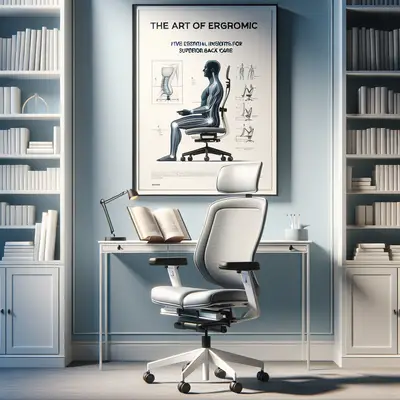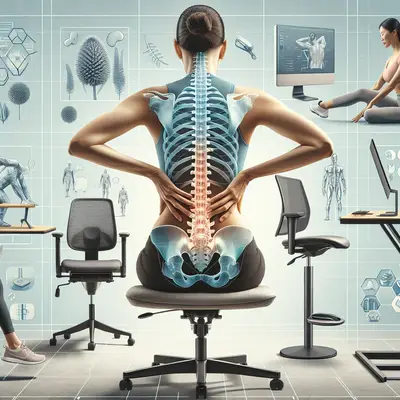
Back pain has a way of editing your life. It reshapes how you sit in a meeting, how long you linger at dinner, how present you feel with the people and work that matter most. True ergonomics is not about gadgets and trending chairs; it is the subtle architecture of your daily environment, arranged so your spine no longer has to negotiate for comfort.
This is ergonomics for those whose backs have already spoken—clearly, and more than once. What follows is a refined, evidence-informed approach, with five exclusive insights that go beyond generic tips and into the realm of intentional, high‑standard back care.
Reframing Ergonomics: From Furniture Choice to Load Management
Most ergonomic advice stops at “buy a better chair.” For a back that has already endured injury, disc changes, or chronic tension, the conversation must be more precise: ergonomics is fundamentally about how mechanical load is distributed across your spine throughout the day.
Every posture is a trade‑off. A perfectly upright position may look textbook, but if it demands constant muscular effort, your tissues will fatigue. A softer recline may be more forgiving for a disc‑sensitive spine, yet problematic for facet joints in others. Elegant ergonomics acknowledges these nuances and aims not for an ideal posture, but for an intelligent rotation of postures.
This means you are not chasing a single “correct” position; you're curating a small repertoire of positions that your back tolerates well and designing your environment to make transitioning between them effortless. The chair, desk, screen, and accessories become tools to choreograph this variation, not one‑time purchases to be “set and forgotten.”
For discerning backs, the metric is not how impressive the setup looks, but how quietly your spine behaves after a 10‑hour day: less background ache, fewer sharp reminders, and more unremarkable, pain‑free minutes—luxuries in their own right.
Insight 1: Micro‑Angles Matter More Than Major Overhauls
For many with back issues, small positional changes are far more powerful than dramatic interventions. A two‑centimeter adjustment in screen height, a slight seat‑pan tilt, or a modest shift in keyboard depth can translate into significant reductions in spinal load over thousands of daily repetitions.
This is because your spine and surrounding musculature are exquisitely sensitive to leverage. A forward head shift of just 2–3 centimeters can increase strain on the neck and upper back substantially; similarly, a minor forward slump at the low back adds compressive load to the discs. Micro‑corrections reduce these lever arms without demanding stiff, military‑style posture.
A premium approach to ergonomics treats your setup like a tailored garment: adjusted, then re‑adjusted in fine increments. Sit, work for 10 minutes, and ask yourself: does my neck feel subtly pulled? Is my low back quietly bracing? If so, adjust only one variable—chair height, backrest angle, foot support—then reassess.
Over a week of incremental refinement, you build an environment that feels almost custom‑molded to your comfort. The result is not dramatic on day one, but profoundly noticeable by day ten, when end‑of‑day discomfort begins to recede from center stage.
Insight 2: The Spine Thrives on Rhythms, Not Static Perfection
For backs that have seen MRIs and pain scales, one simple principle stands out: the spine is not designed to be held; it is designed to be moved. Even an “optimal” posture, held rigidly, will eventually become provocative.
A sophisticated ergonomic strategy therefore emphasizes rhythm over rigidity. This may mean building a quiet choreography into your workday:
- Forty minutes in a gently reclined, lumbar‑supported position
- Ten minutes at a sit‑stand desk in a tall, open‑hip stance
- Two minutes of subtle movement: ankle pumps, pelvic tilts, shoulder rolls while reading or listening
Each position is comfortable, but each has a time limit. By rotating through them, you avoid overloading any one tissue—disc, facet joint, ligament, or muscle group—for too long. The principle mirrors athletic training: variety reduces overuse.
Those with chronic back issues often notice that their worst flare‑ups are tied not to intense activity but to immobility—long drives, flights, or back‑to‑back meetings. Building structured micro‑movement into your ergonomic environment—at home, in the office, or on the road—is a quiet but powerful form of insurance.
Your goal is not constant fidgeting. It is a composed, predictable rhythm of minor adjustments that keeps circulation alive, muscles lightly engaged, and joints gently nourished, without ever calling noisy attention to your condition.
Insight 3: Lumbar Support is a Conversation, Not a Cushion
For a sensitive lower back, lumbar support is often treated as a magic solution: add a cushion, and the problem is solved. In reality, your lumbar curve is dynamic, and the right support depends on your anatomy, your history of pain, and the specific tissues that tend to complain.
Some backs prefer a pronounced, structured support that restores a deep curve and opens the front of the hips. Others, especially those with facet joint irritation or certain types of spinal stenosis, may protest against excessive extension and do better with a more neutral or even slightly flattened curve.
A refined approach is to test your lumbar preferences methodically:
- Try a firmer, more contoured support for a few days, placing it at different heights—from the sacrum up to mid‑lumbar—while observing symptom patterns.
- Then test a subtler, lower‑profile support.
- Finally, test brief periods with minimal support, relying more on hip position and seat angle.
You are not chasing what is “correct” in theory; you are collecting data on what your particular spine finds sustainable in practice. Take mental notes not just during sitting, but one to two hours later: how does your back feel when you stand, climb stairs, or prepare for bed?
Over time, lumbar support becomes less of a product and more of a dialogue with your own body—subtly adjusted for days heavy on meetings versus days heavy on creative focus, for long flights versus quick lunches, for pain‑free weeks versus more vulnerable ones. This is ergonomics as responsive care, not fixed doctrine.
Insight 4: Hands, Eyes, and Feet Quietly Dictate Your Spine
While attention often centers on the chair and backrest, three overlooked anchors largely determine spinal strain: where your hands work, where your eyes gaze, and where your feet rest.
If your keyboard is too high, your shoulders will rise; if your mouse is too far, your shoulder will drift forward; if your laptop screen is too low, your head will follow. Over hours, your spine obediently accommodates these demands. Similarly, feet that are unsupported or tucked under your chair alter your pelvic position, which in turn changes the curvature of your lumbar spine.
Investing in a refined ergonomic setup means treating these three points as primary, not peripheral:
- Hands: Aim for your forearms to float close to parallel with the floor, with wrists in neutral—not bent up or down. This often requires lowering the keyboard or chair, and sometimes separating your keyboard from your laptop.
- Eyes: Position the top of the screen near eye level, at a distance where you can read without leaning in or squinting. If you wear progressive lenses, you may need to lower the screen slightly and ensure the tilt complements your visual segment.
- Feet: Ensure they rest firmly on the floor or a stable footrest, with hips slightly above or level with the knees. This seemingly minor detail is a powerful lever for pelvic alignment and lumbar comfort.
For those living with established back issues, refining these three anchors often produces more relief than upgrading to the most expensive chair. It is the discreet, precise calibration of these contact points that allows your spine to settle rather than compensate.
Insight 5: Travel, Dining, and Leisure Deserve the Same Ergonomic Respect
Many people with excellent desk setups experience a sharp spike in symptoms after weekends, dinners out, or travel. The reason is simple: we protect our backs in “work mode,” then abandon those standards in the spaces where we are meant to relax.
True premium back care extends ergonomic thinking into every environment you frequent:
- In restaurants or at events, choose seating with back support over backless stools whenever possible. Subtly roll a jacket or scarf as a low‑profile lumbar bolster if chairs are deep or overly soft.
- During travel, think beyond the neck pillow. Use a small, firm support at the low back, adjust seat tilt to avoid slouching, and stand or walk briefly at rational intervals—even two to three minutes can be protective on longer trips.
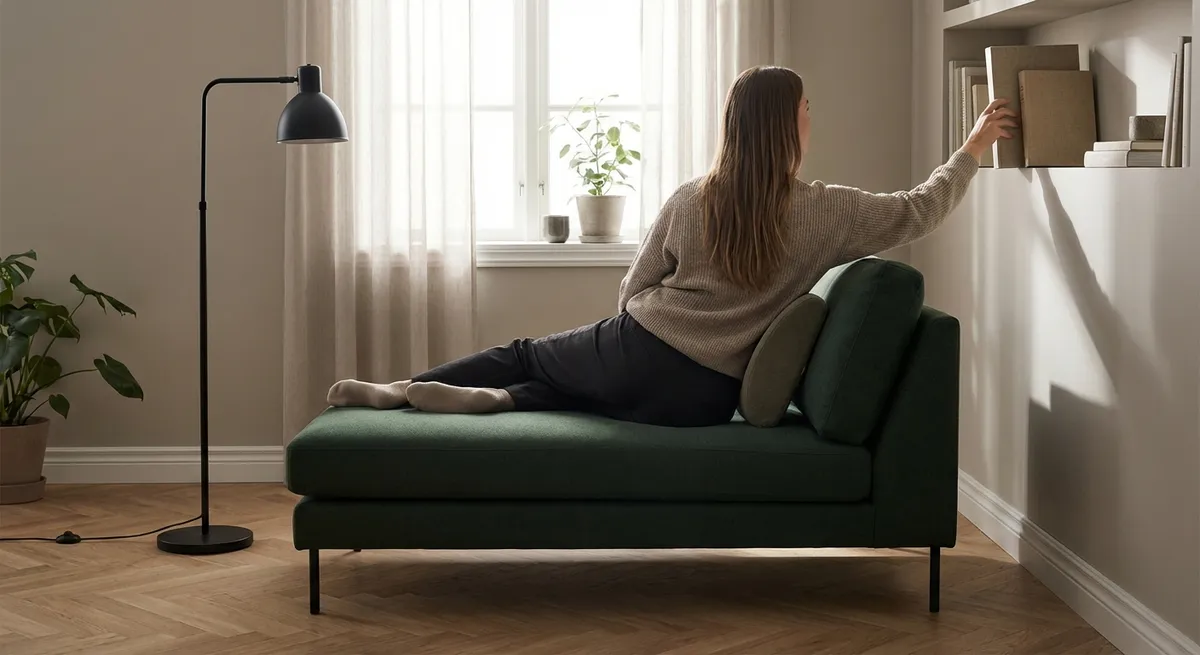
- In living spaces, avoid sinking into deep sofas that fold you into a C‑curve for hours. Introduce side tables at the correct height so you are not repeatedly reaching or twisting, and consider a secondary, more upright “reading chair” that your back associates with comfort rather than collapse.
This is not about living cautiously; it is about living intentionally. When ergonomics becomes a quiet habit rather than a special project, your back health no longer depends on a single “perfect” workspace. Instead, your spine is consistently respected—whether you are in an airport lounge, a boardroom, or your own dining room.
Over time, this continuity is what many people with chronic back issues notice most: fewer jarring spikes of pain after seemingly ordinary outings, and a smoother, more predictable baseline that allows you to say “yes” to more of life without hesitation.
Conclusion
Ergonomics, at its highest expression, is less about products and more about discernment. It is the artful management of load, the orchestration of posture rhythms, and the thoughtful extension of back care into every space you inhabit.
For a demanding back, comfort is not an accident; it is a design choice, refined in micro‑angles, informed by your own lived experience, and maintained with quiet consistency. When your environment begins to work with your spine instead of against it, back pain moves from center stage to background noise—and eventually, for many, to silence.
In that silence, concentration deepens, evenings lengthen, and life feels more spacious. That is the quiet architecture of comfort—and the standard your back deserves.
Sources
- [National Institute of Neurological Disorders and Stroke – Low Back Pain Fact Sheet](https://www.ninds.nih.gov/health-information/disorders/low-back-pain) – Overview of low back pain causes, risk factors, and management approaches
- [Mayo Clinic – Office Ergonomics: Your How-To Guide](https://www.mayoclinic.org/healthy-lifestyle/adult-health/in-depth/office-ergonomics/art-20046169) – Practical guidance on workstation setup and posture from a leading medical institution
- [Occupational Safety and Health Administration (OSHA) – Computer Workstations eTool](https://www.osha.gov/etools/computer-workstations) – Detailed recommendations for adjusting chairs, keyboards, monitors, and accessories
- [Harvard Health Publishing – Prolonged Sitting and Back Pain](https://www.health.harvard.edu/pain/sitting-and-back-pain) – Discussion of how sitting impacts back health and why movement matters
- [Cleveland Clinic – Ergonomics and Back Pain](https://my.clevelandclinic.org/health/articles/4497-back-health-and-ergonomics) – Explains the relationship between ergonomics and spine health, with evidence‑based suggestions
Key Takeaway
The most important thing to remember from this article is that this information can change how you think about Ergonomics.