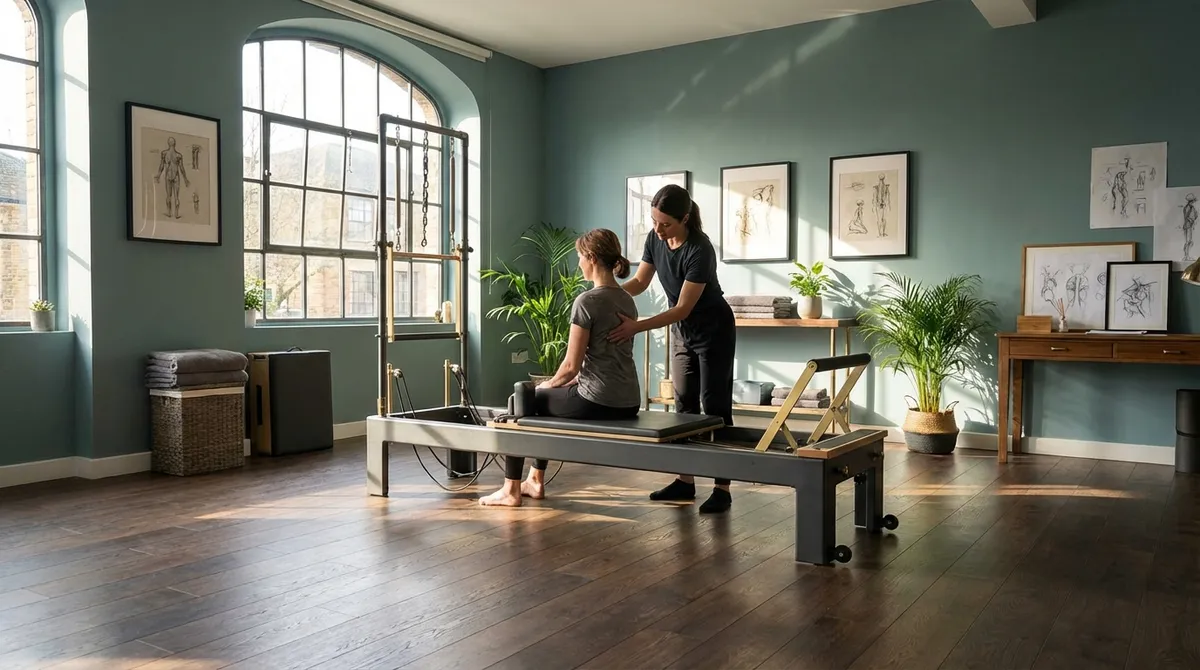
Back pain is often treated as something to “get through.” In reality, it is something to rebuild from—with discernment, intention, and a quietly rigorous plan. Exercise therapy, when curated with precision, is less about generic workouts and more about restoring the spine as if it were a finely engineered structure: responsive, stable, and capable. This is not about training harder; it is about training smarter, with small, deliberate inputs that change how your back behaves under real-world demands.
Below are five exclusive, nuanced insights into exercise therapy for back care—designed for those who are no longer satisfied with broad advice and are ready for thoughtful, elevated solutions.
The First Upgrade: Training Your Nervous System, Not Just Your Muscles
Most back-care advice focuses on “strengthening your core.” Essential, yes—but incomplete. Exercise therapy at a higher level begins with the nervous system: how your brain organizes movement, predicts load, and regulates tension.
When you move, your nervous system is constantly deciding which muscles to activate, how much, and in what sequence. Back pain often emerges not just from “weakness” but from poor coordination, over-protective guarding, and faulty movement patterns encoded over months or years. This is why two people can have similar MRI findings yet experience completely different levels of pain and function.
Precision exercise therapy uses controlled, low-load movements to retrain these patterns. Think of slow, carefully cued hip hinging, segmental spinal mobility work, or asymmetrical exercises that teach your body to decouple hip motion from lumbar motion. The goal is not exhaustion—it is refinement. Done correctly, these sessions feel almost meditative: you are not forcing your back to be stronger; you are teaching it to be smarter.
In practice, this often means:
- Smaller ranges of motion with immaculate control
- Movements performed just below the threshold of pain, not through it
- Emphasis on how transitions feel—getting into and out of positions, not only holding them
- Frequent, short bouts of practice rather than rare, heroic sessions
This nervous-system-first approach builds a foundation of safety and confidence, which is the prerequisite for any meaningful structural change.
Micro-Loading: The Art of Subtle, Strategic Stress
Exercise therapy for the back is less about heavy lifting and more about right-sized loading. The spine responds exquisitely to load when it is applied with discernment. Too little, and tissues remain deconditioned and sensitive. Too much, and you amplify pain and guarding. The refined middle ground is micro-loading: small, intentional doses of stress that the body can absorb and adapt to without alarm.
Micro-loading might look like:
- Elevating your torso a few centimeters higher in a prone extension exercise
- Adding a 1–2 kg weight to a previously bodyweight-only hip hinge
- Holding a side plank 5–10 seconds longer than last week—then stopping while it still feels controlled
- Walking a slightly longer distance or on a subtly varied terrain
What distinguishes micro-loading from casual progression is precision and tracking. You adjust one variable at a time—duration, range, resistance, or speed—rather than all at once. This creates a data-rich environment where you can read your body’s response with clarity rather than guesswork.
Over time, micro-loading:
- Desensitizes irritable tissues
- Improves tolerance to everyday activities like lifting, bending, and sitting
- Rebuilds trust in your back, which is often the most powerful “treatment” of all
In a premium care context, micro-loading feels less like rehab and more like a bespoke training program, where every progression has a rationale—and every session respects your nervous system’s limits.
Posture in Motion: Curating the Transitions, Not Just the Positions
Static posture—how you sit or stand—is only part of the story. Many backs do reasonably well at rest and fail during transitions: rising from a chair, turning to reach a bag in the car, bending to load the dishwasher, or twisting while carrying a child. This is where refined exercise therapy excels: it trains posture in motion, not just posture at rest.
The spine rarely moves in isolation. In reality, your hips, pelvis, ribs, and shoulders share the load. Back pain often emerges when one region becomes stiff or weak, forcing the lumbar spine to compensate. Thoughtful exercise therapy examines how you navigate everyday transitions and reconstructs them as trainable skills.
Consider:
- Practicing a pristine hip hinge pattern before you ever pick up a weight
- Training controlled rotation—seated or standing—before expecting your spine to tolerate twisting under load
- Breaking down a movement like “getting up from the floor” into progressive, supported drills
Rather than simply prescribing “core exercises,” a sophisticated program reverse-engineers the specific transitions that trouble you: getting out of bed, into a car, onto a low chair. These are then rehearsed under increasingly realistic conditions—first supported, then partially loaded, then integrated into your daily life.
You are not just becoming “stronger”; you are becoming more elegant in motion. Your spine learns to share the workload intelligently with the rest of your body, and the sense of fragility begins to dissolve.
Precision Breathing: The Hidden Lever for Spinal Stability
One of the most underestimated tools in exercise therapy for back care is breathing—specifically, how your breath coordinates with your trunk, ribs, and pelvis. This is not a wellness cliché; it is biomechanics.
The diaphragm, pelvic floor, deep abdominal muscles, and spinal stabilizers form a pressure system that supports your spine from the inside. When this system is synchronized, your trunk functions like an intelligent, adaptive cylinder—stiffening when you need support, yielding when you need mobility. When it is disorganized, your back often compensates with excess muscular tension, bracing, or instability.
Refined exercise therapy includes:
- Diaphragmatic breathing in varied positions (supine, sidelying, quadruped, tall kneeling)
- Coordinating exhalation with effort (for example, breathing out during the “hard part” of a lift or transition)
- Training subtle rib mobility so your trunk can expand and compress efficiently
- Reducing habitual breath-holding during everyday tasks, which often masquerades as “core engagement”
An elegant hallmark of this work is that it doesn’t look dramatic from the outside. You might simply appear to be lying on your side, breathing with intention. Internally, however, you are recalibrating pressure, restoring balance between front and back musculature, and teaching your spine how to be held with less brute force and more intrinsic support.
The result is a quieter, more confident back—one that is supported from within, not simply gripped from without.
Your Personal Movement Signature: Designing a Back-Care Identity, Not a Phase
Perhaps the most exclusive insight of sophisticated exercise therapy is this: the aim is not to “finish rehab.” The aim is to establish a movement identity—a set of non-negotiable practices that define how you inhabit your spine long term.
For many, back pain creates a fragmented relationship with movement: bursts of intense effort when pain spikes, followed by long periods of avoidance when it eases. This on–off pattern is the opposite of what your spine needs. A premium approach replaces episodic crisis management with consistent, almost ritualized practice.
This might include:
- A 7–12 minute daily spine-care sequence—small enough to feel effortless, refined enough to matter
- A weekly “maintenance session” focused on mobility and coordination rather than heavy loading
- Thoughtfully chosen anchor movements (for example, a hip hinge, a supported bridge, a gentle rotation drill) that you return to over years, not weeks
- A personal rule set: “No heavy lifting without a warm-up,” or “If I sit more than 45 minutes, I move for two”
Over time, these choices form a movement signature that is uniquely yours. Exercise therapy graduates from something that is done to you or prescribed for you into a personal standard you uphold—quietly, consistently, without drama.
The most telling sign of success is subtle: your back stops being the central character in your day. It becomes a well-maintained, responsive structure that supports your life rather than dictating it.
Conclusion
Elevated back care is not about dramatic transformations or punishing workouts. It is about precision: teaching the nervous system new patterns, loading the spine in carefully measured doses, refining transitions, leveraging breath, and curating a movement identity that endures.
Exercise therapy, approached in this way, is less like rehab and more like craftsmanship. You are not merely “fixing a problem”; you are designing the way your spine will carry you through the next decade. With thoughtful progression, micro-refinements, and an unwavering respect for subtlety, your back can evolve from a source of worry into a quietly reliable asset—elegant, capable, and intelligently rebuilt.
Sources
- American Physical Therapy Association – Guide to Physical Therapy for Low Back Pain – Overview of how targeted exercise and physical therapy support back pain management and function
- National Institute of Neurological Disorders and Stroke – Low Back Pain Fact Sheet – Detailed explanation of causes, risk factors, and evidence-based approaches to low back pain
- Harvard Health Publishing – 6 Exercises for Lower Back Pain – Practical illustration of how specific exercises can improve spinal support and mobility
- Mayo Clinic – Back Pain: Self-Care – Guidance on activity, movement, and exercise as part of everyday back pain self-management
- The Lancet – Low Back Pain Series – Research series summarizing global evidence on low back pain, emphasizing active management and exercise-based approaches
Key Takeaway
The most important thing to remember from this article is that this information can change how you think about Exercise Therapy.