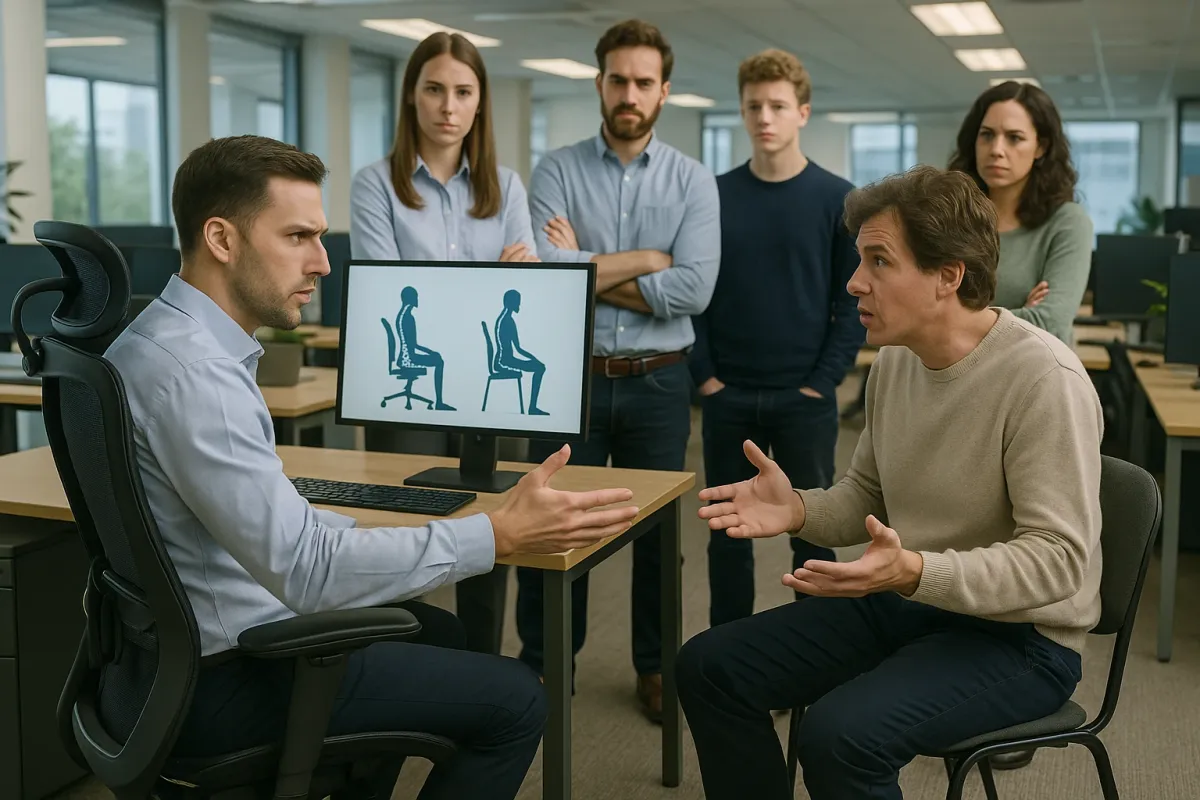
A recent viral story on Bored Panda—about an employee whose $1,800 Herman Miller Aeron kept “disappearing” into a colleague’s cubicle until the situation escalated to an on-the-spot arrest—has done more than entertain the internet. It has quietly exposed a deeper cultural truth: we are entering an era where high‑end ergonomic seating is no longer a luxury accessory, but a fiercely defended necessity.
Beyond the drama of ownership and office politics, this incident underscores a pivotal shift. As hybrid work reshapes how and where we sit, sophisticated back care is emerging as part status symbol, part self‑preservation strategy. If an $1,800 chair can ignite this level of conflict, it is time to ask: what does genuine, premium ergonomics actually look like—and how can you claim it without the chaos?
Below are five refined, actionable insights inspired by this very real moment in workplace culture—designed for those who value both their spine and their standards.
1. Ergonomics as “Personal Infrastructure,” Not Office Furniture
The now‑famous Aeron dispute highlights a generational shift: professionals increasingly treat their bodies as core infrastructure, not expendable assets. That $1,800 price tag isn’t about indulgence—it’s an investment in the daily environment that shapes spinal health, productivity, and long‑term resilience.
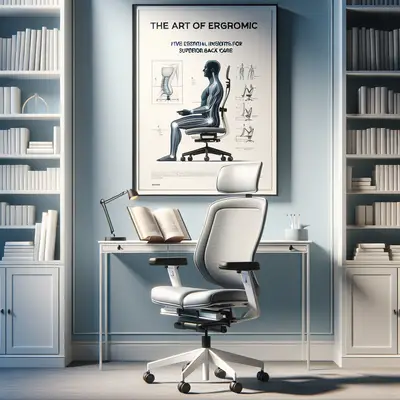
High‑performing professionals are beginning to curate their workstations the way connoisseurs curate collections: chairs with adjustable sacral support, desks with seamless sit‑stand transitions, monitor arms set to precise eye height. In this context, an ergonomic chair is closer to a finely tuned instrument than a shared commodity. The lesson is simple: if your career demands long hours at a desk, your seating is not office décor; it is clinical equipment for your spine. Treat it—and advocate for it—as essential infrastructure, not interchangeable furniture.
2. The Science Behind “Luxury Seating”: What You’re Really Paying For
The internet fixated on the price tag of the Aeron, but the more relevant question is: what, precisely, does a high‑end ergonomic chair give your back that a budget seat cannot? The answer lies in three quiet but powerful design decisions.
First, dynamic support: premium chairs are engineered to move with you, preserving the natural curves of the spine as you lean, pivot, and shift. This reduces the micro‑fatigue that accumulates in your lumbar discs and paraspinal muscles. Second, pressure distribution: advanced mesh or contoured foam disperses load away from the sit bones and lower back, reducing the risk of stiffness, numbness, and sciatic irritation during long sessions. Third, configurability: high‑end models typically allow nuanced adjustments—seat depth, tilt tension, lumbar height, armrest breadth and pivot—enabling a close match to your unique proportions. You are not paying for a brand label; you are paying for the ability to fine‑tune a daily, spine‑shaping environment.
3. The New Etiquette of Ergonomics: Why “Just Borrowing Your Chair” Isn’t Harmless
At first glance, the story of a coworker repeatedly commandeering an $1,800 chair seems comical. But for anyone managing chronic back pain or a history of disc issues, this is not a trivial offense—it’s an assault on a carefully maintained therapeutic setup.
Ergonomic equipment is increasingly prescribed or recommended in clinical settings for people with lumbar disc disease, spinal stenosis, or post‑surgical recovery. Disrupting someone’s tailored chair height, lumbar positioning, or armrest configuration can undo the subtle balance that keeps pain in check through a workday. The new etiquette is clear: an ergonomic chair is not communal; it is akin to someone’s orthotic insoles or prescription lenses. Respecting boundaries around specialized seating is part of a more enlightened, health‑literate office culture—one that understands that comfort is not a luxury, but a clinical necessity for many.
4. Hybrid Work Demands “Dual‑Site” Ergonomic Strategy
The viral chair saga unfolded in a traditional office, yet most knowledge workers now divide time between the corporate floorplate and the home environment. What the story does not show—but strongly implies—is that investing all your ergonomic sophistication in one location is no longer enough.
Your spine does not differentiate between your company’s lease and your living room. If you sit on a premium chair at work but slump into a non‑adjustable dining chair or soft sofa at home for remote days, your back experiences volatility, not consistency. A modern, premium approach to ergonomics involves a dual‑site strategy: a carefully configured primary chair at the office, and a thoughtfully selected, supportive setup at home—perhaps not identical, but aligned in principles. This continuity of support is what protects the spine over months and years, not isolated islands of comfort.
5. From Status Object to Silent Ally: Choosing Ergonomics That Truly Serve Your Spine
The spectacle of a high‑end chair becoming a contested office trophy risks obscuring what matters: the goal is not to own an impressive object, but to curate a silent ally for your spine. Not every back requires an Aeron, and not every expensive chair is ergonomically intelligent.
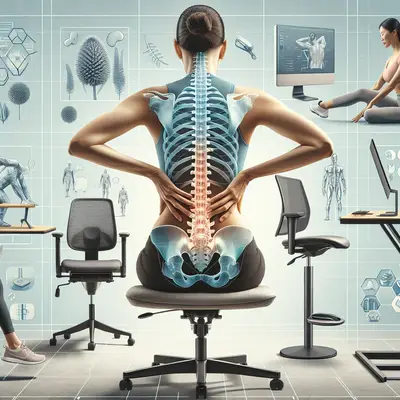
When selecting your setup, anchor your decision in three guiding questions: Does this chair allow my pelvis to sit slightly anteriorly tilted, supporting my natural lumbar curve without effort? Can I keep my feet fully grounded, knees near 90 degrees, and shoulders relaxed without shrugging toward the armrests? Does the chair encourage subtle movement—micro‑reclines, small shifts—rather than locking me into static postures? Chairs and desks that answer “yes” to these questions may vary widely in aesthetic and price, but they share one essential trait: they prioritize spinal health over spectacle.
Conclusion
A disappearing $1,800 Aeron and an unexpected office arrest may seem like the stuff of internet folklore, but beneath the headlines lies a sophisticated truth: we are renegotiating the value of our backs in real time. As more people invest in elevated ergonomic environments—whether in glass towers or home studies—the line between luxury and necessity is quietly dissolving.
True ergonomic refinement isn’t about owning the most talked‑about chair in the room. It is about creating a coherent, respectful ecosystem around your spine—one that recognizes your seating as personal infrastructure, honors the science behind support, and extends that thoughtfulness across every place you work. In a world where a chair can start an office scandal, claiming deliberate, premium care for your back may be the most understated power move of all.
Key Takeaway
The most important thing to remember from this article is that this information can change how you think about Ergonomics.