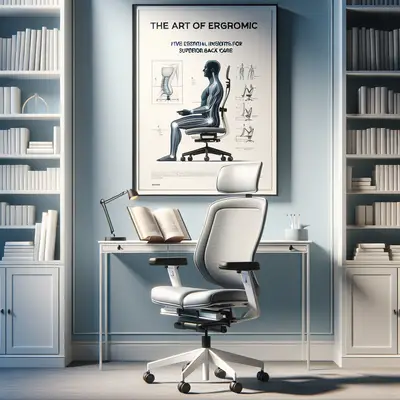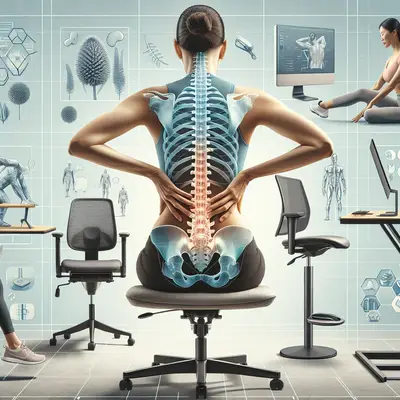
Back comfort is no longer a niche concern; it is a quiet marker of how intentionally we live. In a world that celebrates relentless productivity, ergonomics becomes an act of discernment—a choice to curate not just what we do, but how our body inhabits every moment. Thoughtful ergonomics is not about elaborate gadgets or clinical checklists; it is about precise, elegant adjustments that let your spine move, rest, and sustain you with understated ease.
Below are five exclusive, often-overlooked ergonomic insights for those who are serious about protecting and refining their back health.
1. Micro-Mobility: The Missing Layer in “Good Posture”
The traditional notion of “sit up straight” has quietly failed many people with back issues. Static perfection—holding one ideal posture—is not the goal. The spine is designed for movement, not for being locked into a single position for hours at a time.
Micro-mobility is the concept of weaving subtle, almost invisible movements into your seated and standing life: a slow pelvic tilt while reading an email, a gentle weight shift from one foot to the other during a call, a small thoracic extension when you glance away from the screen. These are not “exercises” in the formal sense; they are micro-corrections that keep joints nourished, discs hydrated, and muscles from stiffening into pain.
A refined ergonomic setup respects this need for movement. Your chair should allow a slight recline and responsive back support, your desk should have enough depth for you to change your distance from the screen, and your day should be punctuated with brief posture “refreshes” rather than heroic, once-a-day workouts. When you think of ergonomics as dynamic choreography instead of a frozen pose, your back is far more likely to feel supported rather than disciplined.
2. The Quiet Power of Visual Ergonomics
Many people obsess over chairs and ignore what their eyes are silently dictating to their spine. Visual ergonomics—the relationship between your eyes, your screen, and your environment—often determines whether your neck and upper back are in harmony or in constant strain.
When the screen is even slightly too low, your head drifts forward; slightly too far, your shoulders roll and your mid-back collapses; too bright or high-contrast, and you lean in, compressing the cervical spine. Over time, this subtle forward creep can be more punishing than a single heavy lift in the gym.
Elegant visual ergonomics involves precise calibration: the top of your screen approximately at or just below eye level, at an arm’s length distance, with brightness matched to the room so your eyes are not straining. Secondary devices—laptops, tablets, phones—should be elevated rather than used flat on a desk or lap for extended periods. Thoughtful lighting that avoids glare, harsh shadows, or reflections not only protects your eyes but also reduces the unconscious neck craning that accumulates into pain.
The sophisticated approach is to treat your line of sight as a structural element. When the eyes are well-positioned, the head, neck, and spine are invited into alignment rather than forced into it.
3. Ergonomic Zoning: Designing Spaces for Specific Spine Behaviors
We often treat ergonomics as something that happens only at a desk. In reality, your spine is negotiating multiple “zones” throughout the day: work, leisure, transit, rest. Each zone demands a different type of support, and elegant back care recognizes these distinctions instead of forcing one posture solution onto every context.
Consider creating ergonomic zones in your environment:
- A focused work zone with a calibrated chair, desk height, and screen alignment that supports upright, alert posture.
- A contemplative reading zone with a high-backed chair or chaise that supports the mid- and upper-back, with arm support so the book or tablet does not drag your neck forward.
- A recovery zone—perhaps a firm, supportive sofa corner or floor setup with cushions—where the lumbar spine can rest in neutral, and the legs can be elevated periodically to reduce spinal load.
For those with back issues, this zoning is more than aesthetic. It prevents the common trap of using a soft sofa designed for lounging as an all-purpose workstation, or working from bed in a posture that undermines both spinal health and sleep quality. When each space in your home has a clear postural intention, your spine encounters less chaos and more predictable, supportive patterns throughout the day.
4. Precision in Transitions: The Overlooked Moments That Hurt Most
People often associate back pain with sitting too long or lifting too heavily. Yet many flare-ups arise in the in-between moments: leaning to pick something off the floor, twisting to grab a bag from the car seat, rising too quickly from a low sofa. These are transition moments, and they are where refined ergonomics quietly shines.
Ergonomic excellence extends to how you:
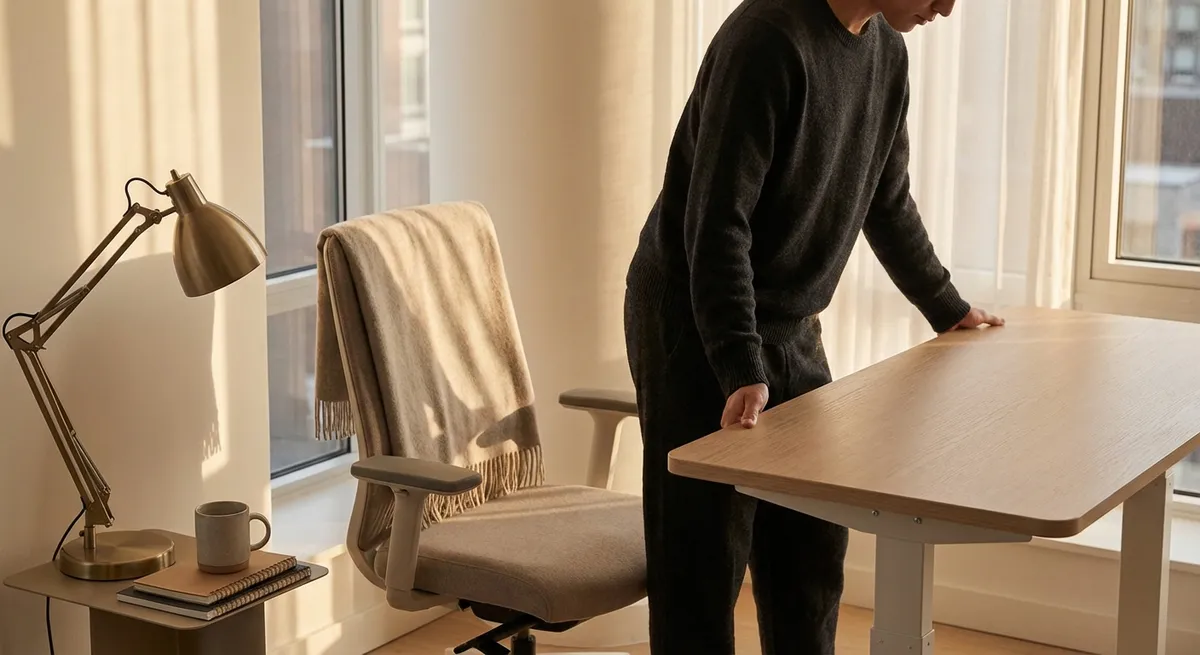
- Stand up from a chair—bringing your feet slightly back, hinging at the hips, and using your legs rather than rounding your spine.
- Shift in bed—rolling to your side and using your arms to assist, rather than jackknifing straight up from your back.
- Reach for objects—stepping closer or pivoting the whole body instead of twisting only through the lumbar spine.
These micro-rituals may feel almost ceremonial at first, but they quickly become second nature. The spine thrives on alignment during movement just as much as during stillness. For someone managing back issues, refining these transitions can mean the difference between a stable day and a sudden, bewildering spike in pain.
Viewed this way, ergonomics is less about furniture and more about choreography—how the body travels through the everyday spaces and tasks you take for granted.
5. Curated Surfaces: How Texture, Firmness, and Depth Shape Your Back
People often reduce ergonomic surfaces to “soft” versus “firm.” The reality is far more nuanced. The surfaces you sit and lie on—chairs, cushions, car seats, mattresses—communicate constantly with your spine through texture, firmness, and depth.
A chair that is too soft lets the pelvis sink, leaving the lumbar spine unsupported and the upper body straining to stay upright. One that is excessively hard may trigger compensatory tension in the hips and lower back. Similarly, an over-deep sofa invites slouching, while a seat pan that is too short offers insufficient thigh support, tipping the pelvis backward and flattening the natural curve of the lower back.
A more sophisticated approach is to curate:
- Selective firmness: choosing surfaces that feel supportive rather than indulgent, especially for prolonged sitting.
- Thoughtful layering: using a lumbar roll, a slim cushion, or a folded towel selectively instead of relying on built-in shapes that may not match your body.
- Intentional variety: alternating between different well-chosen surfaces throughout the day (ergonomic chair, standing desk, supported floor sitting) to distribute load and avoid repetitive pressure points.
For those living with back issues, the goal is not to create a padded world but to create a responsive one—where surfaces are chosen, adjusted, and occasionally rotated with the same discernment you might bring to curating an art collection or wardrobe.
Conclusion
Ergonomics, at its highest expression, is not a set of rules but a cultivated awareness of how your spine participates in every aspect of daily life. Micro-mobility, visual alignment, ergonomic zoning, refined transitions, and curated surfaces together form a quiet, powerful architecture of support.
When you treat back care as a matter of precision rather than crisis, the body responds with less pain, more ease, and a deeper sense of physical confidence. In that sense, ergonomics becomes a discreet luxury: a sophisticated, everyday investment in how gracefully you inhabit your own life.
Sources
- National Institute of Neurological Disorders and Stroke – Low Back Pain Fact Sheet - Overview of causes, risk factors, and management of low back pain
- Mayo Clinic – Office Ergonomics: Your How-To Guide - Practical recommendations for setting up a healthy workspace
- Occupational Safety and Health Administration (OSHA) – Computer Workstations eTool - Detailed guidance on positioning, equipment, and postural adjustments
- Harvard Health Publishing – The Best Ways to Prevent Back Pain - Evidence-based strategies for back pain prevention and daily habits
- Cleveland Clinic – Posture: Why It’s Important and How to Improve It - Discussion of posture’s role in musculoskeletal health and practical tips for improvement
Key Takeaway
The most important thing to remember from this article is that this information can change how you think about Ergonomics.