Back pain rarely announces itself with fanfare. It shows up quietly—an ache after a meeting, a stiffness on waking, a reluctance to twist or bend. True ergonomic care is equally discreet: not loud gadgets or gimmicks, but a series of refined choices that quietly protect the spine all day long.
This is ergonomics as lifestyle—thoughtful, elegant and deeply intentional. Below are five exclusive, often-overlooked insights that people already familiar with back issues will recognize as game-changers rather than generic advice.
Ergonomics as a 24‑Hour Ecosystem, Not a Single Chair
For many, “ergonomics” begins and ends with an office chair. In reality, your spine experiences a 24‑hour ecosystem: how you sit, stand, walk, lift, rest and even scroll your phone are all interlinked moments in a single narrative.
Think of your spine the way you would a fine mechanical watch—precision depends on the entire system being aligned, not one component. A perfectly adjusted desk loses its value if your commute is spent slumped over a steering wheel, or your evenings are spent twisted on a sofa that collapses in the middle.
Elevated ergonomic care means mapping your day:
- Morning: is your first move to your phone in bed, neck flexed sharply?
- Work: do you shift between sitting, standing and brief walks, or remain in one posture for hours?
- Transit: does your car seat or train posture undo the care you’ve taken at your desk?
- Evening: are you “relaxing” in ways that compress or twist your lower back?
- Night: does your mattress and pillow setup honor your spinal alignment?
When back issues are already present, consistency matters as much as correctness. It’s the accumulation of small positional wins—spread across the day—that creates durable relief.
Micro‑Gravity Moments: Reducing Spinal Load Without Fully Lying Down
People with back pain often sense when their spine wants “off‑loading”—a break from gravity—but fully lying down may not be possible or practical. This is where “micro‑gravity” strategies become quietly transformative.
These brief, intentional positions reduce spinal load without requiring a full rest break:
- Reclined break at 120–130°: Slightly reclining your chair (with lumbar support maintained) can reduce disc pressure compared with strict 90° sitting.
- Supported foot elevation: Elevating the feet on a low stool while seated can subtly tilt the pelvis and decrease lumbar strain for some individuals.
- Desk‑edge forearm support: Allowing forearms to rest fully on the desk offloads shoulder and upper back muscles, reducing the tendency to hunch.
- Wall‑lean reset: Standing with your back gently against a wall—head, shoulder blades, and pelvis lightly touching—offers a brief, supported “alignment check” during the day.
These micro‑gravity moments function like small, strategic exhale points for your spine. Over time, the cumulative reduction in load and muscle guarding can mean fewer flares and less end‑of‑day exhaustion.
The Precision of Angles: Why “Almost Right” Still Irritates Your Spine
Many people with recurrent back issues discover the hard way that “close enough” alignment is not actually enough. A monitor that is two inches too low, a keyboard pulled slightly too far forward, or an office chair that is just a few degrees off can all shift load to already vulnerable structures.
Three often-misjudged details:
Screen height and distance
The ideal is roughly arm’s length away, with the top of the screen at or just below eye level. Too low, and your neck flexes; too high, and you extend and tense the upper back. This is not about comfort in the moment, but cumulative strain over months and years.
Hip, knee and ankle geometry
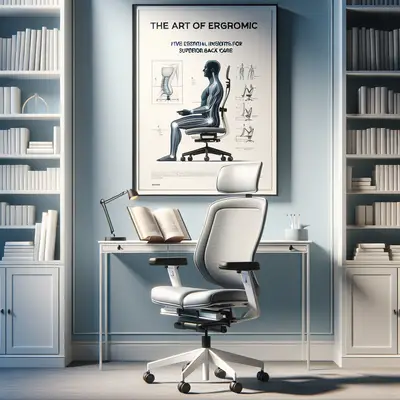
Aim for hips slightly above knee height with feet fully supported—not dangling, not tucked. This allows the pelvis to rest in a neutral orientation, reducing lumbar compression. Even a small footrest can prevent subtle forward sliding that rounds the lower back.
Desk height relative to elbow angle
When your forearms rest on the desk at about 90°–100°, shoulders stay relaxed. If the desk is too high, shoulders elevate; too low, and you lean down, rounding the spine. That extra centimeter of adjustment often distinguishes “fine for now” from “aches every evening.”
For backs that have already been irritated or injured, precision is not a luxury; it’s protection. The body often tolerates imperfection—until it doesn’t.
The Elegance of Planned Micro‑Movement, Not Restless Fidgeting
You may already know that “sitting is the new smoking” is an oversimplification—but prolonged stillness in any one position does strain the spine. Yet the solution isn’t random fidgeting; it’s curated micro‑movement.
Think of it as a choreography for your back:
- Posture swaps, not posture fixes: Instead of obsessing about one ideal posture, rotate through 3–4 “good enough” postures: upright sitting, slight recline, forward-lean (with forearm support), brief standing.
- Timed resets, not heroic marathons: Use subtle cues—calendar reminders, a sip of water, finishing an email—to stand, stretch or walk for 60–120 seconds. These small resets are more sustainable than sporadic, intense stretching sessions.
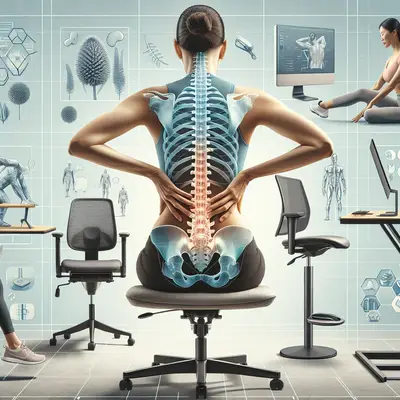
- Targeted relief moves: Gentle pelvic tilts while seated, ankle pumps, shoulder blade squeezes and chin tucks can nourish the spine and surrounding musculature without drawing public attention or interrupting workflow.
- Task‑based variation: Reserve standing for calls or reading, seated posture for focused typing, and walking for brief planning or creative thinking when possible.
This micro‑movement is quiet and deliberate, not restless. It respects that a sensitized spine prefers many nearly-neutral positions, lightly visited, rather than heroic attempts to hold one “perfect” posture all day.
The Silent Weight of Digital Devices: How Your Spine Pays for Every Scroll
For those already managing back or neck pain, phone and laptop habits can silently undo the most carefully curated desk setup.
Key refinements that matter disproportionately when your spine is vulnerable:
- Phone at chest or eye level: The difference between looking down at 45° and holding the phone slightly higher can mean tens of extra pounds of effective load on the cervical spine. Over time, this accelerates discomfort and muscle fatigue.
- Laptop hierarchy: If you must choose between ergonomics for the neck vs. the wrists, prioritize the spine and neck—use a laptop stand or stack of books to elevate the screen, then add an external keyboard when possible.
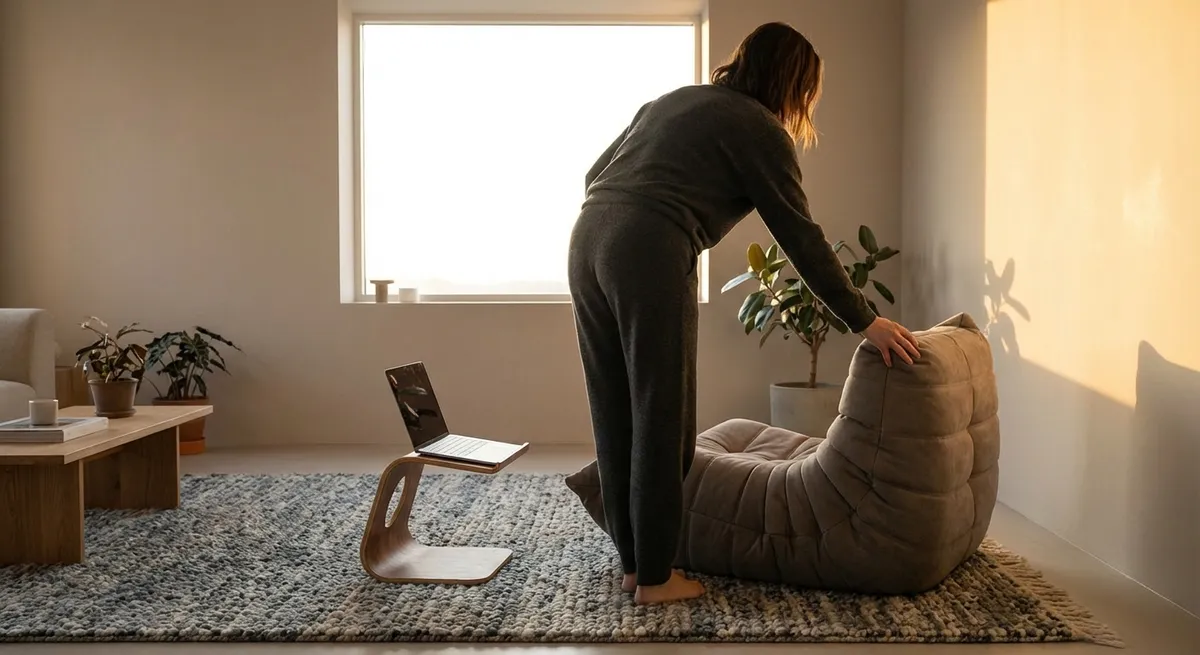
- Bed and sofa boundaries: Long sessions hunched over a laptop in bed or twisted on a sofa are especially risky for people already dealing with back issues. Reserve these positions for very short use, and shift work to a more structured, supported setup whenever possible.
- “Transition rituals”: Before and after extended device use, perform one or two simple, spine-friendly movements: gentle neck rotations, shoulder rolls, and a brief chest-opening stretch. This signals the body to reset rather than accumulate tension.
Digital life is not going away. The question becomes: how do you make your devices answer to your spine, rather than the other way around?
Conclusion
Elevated ergonomic care is not theatrical. It is discreet, precise and deeply personal—an ongoing conversation between your spine, your environment and your habits.
For someone who already knows what back pain feels like, the refinement lies in the details: how many minutes you stay in one posture, how precisely your angles line up, how thoughtfully you break gravitational load, and how quietly your digital routines are redesigned to honor your spine.
Ergonomic living, at its most sophisticated, is not about perfection. It is about never asking your back to pay the price for thoughtless design again.
Sources
- National Institute of Neurological Disorders and Stroke – Low Back Pain Fact Sheet – Overview of causes, risk factors and management principles for low back pain.
- NIOSH (CDC) – Simple Solutions: Ergonomics for Office Workers – Evidence-informed recommendations on workstation setup, posture and movement.
- Mayo Clinic – Office Ergonomics: Your How-To Guide – Practical guidance on arranging chairs, desks and screens to reduce back and neck strain.
- Harvard Health Publishing – Is Sitting Really the New Smoking? – Nuanced discussion of sitting, movement and health risks, relevant to prolonged desk work.
- UCSF Health – Back Pain and Ergonomics – Clinical perspective on how ergonomic adaptations can help prevent and manage back pain.
Key Takeaway
The most important thing to remember from this article is that this information can change how you think about Ergonomics.