In an age where our bodies are often tethered to screens, seats, and schedules, ergonomics is no longer a niche concern—it is the quiet architecture that determines whether your day feels refined or relentlessly draining. For those already familiar with back discomfort, the difference between “acceptable” and “exquisite” ergonomics can be the difference between simply coping and truly functioning at a higher level. This is not about purchasing the most expensive chair or gadget; it is about orchestrating the way your body, environment, and attention meet. The following refined strategies are designed for people who live with back issues and expect more from their workday than mere endurance.
Beyond the Chair: Designing a Three-Dimensional Work Envelope
Most ergonomic conversations begin and end with the chair. For a back already under strain, that is far too narrow a lens. What matters is the three-dimensional “work envelope”—the space your hands, eyes, and torso occupy across a typical day.
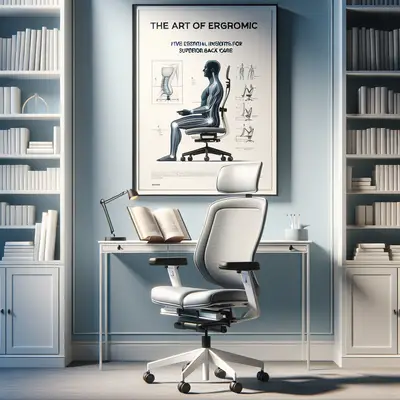
An elevated setup positions your primary tools—keyboard, mouse, documents, and screen—within a comfortable arc that your arms can reach without your shoulders lifting or your spine twisting. Imagine everything you use most often arranged within a shallow semicircle at elbow height, so you never have to lean or reach with a rounded back. Your monitor should meet your gaze without your neck pitching forward; your hips should sit slightly higher than your knees, allowing the pelvis to tilt gently forward to support the spine’s natural curves.
For someone with back issues, this envelope becomes more than convenience—it is protection. Each unnecessary reach, twist, or neck crane is a small tax on a system that is already overburdened. When your tools come to you, rather than you contorting toward them, the spine is allowed to remain composed and supported. The result is not only less pain, but more precise, sustained focus.
Insight 1: Micro-Postures—The Luxury of Subtle Movement
Static “perfect posture” is a myth that punishes people with back problems. The body is not designed for stillness; it thrives on subtle, continuous adjustments. Micro-postures are the small, nearly invisible shifts in position that maintain blood flow, reduce muscle fatigue, and keep the spine nourished.
Instead of chasing a single ideal sitting position, cultivate a repertoire of acceptable positions within a healthy range: slightly more upright, slightly more reclined, feet sometimes flat, sometimes gently propped on a low footrest. The elegance lies in rotating among them every 10–20 minutes. For example, you might work upright for focused typing, recline a few degrees for reading, and lightly shift your weight from one sit bone to the other during calls.
For those managing back pain, micro-postures can be transformative. They reduce the load on any single structure—disc, ligament, or muscle group—so no one part of the back absorbs all the demand. Over the course of a day, these tiny adjustments function like a series of micro-breaks for your spine, maintaining comfort without interrupting your flow. The refined back is not still; it is quietly adaptive.
Insight 2: The “Transition Zones” That Make or Break Your Spine
Ergonomics often focuses on where you work, but not how you move between your environments. For a sensitive back, transitions—getting out of bed, entering the car, standing from a low chair—are where many aggravations begin.
A sophisticated approach treats these transition zones as design opportunities. The bed height that forces you into a deep bend to stand, the low slung sofa that demands a spinal “curl” to rise, or the car seat that requires twisting as you enter—all of these can be refined. Slightly higher sitting surfaces, a firm cushion on too-soft chairs, a step or small box to make getting into tall vehicles smoother, and positioning the car seat so that you pivot your entire body rather than twisting from the waist can dramatically reduce daily micro-trauma.
For someone with back issues, the day is not defined by one major ergonomic failure but by dozens of unconsidered transitions. When you raise the “floor” of your life—both literally with supports and figuratively with better movement habits—your spine is no longer ambushed by unexpected strain. This is ergonomics that extends beyond the desk, into the choreography of everyday movement.
Insight 3: Intelligent Resting Positions—Not Just “Lying Down”
Rest for the back is not synonymous with collapse. When pain is a frequent visitor, the way you lie down, read, or relax can either restore your spine or slowly provoke it.
Intelligent resting positions respect spinal alignment and pressure distribution. Lying on your side with a pillow between your knees can help keep the pelvis and lower back in a more neutral configuration, easing tension in the lumbar region. On your back, a small cushion under the knees can reduce stress on the lumbar curve and provide immediate relief for some. For those who enjoy reading or scrolling in bed, a wedge pillow or adjustable backrest can bring your torso up without forcing your neck into a prolonged forward bend.
The refinement lies in making these positions deliberate rather than accidental. If you know your back is sensitive, keep one or two carefully chosen pillows or supports within arm’s reach of where you typically rest. This turns “I’m exhausted; I’ll just lie down” into a purposeful act of spinal recovery. Over time, these intelligent resting practices can become as restorative as a carefully curated evening routine.
Insight 4: Visual Ergonomics—Protecting the Neck, Preserving the Back
Back pain often begins above the shoulders. When the eyes are strained and the head leans forward to compensate, the cervical spine bears a disproportionate load, which then cascades down the entire back.
Visual ergonomics is the refined, often overlooked discipline of aligning what you see with how your body holds itself. For instance, ensuring your screen is at or just below eye level and at an appropriate distance (usually about an arm’s length) reduces the temptation to crane your neck. Adequate, indirect lighting prevents the subtle forward jutting of the head that often accompanies squinting at a dim or overly bright screen. If you wear glasses, an up-to-date prescription that is optimized for computer distance can eliminate the unconscious tendency to lean closer.
For an already vulnerable back, every extra inch of forward head posture compounds spinal strain. By optimizing what your eyes need—clarity, appropriate brightness, and distance—you reduce the muscular effort required to hold your head and neck in a composed, neutral position. In practice, this can mean fewer tension headaches, less upper back stiffness, and a far gentler load on the lower back.
Insight 5: The Ritual of Reset—Intentional Interruptions for a Calmer Spine
People with back issues know that time is not neutral: an extra thirty minutes in a poor position can echo as pain for hours. The solution is not relentless movement, but strategic interruption—what might be called a “ritual of reset.”
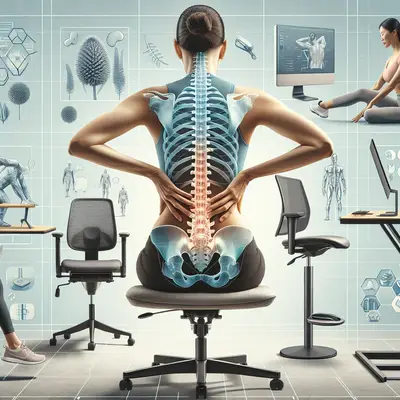
A refined reset practice is minimal, repeatable, and non-disruptive. It may be a standing interval every 30–45 minutes, accompanied by a slow shoulder roll, a gentle spinal extension (placing your hands lightly on your hips and leaning back a few degrees), or a brief walk to the farthest corner of your space. For those in demanding roles, even a 60-second reset can be powerful if done consistently.
What distinguishes a premium approach is integration and subtlety. You might link each reset to a natural break: sending an email, ending a call, or finishing a section of a document. Over time, these resets become as automatic as hitting “save” on your work. For the back that has endured years of neglect, this ritual of deliberate interruption is an elegant counterweight to the inertia of modern work.
Conclusion
Exceptional back care is rarely about a single piece of equipment or a perfect posture frozen in time. It is the sum of countless refined decisions: how your tools meet your body, how you navigate the in-between spaces of your day, how you rest, see, and reset. For those living with back issues, ergonomics is not an aesthetic afterthought—it is a quiet form of self-respect that allows you to participate fully in a demanding life without sacrificing comfort or capability.
By cultivating micro-postures, honoring transition zones, elevating resting positions, refining visual ergonomics, and embracing a ritual of reset, you create more than a workspace. You create a composed environment in which your spine can perform its essential work with less friction and more grace.
Sources
- [National Institute of Neurological Disorders and Stroke – Low Back Pain Fact Sheet](https://www.ninds.nih.gov/health-information/disorders/low-back-pain) – Overview of causes, risk factors, and management strategies for low back pain
- [Occupational Safety and Health Administration (OSHA) – Computer Workstations eTool](https://www.osha.gov/etools/computer-workstations) – Detailed guidance on workstation setup, including monitor, keyboard, and chair positioning
- [Mayo Clinic – Office Ergonomics: Your How-To Guide](https://www.mayoclinic.org/healthy-lifestyle/adult-health/in-depth/office-ergonomics/art-20046169) – Practical recommendations for adjusting workspace elements to reduce back and neck strain
- [Harvard Health Publishing – Back Pain: Prevention and Conservation](https://www.health.harvard.edu/pain/back-pain) – Evidence-based insights into daily strategies to prevent and manage back pain
- [Cleveland Clinic – Ergonomics: How to Make Your Workspace Comfortable and Safe](https://health.clevelandclinic.org/office-ergonomics-how-to-make-your-workspace-comfortable-and-safe) – Clinically informed tips on posture, movement, and workstation design for spinal comfort
Key Takeaway
The most important thing to remember from this article is that this information can change how you think about Ergonomics.