Back pain can feel unruly—loud, intrusive, and indifferent to your schedule. Yet behind that discomfort is often a remarkably coherent message. When approached with intention, pain stops being a tyrant and becomes a guide: a signal to be interpreted, organized, and managed with precision. This is where refined pain management lives—not in denial or dramatic intervention, but in calm, structured stewardship of your body’s most persistent feedback.
Below are five exclusive, practice-ready insights for those who expect more from their back care than one-size-fits-all advice.
Insight 1: Master Your Personal Pain “Signature”
No two backs express distress in exactly the same way. The person who hurts after sitting is not the same as the person who collapses after long walks or wakes up stiff but improves with motion. Treat your pain like a signature—specific, recognizable, and instructive.
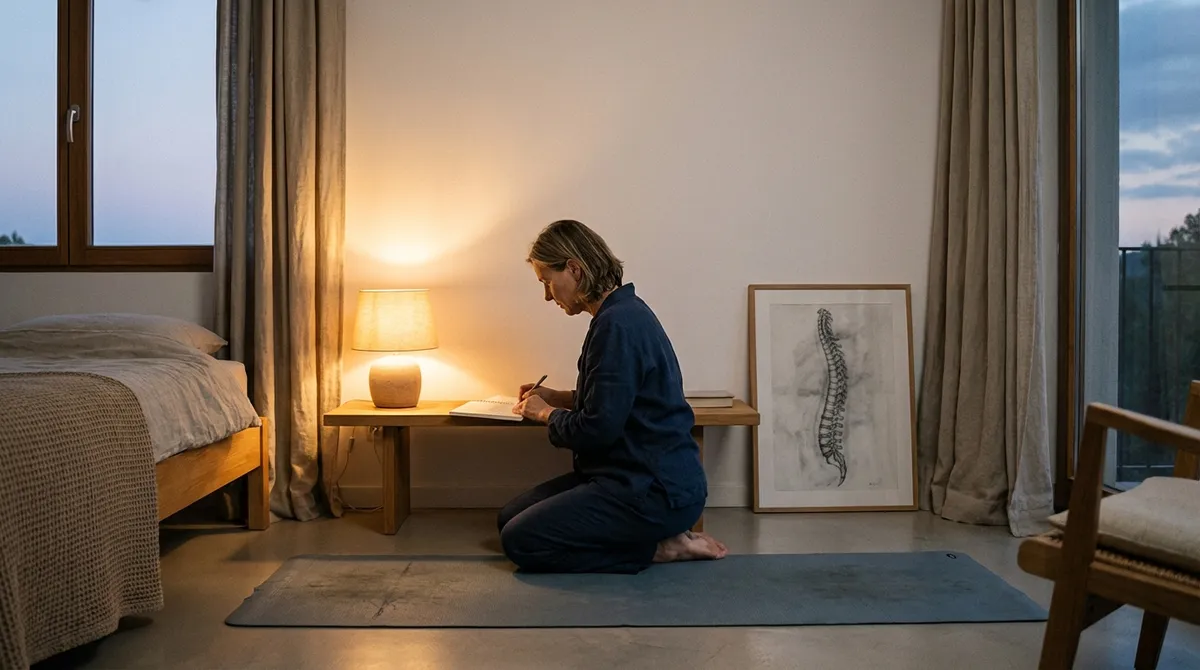
Begin by tracking three details daily for at least two weeks: what you were doing before the pain rose, how the pain feels (sharp, dull, burning, tight, electric), and how long it takes to ease once you adjust. Over time, patterns begin to surface: perhaps your pain announces itself after 20 minutes of sitting, or only on days when sleep was fragmented, or following heavy meals and long drives.
This record becomes a private atlas of your pain behavior. You can then bring this “map” to your clinician, who can make more precise recommendations, adjust medications or exercises with greater accuracy, and avoid guesswork. The sophisticated approach is not more intensity—it’s more information.
Insight 2: Use “Micro-Interventions” Instead of Heroic Fixes
Effective pain management is rarely about one grand solution. It’s about quiet, well-timed adjustments layered through the day—micro-interventions that prevent your nervous system from slipping into full crisis mode.
Instead of waiting until your back is in open revolt, schedule deliberate interruptions to the very behaviors that provoke it. Set structured, recurring cues: a subtle timer every 30–45 minutes to change position, a habit of standing during phone calls, or a rule that every email break includes 30 seconds of gentle spinal movement. Think of them as precision edits to your day rather than disruptions.
Each micro-intervention is modest: a small posture correction, a short walk down the hall, a slow exhale that lowers muscle tension and heart rate, a quick lumbar support adjustment. None of these alone will transform your pain, but together they stop irritation from accumulating into a flare. This quiet, preemptive strategy often separates those who merely cope from those who gradually regain control.
Insight 3: Train Your Nervous System, Not Just Your Muscles
Back pain is not simply a mechanical problem of discs, joints, or muscles. It is also a nervous system phenomenon—a system that can become sensitized, overprotective, and reactive after injury, stress, or prolonged discomfort. Elegant pain management acknowledges this and works on the “software” as carefully as the “hardware.”
Simple, structured practices that calm the nervous system often amplify the impact of physical treatments. Slow, diaphragmatic breathing that lengthens the exhale, guided body scans that help you distinguish discomfort from threat, or brief mindfulness sessions that teach you to observe pain without panicking can all make the nervous system less reactive. Over weeks, your pain threshold may rise—not because your spine is suddenly new, but because your nervous system stops sounding the alarm at every minor input.
When we ignore this dimension, we lean too heavily on injections, medications, or aggressive procedures that may not address the underlying sensitivity. When we include it, manual therapy, exercise, and medical care tend to work better, with fewer dramatic swings between “good days” and “bad days.”
Insight 4: Curate Your Recovery Environment with Intent
Your environment can either constantly provoke your back or quietly protect it. Many people address chairs and mattresses but overlook the full ecosystem their back inhabits—lighting, sound, clutter, workflow, and even how technology is positioned.
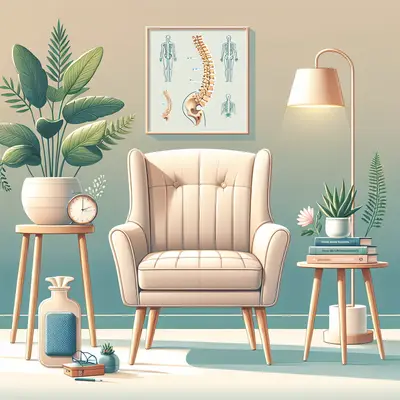
Consider the “recovery footprint” of your home and office: is there a reliably comfortable place where your back can genuinely decompress, or do you simply collapse onto the nearest surface? Are your most-used items positioned so that reaching for them is neutral rather than twisted or strained? Is there a chair or lounge spot where you can adopt a pain-relieving posture without compromising circulation or neck alignment?
You can also be deliberate about sensory inputs: soft but adequate lighting to prevent subtle forward head strain, reduced background noise to limit stress, and an organized space that minimizes repeated bending and awkward reaching. A well-curated environment quietly removes dozens of micro-stresses on your spine each day. Over time, this is often more protective than any single device or gadget.
Insight 5: Adopt a “Negotiation” Mindset Instead of an All-or-Nothing One
Many people manage back pain through extremes: pushing aggressively on good days, then immobilizing themselves on bad days. This “boom and bust” pattern tends to irritate tissue, confuse the nervous system, and erode confidence. A more refined strategy treats activity as a negotiation—calm, measured, and predictable.
Instead of asking, “Can I do this, yes or no?” ask, “How can I do this in a way my back will accept today?” That might mean decreasing duration, lightening the load, breaking the task into segments, or pairing activity with brief recovery intervals. For instance, you might still cook a full dinner, but prepare it in three short sessions rather than one long standing marathon. You still walk, but you select 10 minutes twice a day rather than 25 minutes once, gradually expanding as your back tolerates more.
This negotiation mindset respects both your goals and your limits. It prevents the demoralizing cycles of overexertion and shutdown, and it sends your nervous system a consistent message: movement is safe, deliberate, and manageable—not chaotic and threatening. Over months, this creates a quieter, more cooperative relationship with your back.
Conclusion
Refined pain management is not about living a smaller life; it is about living a more deliberate one. When you understand your personal pain signature, weave in micro-interventions, train your nervous system, curate your environment, and negotiate activity instead of battling it, your back is no longer a saboteur. It becomes a demanding but ultimately knowable partner.
The promise isn’t instant relief—it is steady, dignified progress. With thoughtful strategy and a disciplined calm, back pain can shift from an overwhelming force to a signal you manage with clarity and authority.
Sources
- [National Institute of Neurological Disorders and Stroke – Low Back Pain Fact Sheet](https://www.ninds.nih.gov/health-information/disorders/low-back-pain) – Overview of causes, risk factors, and treatment approaches for low back pain
- [American College of Physicians – Noninvasive Treatments for Acute, Subacute, and Chronic Low Back Pain](https://www.acponline.org/acp-newsroom/american-college-of-physicians-issues-guideline-for-treating-nonradicular-low-back-pain) – Clinical guideline emphasizing noninvasive, multimodal pain management
- [Harvard Health Publishing – Back Pain: How to Reduce Symptoms and Prevent Future Problems](https://www.health.harvard.edu/pain/back-pain) – Practical strategies for managing and preventing back pain, including lifestyle and activity recommendations
- [Mayo Clinic – Chronic Pain: Medication Decisions](https://www.mayoclinic.org/chronic-pain-medication-decisions/art-20360371) – Insight into how medications fit within broader pain management plans
- [Cleveland Clinic – Chronic Pain: What It Is, Causes & Treatment](https://my.clevelandclinic.org/health/diseases/4795-chronic-pain) – Explanation of the role of the nervous system and comprehensive management options for ongoing pain
Key Takeaway
The most important thing to remember from this article is that this information can change how you think about Pain Management.