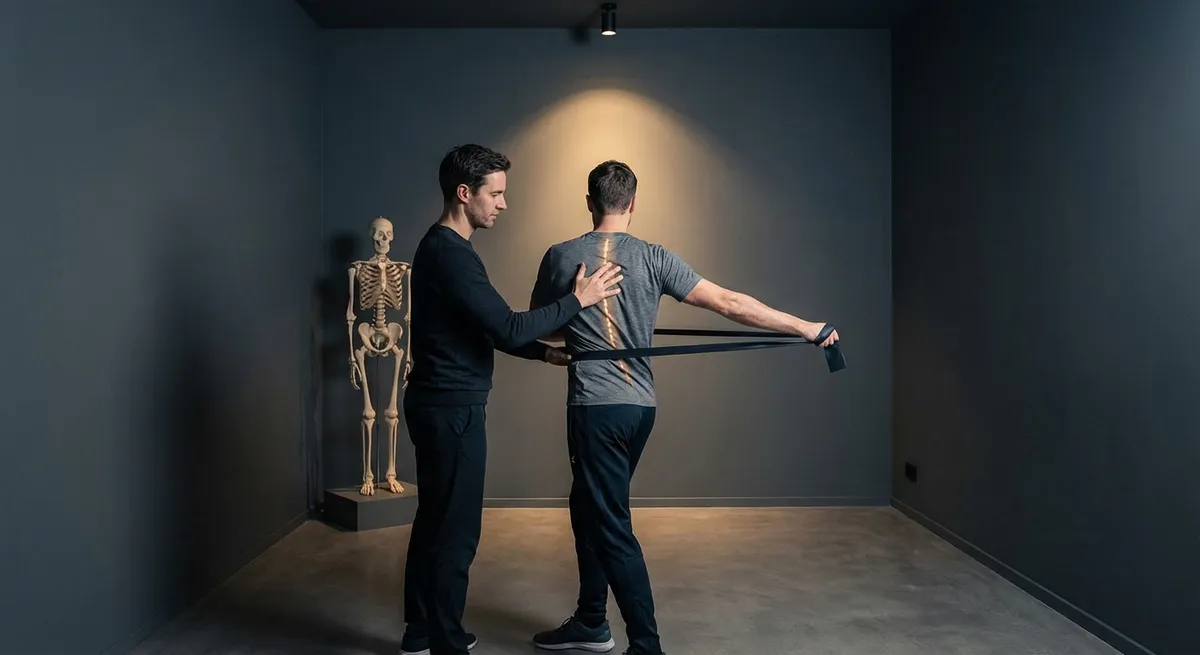
Back pain rarely arrives as a single dramatic event. More often, it is the quiet accumulation of small compromises: the chair that almost fits, the stride that is almost balanced, the workout that is almost aligned. Exercise therapy is where “almost” is methodically upgraded to “exact.” When designed and executed with precision, therapeutic movement becomes less about “working out” and more about curating how your spine experiences every load, every gesture, every day.
This is not generic advice to “strengthen your core.” It is a more exacting standard of care: how you move, how you recover, and how you measure what genuinely helps your back over time. Below are five refined, under‑discussed insights that can transform exercise therapy from something you occasionally attempt into a disciplined framework for protecting a very valuable asset—your spine.
Exercise Therapy as a Diagnostic Lens, Not Just a Treatment
Most people approach exercise therapy as something they do after a diagnosis. Yet for a discerning back‑care approach, the way your body responds to specific movements is itself diagnostic data.
Precise patterns—what eases pain, what worsens it, and what simply feels “different”—can clarify whether discomfort is likely disc‑related, facet‑driven, muscular, or influenced by nerve sensitivity. For example, extension‑based exercises that relieve leg symptoms may hint at a disc component, while rotation intolerance may point elsewhere. This doesn’t replace imaging or professional evaluation, but it provides incredibly rich context.
When you move under the guidance of a skilled physical therapist or exercise specialist, each repetition becomes a micro‑assessment. Are you bracing too early? Are you unable to maintain pelvic neutrality beyond a few seconds? Does your pain arrive after a delay rather than immediately? All of these nuances help refine both diagnosis and treatment.
Instead of thinking “I’m doing my exercises,” consider: “I’m collecting information about my back.” With that mindset, exercise therapy stops feeling like homework and begins to feel like an ongoing, intelligent conversation with your spine.
Precision Over Power: The Luxury of Controlled Load
In a refined exercise‑therapy program, intensity is not the primary metric of success; specificity is. The goal is not to simply get stronger, but to be strong in precisely the positions and patterns your spine must endure in your real life—lifting a suitcase into an overhead bin, standing through a presentation, leaning over a bathroom sink, or navigating cobblestone streets on holiday.
Controlled loading in exercise therapy acts as a luxury test environment for your back. You decide the load, the angle, the tempo, and the duration, and you adjust them deliberately rather than reactively. Isometric holds for the deep trunk muscles, low‑amplitude hip hinging, or carefully progressed single‑leg work can be far more valuable than impressive weight numbers.
Slow tempo is a particularly underrated refinement. Moving deliberately—three to five seconds up, three to five seconds down—reveals compensations you might otherwise miss. Your shoulders shrug, your breath holds, or your lumbar spine subtly flexes when it should not. These are not failures; they are invitations to refine.
A sophisticated approach also respects recovery curves. The aim is to leave sessions feeling composed, not shattered. If your nervous system finishes a session more settled than when you began—breathing slower, tension lower, movement smoother—you are practicing premium‑grade exercise therapy, not just training.
The Micro‑Alignment Advantage: Small Corrections, Outsized Returns
In complex back care, millimeters matter. The distance between a neutral spine and a subtly flexed one during a deadlift, or between a supported pelvis and a slightly rotated one during a bridge, can determine whether you are healing tissue or irritating it.
Micro‑alignment is the quiet art of asking for just enough correction, not perfection. Can you lengthen the back of your neck by a centimeter, soften your ribs a fraction, or adjust your hip position a few degrees? These are small adjustments, but over hundreds of repetitions and thousands of steps, they become structural habits.
Sophisticated exercise therapy privileges sensory detail:
- Feeling the contact points of your feet in the floor, not just “standing”
- Noticing whether your lower ribs flare upward when you raise your arms
- Sensing whether your glutes or your lumbar spine are truly driving your extension
This subtlety also reduces the risk of “bracing as a lifestyle.” Many people with back issues over‑correct by clenching their core almost constantly. A more elevated approach teaches graded support—dialing tension up for a heavy lift, but allowing softness and fluidity for everyday tasks.
Over time, this micro‑alignment practice extends beyond the mat. You start to recognize when your spine is being asked to do the hips’ job, when your shoulders are standing in for your mid‑back, and when your jaw is doing what your core has not been trained to do—hold tension. Exercise therapy becomes posture training at the nervous‑system level.
Load Literacy: Curating What Your Spine Carries—and How
One of the most exclusive advantages you can give your back is load literacy: understanding how much, how often, and in what manner your spine can safely carry and transmit force. This is not only about gym loads; it is about life loads.
Exercise therapy provides a controlled arena to explore questions such as:
- How much can I hinge at my hips while keeping my lumbar spine neutral?
- How long can I stand before my posture decays—and what micro‑adjustment extends that time?
- At what volume of repetitions does my form begin to deteriorate?
By gradually increasing load and monitoring symptoms over 24–48 hours, you begin to map your personal “thresholds.” A premium program does not chase those thresholds daily; it hovers just below, nudges them with care, and retreats when early warning signs appear.
This approach also sharpens your judgment in high‑demand situations. You start to recognize that it may be worth making two trips from the car instead of one, asking for help with a heavy bag, or elevating your laptop for a standing call rather than staying seated. These decisions feel less like precautions and more like an investment strategy: you are protecting long‑term capacity rather than spending it impulsively.
In essence, you become the curator of your spine’s exposures, not a passive recipient of whatever the day demands.
Elegant Consistency: Designing a Back‑Protective Ritual
For individuals with discerning standards, the obstacle is rarely access to information; it is integrating that information into a life that is already full. Here, the most powerful refinement is ritual.
A sophisticated exercise‑therapy ritual is brief, precise, and repeatable under less‑than‑ideal conditions—hotel rooms, meetings, travel days, or long social evenings. Think of it as your spine’s daily capsule collection: not many pieces, but each exquisitely chosen.
This might include:
- A short morning sequence to restore hip and thoracic mobility before the day’s sitting accumulates
- A midday standing or walking interval with two or three targeted stability drills
- An evening decompression routine—gentle traction, breathing, and light core activation to settle the nervous system
The elegance lies in its predictability: your back learns what it can count on. Instead of dramatic “reset” sessions after a flare‑up, you cultivate quiet continuity. This continuity is what reshapes tissue tolerance, movement patterns, and pain sensitivity over time.
Importantly, a refined ritual also includes deliberate pauses. One of the most underrated tools in exercise therapy is simply lying still in a supported position for a few minutes, allowing discs, ligaments, and muscles a brief, regular reprieve from compression. The intention is not idleness, but restorative stillness—chosen, structured, and physiologically meaningful.
Conclusion
Back‑focused exercise therapy reaches its highest form when it moves beyond generic strengthening and becomes a disciplined, smartly curated conversation between your body, your nervous system, and your life demands. It can diagnose as well as treat, refine as well as fortify, and reveal as well as repair.
With micro‑alignment, controlled loading, and elegant consistency, each movement session becomes less about “fixing pain” and more about protecting an asset you expect to serve you gracefully for decades. In that sense, the most luxurious thing you can offer your back is not a gadget or a one‑off treatment, but a well‑designed, precisely executed practice—movement as precision care.
Sources
- American Physical Therapy Association – Low Back Pain Clinical Practice Guideline - Evidence-based recommendations on physical therapy and exercise approaches for low back pain
- Harvard Health Publishing – Physical Therapy for Low Back Pain - Overview of how targeted exercise and physical therapy help treat and prevent back pain
- NICE (UK National Institute for Health and Care Excellence) – Low Back Pain and Sciatica in Over 16s - Clinical guideline emphasizing exercise programs as core management for back pain and sciatica
- National Institutes of Health – Exercise Therapy for Chronic Low Back Pain - Research review on the role, benefits, and variations of exercise therapy in chronic low back pain
- Mayo Clinic – Back Pain: Self-Management and Exercise - Practical, medically reviewed guidance on exercises and strategies to support a healthier back
Key Takeaway
The most important thing to remember from this article is that this information can change how you think about Exercise Therapy.