Back pain rarely arrives as a dramatic event. It accumulates quietly—in the way you stand at the kitchen counter, how you exhale into your chair after a long day, or the micro-tensions locked into your shoulders as you scroll late at night. For those who value refinement in all things, back care is less about dramatic interventions and more about subtle, sustained choices that respect the spine as the architectural core of a well-lived life.
This article offers five exclusive, under-discussed insights—deliberate shifts in how you inhabit your body—that people navigating back issues often wish they had discovered sooner.
Insight 1: Treat Your Spine as an Ecosystem, Not a Single Structure
Most people think of “the back” as a singular problem area—“my lower back,” “my neck,” “that one disc.” In reality, your spine behaves more like an ecosystem, where everything influences everything else.
The lumbar spine does not operate in isolation; it is constantly negotiating with your hips, thoracic spine, and even your ankles. Ankle stiffness quietly alters your gait. Hip tightness changes how your pelvis tilts. Your pelvis then dictates how your lumbar spine loads with each step or seated posture. When one region is compromised, another silently compensates until pain eventually surfaces—often far from the true origin.
A refined approach to back health, therefore, refuses to chase only the site of pain. Instead, it looks upstream and downstream. If your lower back is irritated, a thorough assessment considers hip mobility, abdominal control, breathing mechanics, and even how your ribcage sits over your pelvis. This is why well-designed back care often feels surprisingly “indirect”—you might spend time opening your hip flexors, mobilizing your mid-back, or strengthening the deep core, while your lower back quietly benefits from the resulting harmony.
Framed this way, your spine becomes less a problem to fix and more a living structure to be balanced. The aim is not simply to remove pain, but to curate a spine that moves with coherence, rather than compensation.
Insight 2: Micro-Movements Are More Powerful Than Occasional Workouts
Many people with back issues are diligent with exercise: a few weekly gym sessions, a yoga class, perhaps a stretching routine. Yet their backs still protest by late afternoon or at the end of a busy week. The disconnect is simple: the spine responds more to what you do all day than to what you do three times a week.
Your back “remembers” cumulative patterns, not heroic efforts. Hours of stillness bracketing brief periods of activity encourage stiffness, shallow breathing, and increased sensitivity to pain. In contrast, frequent, almost imperceptible movements nourish the spine: small rotations, subtle weight shifts, gentle extensions, and posture resets that prevent any one tissue from bearing the load for too long.
Consider introducing elegant micro-movements into your day:
- While standing in a queue, gently transfer your weight from one leg to the other and softly unlock your knees.
- At your desk, every 20–30 minutes, perform a quiet thoracic rotation—turning your ribcage gently to one side and then the other.
- When on calls, stand and slowly roll your shoulders, allowing your chest to open and your upper back to expand.
- Between tasks, take a deliberate 30 seconds to lengthen through the crown of your head and lightly engage your lower abdominals.
These movements are not workouts. They are posture punctuation marks—refined interruptions that keep the spine from settling into rigidity. Over time, these subtle inputs accumulate into noticeable resilience, especially for those who already live with back pain.
Insight 3: The Luxury of Breath—How You Inhale Shapes Your Spine
Back care conversations often focus on muscles and joints, while breath is treated as an afterthought, or purely a relaxation tool. Yet the diaphragm—your primary breathing muscle—is intimately connected to the spine, ribcage, and deep core. When breathing becomes shallow and upper-chest dominant, the diaphragm’s role weakens, and other muscles step in as poor substitutes, including those around your neck, shoulders, and lower back.
A refined back-care practice treats breathing as structural support, not just stress management. When you inhale deeply through your nose and allow your lower ribs to expand 360 degrees—front, sides, and back—you encourage the diaphragm to descend fully. This coordinated expansion supports your spine from within, gently stabilizing the lumbar region and reducing strain on superficial back muscles.
Conversely, rushed, vertical breathing (where the shoulders lift and the chest rises sharply) can increase tension in the upper back and neck, subtly altering spinal alignment over time. For someone already prone to back pain, this can become a quiet aggravator.
To integrate breath as an element of spinal luxury:
- Sit or lie comfortably and place your hands around your lower ribs.
- Inhale slowly through your nose for a count of 4, feeling your ribs widen in all directions.
- Exhale for a count of 6, allowing your ribs to soften and your abdominal wall to gently engage.
- Notice how, with repetition, your lower back begins to feel less braced and more supported.
This is not merely calming; it is architectural. The quality of your breath continuously informs how your spine is supported, both in stillness and in motion.
Insight 4: Muscle Tone, Not Muscle Size, Is the Quiet Protector
When people think of protecting their backs, they often imagine building stronger, bigger muscles—especially in the lower back. Yet the quiet guardians of your spine are not the obvious, superficial muscles, but the deep stabilizers that sit closer to the vertebrae and pelvis. These muscles—even when small—play an outsized role in how well your spine handles daily loads.
Refined back care shifts the goal from “stronger back” to “elegant control.” It prioritizes muscle tone and responsiveness over sheer bulk. Deep stabilizers such as the multifidus, transverse abdominis, and pelvic floor work less like brute-force defenders and more like a finely tuned support team, activating just enough, at the right time, to guide each movement securely.
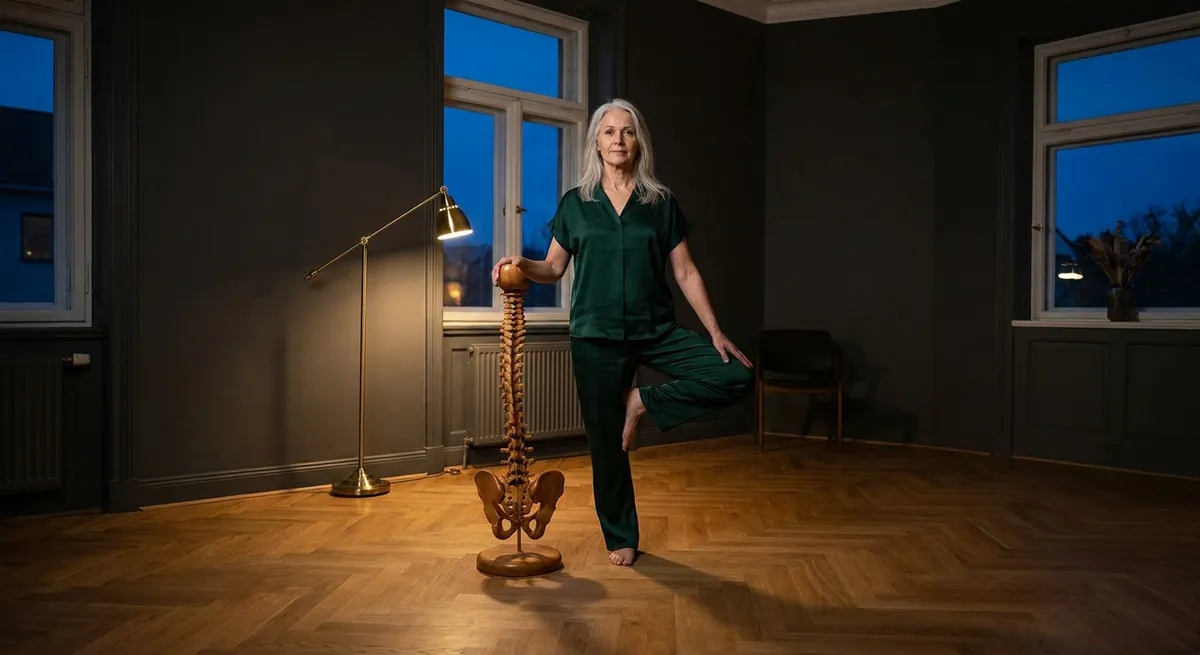
This is why slow, controlled exercises often feel deceptively challenging for people with back issues. Movements such as precise pelvic tilts, subtle abdominal bracing, or gentle single-leg balance place the responsibility on coordination rather than effort. Done consistently, they recalibrate the nervous system’s ability to recruit the right muscles at the right intensity, instead of over-relying on large, tired back muscles to “hold everything together.”
Exclusive back care is not about punishing core routines. It is about cultivating subtle strength: the kind you feel as ease when lifting, grace when turning, and stability when you are simply standing still.
Insight 5: Recovery Rituals Are Your Spine’s Quiet Insurance Policy
For many, recovery is reactive: heat when the back seizes, stretching when stiffness becomes unbearable, medication when pain interrupts sleep. A more elevated philosophy treats recovery as a daily ritual, not an emergency response.
The spine, like any refined structure, thrives on thoughtful maintenance. This might look like a consistent evening decompression ritual—simple, unhurried practices that signal to the nervous system that it is safe to release its grip on the back.
Thoughtful examples include:
- Floor time: Lying on your back with knees bent, allowing your spine to settle into a neutral position while you practice slow, diaphragmatic breathing.
- Supported lengthening: Resting your calves on a low ottoman or chair to gently tilt the pelvis and unload the lower back.
- Warmth as cue, not cure: A warm bath or heating pad used not only to soothe muscles, but as the prelude to gentle mobility work afterward.
- Tactile down-regulation: Using a soft foam roller or therapy ball not aggressively, but with light, sustained pressure along the muscles beside—not on—your spine, to encourage relaxation rather than forceful release.
These rituals do not have to be lengthy. What matters is their regularity and intention. When your back comes to expect periods of intentional recovery, its baseline tension gradually lowers, making pain flare-ups less frequent and less severe. For those already managing chronic back issues, these rituals become a quiet but powerful form of insurance—small, daily investments that compound into significant protection.
Conclusion
Sophisticated back care is less about dramatic reinvention and more about deliberate refinement. When you begin to see your spine as an ecosystem rather than a single complaint, prioritize micro-movements over occasional exertion, breathe as though your ribs and vertebrae matter (because they do), train tone instead of just strength, and treat recovery as a ritual rather than a rescue, your relationship with your back changes.
The result is not merely less pain, but a new standard of physical composure—where sitting, standing, and moving through your day feels less like enduring your body and more like inhabiting it with intention.
Sources
- National Institute of Neurological Disorders and Stroke – Low Back Pain Fact Sheet - Overview of causes, mechanisms, and management of low back pain from a U.S. government health agency
- Mayo Clinic – Back Pain Basics - Explains common causes, risk factors, and treatment options for back pain
- Harvard Health Publishing – Why Your Posture Matters - Discusses posture, spinal alignment, and their influence on back health
- Cleveland Clinic – Core Muscles and Back Support - Details how core stability and deep muscles support the spine and prevent pain
- American Physical Therapy Association – Physical Therapy Guide to Low Back Pain - Describes evidence-based movement, exercise, and recovery strategies for low back pain
Key Takeaway
The most important thing to remember from this article is that this information can change how you think about Back Health.