Back pain rarely appears out of nowhere. It is often the final expression of years of subtle compromises: a slightly collapsed posture here, an unconsidered chair there, a neglected recovery window between demanding days. For discerning individuals who expect their bodies to perform at a consistently high level, back health is less about dramatic interventions and more about precise, deliberate decisions.
What follows are five exclusive, often-overlooked insights for people who live with back issues—and who are ready to approach their spine with the same discernment they apply to their work, environment, and time.
Insight 1: Your Spine Is Not a Column – It Is a Negotiation
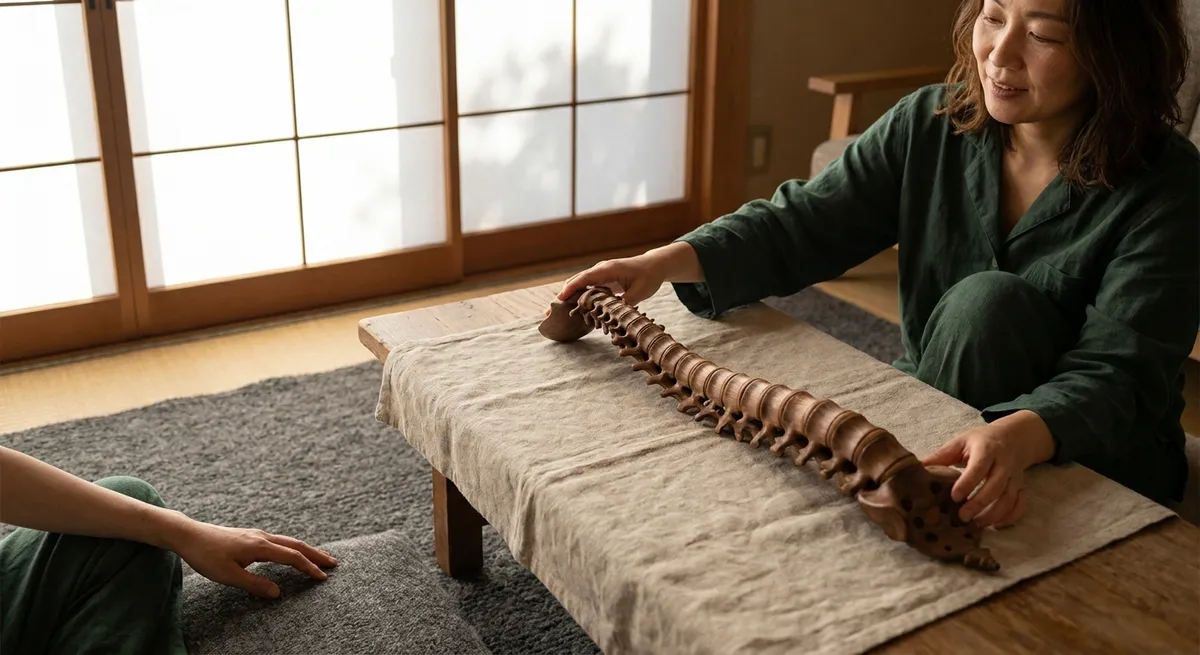
We often imagine the spine as a rigid architectural column designed to hold us upright. In reality, it is closer to a negotiated alliance between bones, discs, muscles, ligaments, fascia, and the nervous system. Pain emerges when that negotiation becomes imbalanced—when one structure is consistently overburdened and others underused.
Each vertebra, disc, and supporting muscle group quietly takes on its share of load with every step, bend, or twist. When you sit in a slightly slumped position for hours, it is not simply “poor posture”; you are repeatedly asking your discs and ligaments to accept forces they were not meant to carry alone. Conversely, when your deep stabilizing muscles (like the multifidus and transverse abdominis) are under-active, they opt out of the negotiation, leaving more superficial muscles to overwork and fatigue.
Reframing your spine as a constantly adjusting system transforms how you respond to discomfort. Instead of asking, “What is wrong with my back?” you begin asking, “Which part of this system is overworking, and which is under-participating?” That question leads naturally to more intelligent decisions about movement, strengthening, and rest—ones that respect the spine’s complexity rather than demanding a single, simplistic fix.
Insight 2: Micro-Intervals of Care Matter More Than Occasional Heroics
Most people try to “solve” their back issues with occasional intense efforts: a weekly workout, an ambitious yoga session, a rare massage booked only when pain flares. The spine, however, responds far more favorably to quiet consistency than to sporadic intensity.
Consider your typical day: extended sitting, concentration, and time pressure compress your attention and, with it, your posture. Your back is not asking for heroic intervention at the end of the week; it’s asking for small, predictable breaks woven into your routine. Ninety seconds of intentional movement every hour will often serve your spine better than ninety minutes of intense training on Saturday.
Micro-intervals of care might include standing and gently arching backward after a long email sprint, performing a short hip flexor stretch between calls, or walking a short loop while taking a phone meeting. These are not workouts. They are quiet recalibrations that give your discs, muscles, and joints a repeated opportunity to reset. Over weeks and months, these micro-moments accumulate into a profound reduction in stiffness and flare-ups.
The refined approach is not “I’ll fix this later” but “I’ll adjust this now, before it becomes a problem.”
Insight 3: Your Hips Often Decide How Your Back Feels
People frequently focus on the spine while ignoring the powerful structures immediately below it: the hips and pelvis. Yet the hips often determine how forces travel through the back. Stiff or weak hips can quietly dictate whether your lumbar spine is supported—or sacrificed—during daily life.
When hip flexors are tight from prolonged sitting, they gently tug the pelvis forward, increasing the curve in the lower back and compressing structures that may already be irritated. When the gluteal and deep hip muscles are under-conditioned, your back automatically takes on more of the workload during walking, lifting, and even standing. Over time, the spine is asked to be both stabilizer and prime mover—roles it was never meant to fulfill simultaneously.
Reorienting your attention to your hips is not simply adding a few stretches; it is acknowledging that your lower back relies on how gracefully your hips absorb and guide movement. Controlled hip mobility drills, glute strengthening, and thoughtful warm-ups before exercise create an environment in which the lumbar spine can behave as a finely tuned coordinator rather than a blunt load-bearer.
For many individuals with persistent back issues, the most elegant intervention is not another back-specific exercise, but a sophisticated hip-care routine that reduces the spine’s need to compensate.
Insight 4: The Nervous System Is the Quiet Gatekeeper of Your Pain
Back pain is not just about structural wear and tear—it is also about how your nervous system interprets and responds to signals from your body. Two people with nearly identical MRI findings can have completely different pain experiences: one relatively comfortable, the other deeply limited. The difference often lies in sensitivity, not severity.
After repeated episodes of pain, the nervous system can become primed, like a smoke alarm that begins to shriek at the slightest hint of heat. Unrelenting stress, poor sleep, and constant mental strain all turn up the sensitivity dial, making modest mechanical problems feel like intolerable crises. In this context, purely physical interventions—new chairs, stretches, or braces—will only go so far if the system processing the signals remains highly reactive.
A more sophisticated strategy includes deliberate down-regulation of the nervous system alongside physical care. This might look like structured, consistent sleep routines; brief, regular breathing practices that lengthen the exhale; or low-intensity movement such as walking or gentle swimming that communicates “safety” to the body. Over time, such practices help recalibrate the system so it can distinguish between genuine threat and normal sensation.
Attending to your nervous system is not indulgence—it is essential infrastructure for meaningful, lasting change in how your back feels.
Insight 5: Precision in Daily Transitions Outweighs Occasional Perfect Posture
People often obsess over maintaining an ideal posture while sitting, then completely abandon care during the transitions that matter most: getting out of bed, entering and exiting cars, lifting luggage, leaning over sinks, or twisting to reach for something behind them. Yet it is during these unscripted movements—the in-between moments—that backs are most vulnerable.
The spine tolerates neutral, well-supported positions reasonably well, even if not perfect. What tends to provoke discomfort are sudden, poorly coordinated movements under load: bending and twisting at once to pick up a heavy bag, or rounding forward abruptly to grab something from the floor. These transitions are where refined spinal habits pay immense dividends.
Adopting a more deliberate approach does not mean moving stiffly or fearfully. It means cultivating a small set of reliable movement principles and letting them quietly govern your day: hinge from the hips rather than collapsing at the waist, keep objects closer to your body rather than reaching with straight arms, and engage your legs when rising or lowering rather than asking the lower back to orchestrate everything.
Over time, this precision becomes second nature. You are no longer trying to “hold good posture” for hours, but instead moving through your day with understated, consistent elegance—protecting your spine where it is most at risk without making every action feel like a chore.
Conclusion
Exceptional back care is rarely about a single breakthrough technique. It emerges from a series of intelligent, deliberate choices: understanding your spine as a living negotiation, prioritizing micro-intervals of care, honoring the decisive role of your hips, respecting the influence of your nervous system, and refining the small transitions that define your day.
For those who demand a high standard from their bodies, the most powerful shift is philosophical: from treating back pain as an unfortunate interruption to regarding back health as a cultivated practice—one that quietly supports every other ambition in your life.
Sources
- National Institute of Neurological Disorders and Stroke – Low Back Pain Fact Sheet – Overview of causes, mechanisms, and treatments for low back pain
- Harvard Health Publishing – 4 Ways Your Office Job Is Hurting Your Back – Discusses daily habits, posture, and movement patterns affecting back health
- Mayo Clinic – Back Pain Basics – Explains common causes and risk factors, including movement and lifestyle considerations
- Cleveland Clinic – Hip Pain and the Connection to Back Issues – Explores the interdependence of the hips and spine in generating pain
- American Physical Therapy Association – Understanding Pain and the Nervous System – Describes how the nervous system modulates pain and why sensitivity matters
Key Takeaway
The most important thing to remember from this article is that this information can change how you think about Back Health.