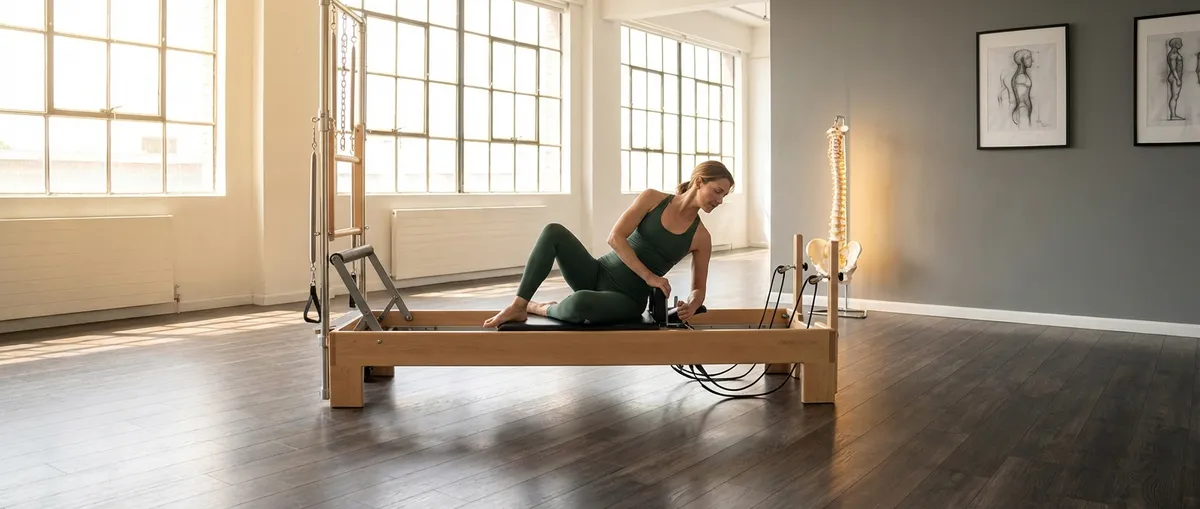
Back exercise should never feel like punishment; at its best, it is a conversation with your spine—measured, intelligent, and exquisitely specific. For those who live with back issues, the goal is not athletic heroics, but a cultivated stability that makes daily life feel less negotiated and more assured. Exercise therapy, when approached with discernment, becomes less about “working out” and more about curating how your body behaves under load, in motion, and at rest.
This is not a catalogue of generic stretches. Instead, it is a refined look at how sophisticated exercise therapy quietly resets the way your back organizes effort, absorbs demand, and carries you through demanding days. Below are five exclusive insights—less about trends, more about thoughtful practice—that those with discerning backs will recognize as the difference between “doing exercises” and genuinely changing how their spine lives in the world.
Insight 1: Train the Pattern, Not Just the Muscle
Many back programs fixate on muscle strength—“stronger core,” “stronger back”—without asking how those muscles collaborate. The spine does not move in isolation; it is the center of a complex choreography involving hips, ribs, diaphragm, and feet. Sophisticated exercise therapy therefore trains movement patterns, not isolated parts.
Consider the simple act of bending to pick something up. A pattern-focused approach looks at hip hinge mechanics, ribcage positioning, breathing, and how the weight travels through your feet. Instead of endless crunches or back extensions, your therapy might emphasize controlled hip hinges, loaded carries, and split-stance movements that teach the spine to share work intelligently with the hips and pelvis.
The real refinement lies in how you transition: from sitting to standing, from standing to reaching, from lifting to walking away. Exercise becomes an elegant rehearsal of these transitions, so that your spine stops absorbing every demand alone and instead delegates work to stronger, more suitable structures.
Insight 2: Use Micro-Loading to Rebuild Trust with Movement
For many with back pain, movement is not just uncomfortable—it feels unpredictable, even untrustworthy. Sophisticated therapy does not bulldoze through this fear with bravado; it rebuilds trust through micro-loading: tiny, precisely measured demands that your body can reliably succeed at.
Micro-loading might look like using very light resistance bands to explore controlled spinal rotation, or holding a small weight while practicing a flawless hip hinge to just below the knee. The objective is not fatigue, but consistency: repetition of high-quality movement with just enough challenge to stimulate adaptation without provoking a flare.
Over time, the nervous system begins to update its internal formulas: “This movement is safe. This load is manageable. This pattern is reliable.” Instead of oscillating between total rest and overexertion, you inhabit the refined middle ground where progress is built repetition by repetition. The elegance is in the restraint—knowing that subtle, sustainable loading is often more transformative than heroic effort.
Insight 3: Anchor Every Movement in Breath and Pressure Control
The most elegant back programs pay close attention to what is often overlooked: how you breathe and how pressure is managed within your trunk. The diaphragm, deep abdominal wall, pelvic floor, and spinal stabilizers function as a pressure system that supports your spine under load. When breath is shallow, braced incorrectly, or disconnected from movement, the spine often takes the excess strain.
In practice, this might mean coordinating a gentle exhale with the most demanding part of a movement—rising from a squat, initiating a row, or returning from a forward fold—so that your trunk “gathers” around the spine rather than collapsing onto it. It might involve learning how to expand the ribcage laterally, not just forward, so that each inhalation supports length rather than tension.
A refined exercise therapy session rarely rushes past breath. Instead, it threads breath cues into each repetition: inhale to prepare and lengthen; exhale to stabilize and move. Over time, this pairing becomes unconscious—your spine benefits from a continuously intelligent pressure system that makes daily bends, lifts, and turns feel noticeably more contained and supported.
Insight 4: Cultivate “Elegant Endurance” Over Raw Strength
For backs that have been through strain, surgery, or years of quiet complaint, the central need is often endurance, not maximal strength. The spine must hold itself with quiet competence over hours—through meetings, travel, caregiving, and the countless minor tasks that populate a modern day.
Elegant endurance training favors lower loads, longer holds, and meticulous form. This might include sustained, well-aligned side planks; slow, controlled bridges with extended holds at the top; or patient practice of upright, balanced sitting and standing with brief, frequent breaks rather than heroic, static marathons in any one position.
The intent is to build a background layer of resilience: trunk muscles that can maintain subtle support for long periods without fatiguing into collapse or compensatory tension. Strength, in this context, is measured not by how heavy you can lift once, but by how effortlessly you can maintain poise through a demanding day—flight delays, long commutes, and all.
Insight 5: Let Recovery Practices Be as Curated as the Exercises
The most refined exercise therapy programs treat recovery not as an afterthought, but as an integral, carefully curated phase. A well-trained spine deserves equally considered decompression—practices that signal to the nervous system that effort is complete and safety is restored.
This can include gentle positional decompression (such as lying on the back with lower legs supported on a chair, allowing the spine to rest in a neutral, low-load position), subtle rocking motions that soothe rather than stretch, or brief, guided breath practices that downshift the nervous system from vigilance to calm. Heat, cold, or self-massage tools can be integrated, but always in service of how the body feels and responds, not simply as routine rituals.
Tracking how your back recovers—how it feels two hours later, the next morning, and at the end of the week—becomes part of the therapy itself. Adjustments to volume, intensity, and exercise selection are then made with the same care you might apply to tailoring a garment. Recovery, in this frame, is not passive; it is an active, intelligent refinement of how your spine integrates new strength and new patterns.
Conclusion
Sophisticated exercise therapy for the back is less about chasing intensity and more about cultivating discernment. It trains patterns, not parts; trust, not bravado. It respects micro-loading, breath, endurance, and recovery as equal partners in the pursuit of a spine that feels composed rather than compromised.
For the discerning individual, this approach transforms exercise from obligation into craft. Each session becomes an investment in how gracefully you inhabit your body—how your spine participates in work, leisure, travel, and rest. Over time, the reward is not just less pain, but a quieter confidence in movement itself: the reassuring sense that your back is no longer a fragile exception, but a well-tended asset in the architecture of your life.
Sources
- [National Institute of Neurological Disorders and Stroke – Low Back Pain Fact Sheet](https://www.ninds.nih.gov/health-information/disorders/low-back-pain) – Overview of causes, risk factors, and evidence-based management of low back pain.
- [Mayo Clinic – Back Pain: Self-Care and Nonsurgical Treatments](https://www.mayoclinic.org/diseases-conditions/back-pain/diagnosis-treatment/drc-20369911) – Discusses exercise, physical therapy principles, and conservative management strategies.
- [Harvard Health Publishing – Strengthening Your Core](https://www.health.harvard.edu/healthbeat/the-real-world-benefits-of-strengthening-your-core) – Explores the role of core stability and endurance in spine support and daily function.
- [Cleveland Clinic – Physical Therapy for Low Back Pain](https://my.clevelandclinic.org/health/treatments/22066-physical-therapy-for-low-back-pain) – Details how structured exercise therapy and movement training are used to treat back pain.
- [American College of Sports Medicine – Position Stand on Exercise and Chronic Low Back Pain](https://journals.lww.com/acsm-msse/Fulltext/2009/11000/Exercise_Therapy_for_Chronic_Low_Back_Pain.25.aspx) – Research-based guidance on specific exercise approaches for chronic low back pain.
Key Takeaway
The most important thing to remember from this article is that this information can change how you think about Exercise Therapy.