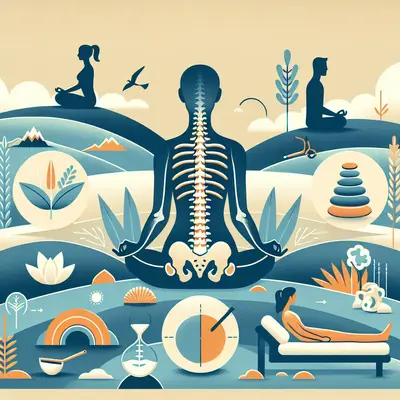
Back pain rarely arrives as a single dramatic event. It accumulates—one neglected stretch, one rushed commute, one poorly chosen chair at a time. For discerning individuals who value longevity, focus, and physical composure, back health is less about chasing instant relief and more about curating a refined, sustainable relationship with the spine. What follows are five exclusive insights—subtle, often overlooked, yet deeply practical—that elevate back care from damage control to a deliberate standard of living.
Insight 1: Your Back Responds to Atmosphere, Not Just Alignment
Traditional advice centers on “sit up straight” and “fix your posture,” but the nervous system that governs your back is exquisitely sensitive to atmosphere: light, sound, temperature, even the perceived pace of your day.
A dim, cluttered room with stale air and constant notifications can heighten muscle tension in the neck, shoulders, and lumbar spine—even if your chair is technically “ergonomic.” By contrast, a curated environment with natural light, subdued noise, and deliberate visual order can reduce baseline muscle guarding and pain sensitivity. This is not aesthetic for its own sake; it is physiology.
The premium approach to back care recognizes that your spine is part of a living ecosystem. Adjusting screen brightness to match ambient light, choosing warm rather than harsh overhead illumination, and maintaining a calm acoustic landscape (soft soundscapes instead of chaotic news cycles) all modulate how your body holds itself. The more composed the atmosphere, the more your spine can default to ease rather than defense.
Insight 2: Precision Micro-Movements Matter More Than Occasional “Big Workouts”
Many people live in a binary: sedentary all day, then a single intense workout to compensate. The spine does not respond well to that rhythm. It thrives on small, precise, frequent motion rather than rare bursts of effort.
Micro-movements—gentle pelvic tilts, subtle thoracic rotations, ankle pumps while seated, slow neck glides—keep joints nourished and tissues oxygenated. They also maintain the subtle coordination of deep stabilizing muscles (such as the multifidus and transverse abdominis) that cannot be adequately trained solely through heavy lifting or sporadic exercise classes.
For refined spine care, think of movement as seasoning rather than a weekly banquet. Every 30–45 minutes, introduce a 60–90 second “movement vignette”: stand and gently spiral your spine, roll your shoulders with intention, or glide into a slow, controlled hip hinge. Over weeks, this punctuated rhythm changes your baseline: less stiffness upon standing, fewer painful “surprises,” and a more responsive, confident back.
Insight 3: Your Breath Is an Unused Structural Asset
Most back care guidance underestimates the spine–breath connection. The diaphragm, pelvic floor, deep abdominal wall, and spinal stabilizers form an integrated pressure system. When breathing is shallow, rushed, or perpetually held high in the chest, this system underperforms—and your back quietly compensates.
Refined back health rituals treat breathing as structural hygiene. Slow, nasal, diaphragmatic breaths with a slightly extended exhale can decrease pain sensitivity, encourage better spinal alignment, and recruit the deep core without aggressive bracing. When you inhale and feel your lower ribs gently widen in all directions—not just forward—you subtly support the lumbar spine from within.
A practical, elegant pattern: sit or stand tall, inhale gently for four seconds through the nose, feeling the lower ribs expand, pause briefly, then exhale for six seconds, allowing the shoulders and jaw to soften. Three to five rounds, several times a day, will feel like almost nothing in the moment. Over time, your spine registers the difference as stability without strain, strength without hardness.
Insight 4: Your Evening Routine Quietly Decides Tomorrow’s Back
Morning stiffness, aching during the first steps out of bed, or a “heavy” spine by midday are often blamed on the mattress or the previous day’s workload. The missing piece is frequently the evening transition: how you land your nervous system before sleep.
Screens close to the face, last-minute inbox triage, and working in bed prime the body to remain vigilant. Vigilance manifests physically as tension—especially along the spinal extensors and neck. In contrast, a deliberately structured evening routine becomes a daily negotiation with your back: an assurance that it may release its guard.
Consider a 20–30 minute “spinal unwind” window before bed. This might include: a brief warm shower, a few gentle supine knee-to-chest or windshield wiper movements, a supported child’s pose or gentle spinal decompression over a cushion, and a short period of quiet reading or listening to calming audio away from your work devices. The objective is not intensity; it is signal clarity. You are telling your body, consistently, that tomorrow’s movement can be fluid because tonight’s tension is being respectfully discharged.
Insight 5: Elegant Back Care Is Less About Perfect Posture and More About Skilled Variety
The modern obsession with “perfect posture” overlooks a key truth: there is no single, universally correct way for every spine to sit, stand, or move. What your back craves is not static correctness but skilled variety—an intelligent rotation of positions that shares the load among tissues and joints.
Premium back care reframes posture as a choreography, not a frozen pose. You might sit tall on your sit bones for a focused work sprint, then recline slightly with lumbar support, then stand at a counter-height surface, later shift to a perch stool that encourages gentle dynamic balance. Each posture is supportive for a time; none is mandated for the entire day.
When you choose chairs, sofas, and work surfaces, consider them as a wardrobe for your spine rather than a single “forever” solution. Over the course of a day, invite your body into different configurations: symmetrical standing, staggered stance, cross-legged sitting on a firm surface, gentle leaning with forearm support. The more nuanced your repertoire of comfortable positions, the more resilient—and less reactive—your back becomes.
Conclusion
Back health at its highest standard is subtle, attentive, and deeply integrated into how you live—not just how you stretch. Your spine reflects your atmosphere, your micro-movements, your breath, your evenings, and the diversity of positions you inhabit. When you curate these elements with care, back care shifts from crisis management to quiet craftsmanship.
You are not merely avoiding pain; you are cultivating a body that feels composed, capable, and ready for the demands of a modern, high-performing life. Over time, these refined practices become less like “treatment” and more like a signature: the way you move through the world with a spine that is not merely surviving, but elegantly supported.
Sources
- [National Institute of Neurological Disorders and Stroke – Low Back Pain Fact Sheet](https://www.ninds.nih.gov/health-information/disorders/low-back-pain) - Overview of causes, risk factors, and approaches to back pain management
- [Harvard Health Publishing – 4 ways to turn good posture into less back pain](https://www.health.harvard.edu/pain/4-ways-to-turn-good-posture-into-less-back-pain) - Discusses posture, movement, and spinal health in daily life
- [Centers for Disease Control and Prevention – Physical Activity Basics](https://www.cdc.gov/physicalactivity/basics/index.htm) - Explains the role of regular movement and activity patterns in overall musculoskeletal health
- [Cleveland Clinic – Diaphragmatic Breathing](https://my.clevelandclinic.org/health/articles/9445-diaphragmatic-breathing) - Details how proper breathing mechanics can influence muscular tension and pain
- [Mayo Clinic – Back Pain: Symptoms and Causes](https://www.mayoclinic.org/diseases-conditions/back-pain/symptoms-causes/syc-20369906) - Provides clinical context on back pain mechanisms and contributing lifestyle factors
Key Takeaway
The most important thing to remember from this article is that this information can change how you think about Back Health.