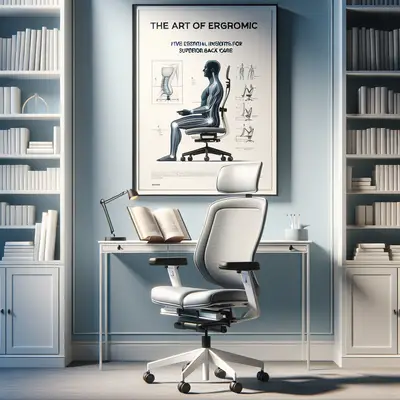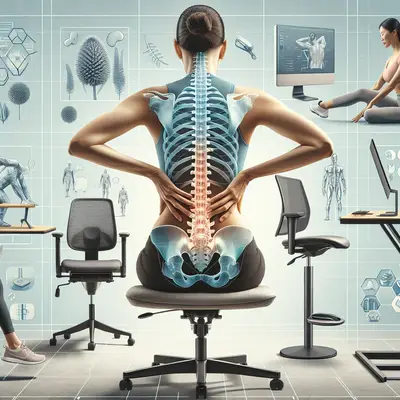
The way you inhabit your workspace quietly scripts the story of your spine. Beyond generic advice about “sitting up straight,” there is a more nuanced, sophisticated approach to ergonomics—one that treats your back not as a problem to be managed, but as an asset to be preserved. This is ergonomics as quiet luxury: deliberate, measured choices that protect your spine while elevating the quality of your attention, mood, and performance.
Below are five exclusive, detail‑oriented insights for those who expect more from both their environment and their back care.
1. Designing Around Micro-Motion, Not Static Posture
Classic ergonomic advice often assumes a single “ideal” sitting position. In reality, the spine thrives on movement, and prolonged stillness—no matter how perfectly aligned—invites stiffness and fatigue.
A refined approach is to engineer your workspace around micro‑motion:
- Position your keyboard and mouse so that tiny, frequent adjustments of the forearms and shoulders feel natural rather than effortful. Slight lateral movements, subtle forearm rotations, and gentle shoulder shifts prevent any one segment of your back from bearing constant load.
- Choose a chair that allows controlled movement—tilt, recline, and slight bounce—without feeling unstable. The aim is elegant dynamism, not fidgeting.
- Place items you use often (phone, notebook, water) just far enough away that you must rotate gently through your mid-back and shoulders, rather than collapsing forward from the neck.
- Consider a sit‑stand desk not as a binary option, but as a platform for variety: small height adjustments throughout the day can coax your body into subtle rebalancing.
Instead of thinking, “What is the perfect posture?”, ask, “How can I invite graceful, near‑constant micro-motion throughout my day?” This shift alone reframes ergonomics from rigid rules into fluid choreography.
2. Calibrating Your Visual Field to Protect the Cervical Spine
For many high-performing professionals, back strain begins above the shoulders. Neck alignment, eye strain, and cognitive fatigue are intimately linked—and poorly arranged screens can quietly undermine even the most expensive chair.
Elevated ergonomics focuses not only on screen height, but on the entire visual field:
- The top of your primary monitor should sit near eye level, but the more critical refinement is angle and distance. Your screen should be far enough away that your eyes rest softly, yet close enough that you don’t lean forward to read fine details.
- If you use multiple monitors, designate one as the “anchor” screen and align it directly in front of you. Surrounding screens should curve gently around your natural gaze, not force repetitive neck twisting.
- For laptop users, a stand and separate keyboard are non‑negotiable for long work sessions. The sophistication lies in adjusting the screen height so that your chin remains parallel to the floor and your throat relaxed, without strain behind the eyes.
- Attention to contrast, lighting, and glare is crucial. Dim, overly bright, or glaring screens cause you to unconsciously crane your head forward, compressing the upper spine.
This is visual ergonomics as spine protection: by designing your visual field thoughtfully, you reduce the subtle forward drag on your neck that, over months and years, becomes chronic upper back and shoulder tension.
3. Curating Surfaces: The Tactile Architecture of Support
Most ergonomic discourse stops at chair height and lumbar support; fewer people consider the tactile environment surrounding the body. The textures, firmness, and responsiveness of surfaces that hold you—seat, armrests, desk edge, even flooring—quietly shape how your back behaves.
Sophisticated back care looks closely at these touchpoints:
- Seat pan depth should allow two to three finger widths between the edge of the chair and the back of your knees. Too long, and you slump forward; too short, and your thighs lack stable support.
- Armrests should not simply exist; they should be tuned. Ideally, your forearms rest lightly with shoulders relaxed, neither elevated nor dropped. Overly high armrests encourage shrugged shoulders; too low and the upper back caves forward.
- The desk edge contact with your forearms matters. A gently rounded edge or a soft wrist support can reduce the temptation to hover your shoulders upward or excessively lean on your elbows, sparing the neck and upper back.
- Underfoot, a supportive mat (especially when standing) or a subtly textured surface encourages micro-adjustments through the feet and ankles, which echoes up into the hips and lumbar spine.
By curating surfaces with as much discernment as you would a tailored garment, you create an environment that holds your body in alignment without demanding it. The result is less gripping, less bracing, and a more effortless, refined posture.
4. Synchronizing Breathing, Alignment, and Cognitive Load
One of the more overlooked dimensions of ergonomics is the relationship between mental exertion, breathing patterns, and spinal tension. When focus intensifies, many people hold their breath, tighten their jaw, and subtly round forward—as if curling around their thoughts.
Premium back care integrates breath and cognition:
- Notice how your spine behaves during high-stakes tasks: tight deadlines, difficult calls, or complex analysis. These moments often trigger unconscious neck craning, shoulder lifting, and lumbar collapse.
- Establish micro‑rituals tied to natural breaks in cognitive load: each time you send an important email, finish a meeting, or complete a complex section of work, take one slow, deliberate breath with a gentle lengthening through the spine.
- During demanding tasks, use “soft focus” posture: imagine your sternum very slightly lifted, the back of your neck elongated, and your ribs subtly floating up away from your pelvis. This isn’t rigid military posture—it’s refined, almost invisible expansion.
- Train yourself to associate deep, quiet breathing with clear thinking. Over time, your nervous system will favor a more open, supported upper body during intense mental work, reducing the chronic contraction that so often manifests as back pain.
In this way, ergonomics extends beyond furniture into neurophysiology: your back becomes a participant in your cognitive performance, not a casualty of it.
5. Designing Transitions, Not Just Workstations
Most ergonomic advice ends at the boundary of the desk. Yet the way you transition between activities—meeting to meeting, sitting to standing, work to commute—often determines how your back feels by evening.
A more elevated approach treats transitions as strategic opportunities:
- Stand up slowly and deliberately, letting your spine unfurl rather than launching forward from your lower back. Think of each transition from sitting as a small, precise movement rather than a rushed necessity.
- Use doorway thresholds as posture prompts. Each time you pass through, imagine lightly lengthening your spine and allowing your shoulders to settle down and back—not exaggerated, simply reset.
- Between calls or tasks, spend 30 seconds in a counter‑position: if you’ve been flexed forward, gently open the chest and extend the upper back; if you’ve been standing, briefly sit and release the hip flexors.
- When leaving your workspace—whether to another room or another building—avoid collapsing into your phone. Walk the first 10–20 steps with attention: relaxed jaw, steady gaze at eye level, easy swing through the arms.
These transitions, executed with intention, act as elegant “bookmarks” for your spine throughout the day. They prevent the accumulation of strain, preserving the back’s sense of length, balance, and composure.
Conclusion
Ergonomics, at its most refined, is less about gadgets and more about stewardship—of your spine, your attention, and the subtle ways you inhabit your environment. By favoring micro-motion over frozen “perfect” posture, tuning your visual field, curating supportive surfaces, synchronizing breath with cognitive demand, and designing intentional transitions, you create an ecosystem that quietly safeguards your back.
For those who expect longevity not only in their careers but in the comfort of their bodies, this elevated approach to ergonomics is not an indulgence. It is a considered investment in how gracefully you will move, work, and live over the decades ahead.
Sources
- [Mayo Clinic – Office ergonomics: Your how-to guide](https://www.mayoclinic.org/healthy-lifestyle/adult-health/in-depth/office-ergonomics/art-20046169) - Overview of evidence-based office ergonomics, including posture, chair setup, and desk height
- [NIOSH (CDC) – Computer Workstations](https://www.cdc.gov/niosh/topics/ergonomics/computer/default.html) - U.S. government guidance on computer workstation design and risk reduction
- [Harvard Health Publishing – Is a standing desk right for you?](https://www.health.harvard.edu/blog/is-a-standing-desk-right-for-you-2016092310264) - Discussion of sit-stand workstations and how movement benefits musculoskeletal health
- [Cleveland Clinic – Tips for better posture at work](https://health.clevelandclinic.org/desk-posture) - Practical advice on posture, screen position, and body alignment in the office
- [Occupational Safety and Health Administration (OSHA) – Computer Workstations eTool](https://www.osha.gov/etools/computer-workstations) - Detailed ergonomic recommendations for monitor, chair, keyboard, and overall workstation configuration
Key Takeaway
The most important thing to remember from this article is that this information can change how you think about Ergonomics.