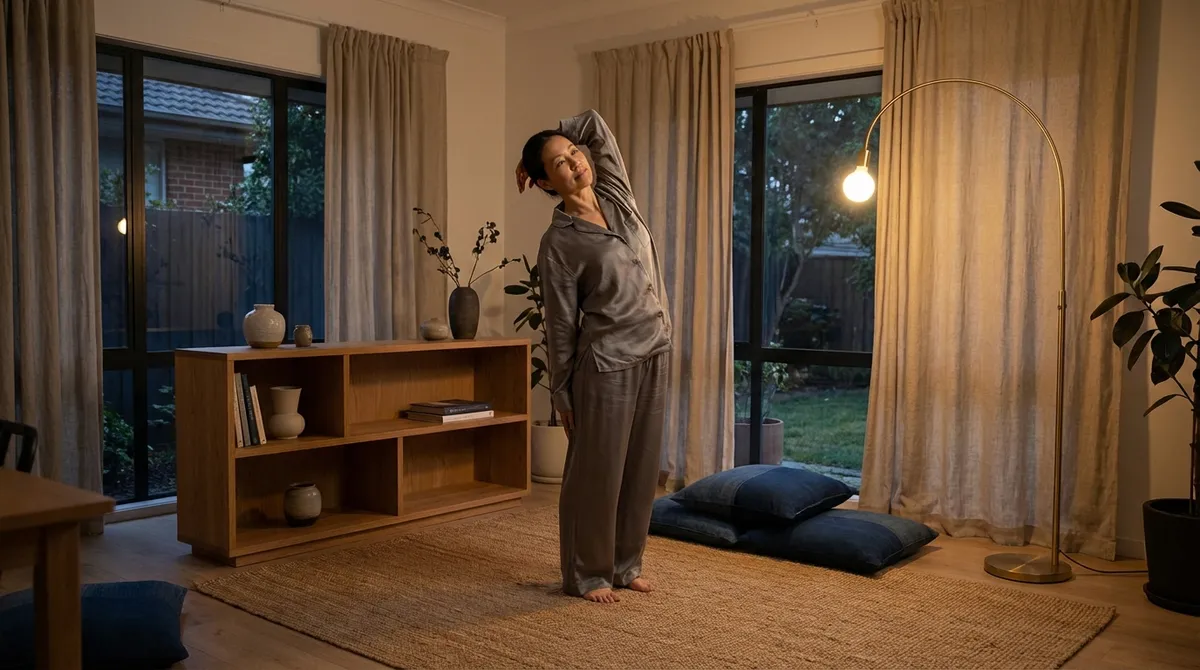
Modern life quietly trains us to ignore our backs—until they demand our full attention. For many discerning professionals, back discomfort is not just a health concern but a subtle tax on focus, composure, and performance. This is not an article about “quick fixes” or generic stretching routines. Instead, it is a considered exploration of five refined, less-discussed practices that respect the complexity of your spine and the sophistication of your lifestyle.
Below are five exclusive insights—small levers with outsized impact—for those who view back care as both a necessity and an investment in long-term capability.
1. Treat Spinal Rest as a Design Problem, Not Just a Mattress Choice
Most conversations about back-friendly sleep stop at “get a good mattress.” That is an oversimplification. Restorative spinal rest is a design ecosystem: mattress, pillow architecture, temperature, fabric, and nocturnal movement patterns all interact.
Prioritize a sleep surface that supports your spine’s natural curves without forcing it flat. This may mean a medium-firm mattress paired with a carefully calibrated pillow height that keeps your neck aligned with your mid-back, rather than propped at an angle. For side sleepers, a soft but structured pillow between the knees can reduce rotational stress on the lumbar spine; for back sleepers, a thin pillow under the knees can ease lumbar extension.
Consider textiles and temperature as elements of spinal health, not mere comfort. Overheating leads to micro-awakenings and frequent position changes, each a tiny mechanical stress on vertebral joints and paraspinal muscles. A cooler, breathable sleep environment—natural fibers, lighter duvets, optimal bedroom temperature—allows the back to remain in fewer, more stable positions overnight. Think of your sleep setup less as “bedroom decor” and more as a nightly recovery lab for your spine.
2. Curate Micro-Movements as a Daily Spinal Investment Portfolio
We often frame movement as exercise sessions—an hour at the gym, a class, a walk. From the spine’s perspective, however, what you do in the other 23 hours is often more consequential. Micro-movements—subtle, intentional motions interspersed throughout the day—quietly determine the cumulative load on your back.
Rather than scheduling “stretch breaks,” design your day so that movement is woven into routine tasks. Stand to take phone calls, but don’t just stand—shift your weight, lightly rise onto your toes, or gently tilt your pelvis forward and back. When waiting for a kettle to boil or an elevator to arrive, perform discreet spinal decompression: lengthen through the crown of your head, soften your ribs, and imagine space between each vertebra.
At your desk, think in terms of “posture rotation” rather than “perfect posture.” Alternate between slightly different supported positions every 20–30 minutes: a more upright stance, a subtly reclined position with proper lumbar support, a brief perching posture on the edge of the seat. You are not chasing a single ideal posture; you are minimizing static load by curating a portfolio of acceptable ones. Over weeks and months, this approach protects spinal tissues more effectively than any once-a-day routine.
3. Use Breathing as Precision Support for the Spine
Breathing is often treated as a relaxation tool, but it is also an underappreciated structural system for the back. The diaphragm, deep abdominal muscles, pelvic floor, and small stabilizers along the spine form an integrated pressure system known as the “core cylinder.” When this system is well-coordinated, it distributes load more elegantly across the spine.
Instead of “bracing your core” in a rigid, tense way, practice refined pressure control. In a seated or standing position, inhale through the nose, allowing the lower ribs to gently expand sideways rather than the shoulders lifting upward. On the exhale, imagine the lower ribs sliding inward and slightly down as the lower abdomen gently firms—not from force, but from subtle engagement. This is quiet stability, not obvious effort.
Integrate this into everyday actions that challenge the back: lifting luggage into a car, rising from a low chair, or carrying shopping bags. Inhale to prepare, exhale as you initiate the movement, using that exhale to support the lumbar spine with organized, controlled pressure. Over time, the spine experiences less “surprise load” and fewer abrupt, unsupported movements—two common precursors to pain.
4. Audit Your Day for Hidden Asymmetries That Quietly Distort the Spine
Few things quietly sabotage spinal health as efficiently as habitual asymmetry. It rarely looks dramatic. It’s the bag always carried on the same shoulder, the child always held on the same hip, or the laptop always angled slightly to one side. Over years, these micro-biases engrave patterns into muscles and joints.
A refined approach to back care includes a personal asymmetry audit. For one full day, simply notice how often you favor one side: which hand holds your phone, which leg you cross over the other, which side you lean toward when reaching or working. Take notes. The act of observation itself is an intervention.
Once identified, correct asymmetries in low-friction ways. Alternate shoulders for bags and briefcases. If you always cross your right leg, occasionally cross the left—or better yet, keep both feet grounded and slightly apart. Adjust screens to be directly in front of you—laptops, external monitors, even televisions. These adjustments feel trivial in the moment but dramatically smooth the mechanical “story” your spine tells over time: more symmetry, less accumulated torsion, fewer silent compromises.
5. Elevate Recovery: Schedule the Spine the Way You Schedule Strategy
Many high-performing individuals treat back care reactively—only when pain interrupts their agenda. A more sophisticated strategy treats spinal recovery as a scheduled, non-negotiable asset-protection ritual, akin to financial reviews or strategic planning.
Once or twice a week, commit to a structured 15–20 minute session dedicated solely to spinal recovery. This might include gentle decompression positions such as lying on your back with lower legs supported on a chair, slow controlled pelvic tilts, and a few carefully chosen movements that address your specific patterns (for example, thoracic extensions over a rolled towel for those who sit frequently).
Layer subtle sensory refinement into this time: reduce visual noise (dim lighting, minimal screens), limit auditory clutter, and give your nervous system the opportunity to downshift. The spine does not operate in isolation from the brain; heightened stress amplifies pain perception and muscle guarding. A regular, intentional recovery window teaches your system that your back is not in constant threat-mode—and that alone can reduce chronic discomfort.
Once this session is blocked into your calendar, treat it with the same respect as an important meeting. Over months, the compound interest on these brief, consistent investments in the spine often exceeds that of occasional, intensive interventions.
Conclusion
Elevated back care is not about perfectionism or elaborate routines. It is about quiet, consistent refinement: designing your sleep environment as a recovery system, curating micro-movements, using breathing as structural support, eliminating hidden asymmetries, and scheduling spinal recovery with intent.
The spine is both architecture and instrument—bearing weight, enabling movement, and reflecting the subtleties of how you live. When you approach it with discernment, your back becomes less a source of worry and more a quietly reliable foundation for the life you intend to lead.
Sources
- National Institute of Neurological Disorders and Stroke – Low Back Pain Fact Sheet - Overview of causes, risk factors, and evidence-based approaches to low back pain
- Mayo Clinic – Back Pain: Symptoms and Causes - Explains common contributors to back pain, including posture and lifestyle factors
- Harvard Health Publishing – The Best Sleep Position for Your Back - Discusses how sleep posture and positioning influence spinal stress
- Cleveland Clinic – Core Exercises - Details the role of core stability and breathing in supporting the spine
- National Library of Medicine – Sitting, Standing and Moving at Work - Research review on how varied postures and movement breaks affect spinal load and discomfort
Key Takeaway
The most important thing to remember from this article is that this information can change how you think about Back Health.