Back health is no longer a purely clinical concern; it has become an essential element of a cultivated life. For those who demand more from their bodies—and their environments—back care is not merely about managing pain, but about designing a daily existence that consistently protects and elevates spinal wellbeing. The following insights are crafted for individuals who value precision, discretion, and long-term excellence in how they inhabit their bodies.
Insight 1: Treat Your Spine as a Luxury Asset, Not a Utility
Most people relate to their back as a workhorse—something to be “fixed” when it fails. A more refined approach is to treat the spine as you would a high-value asset: proactively protected, regularly reviewed, and never taken for granted.
This shift begins with how you plan your week. Instead of fitting movement around your schedule, you design your schedule around a non-negotiable baseline of spinal care—such as dedicated mobility sessions, a standing or walking component during long calls, and intentional decompression in the evenings. This is not about perfection; it is about viewing each day as either adding to or drawing from your “spinal equity.”
From a medical perspective, the spine is a complex structure of vertebrae, discs, ligaments, and muscles that responds over years to the cumulative load you place upon it. Micro-decisions—how you lift a bag, how long you sit uninterrupted, the firmness of your mattress—compound over time. Those with consistently healthy backs often are not “lucky”; they are quietly meticulous. When you begin to see each posture and movement as either an investment or a withdrawal, back care becomes an elevated, intentional practice rather than a reactive chore.
Insight 2: Curate Micro-Intervals of Decompression Throughout the Day
Many people think in terms of single, heroic interventions: a weekly massage, a monthly adjustment, an occasional yoga class. Those can be helpful, but for a discerning spine, the real magic lies in micro-intervals of decompression woven into the day.
Spinal discs, which act as cushions between vertebrae, are sensitive to sustained compressive forces. Prolonged sitting, especially in a slightly flexed posture, can subtly increase disc pressure and strain over time. Counteracting this does not require dramatic inversion tables or hour-long stretching rituals. Instead, it can be achieved through carefully designed one- to three-minute “interludes” at key points: after 45–60 minutes of desk work, after a long drive, between back-to-back meetings, or upon arriving home in the evening.
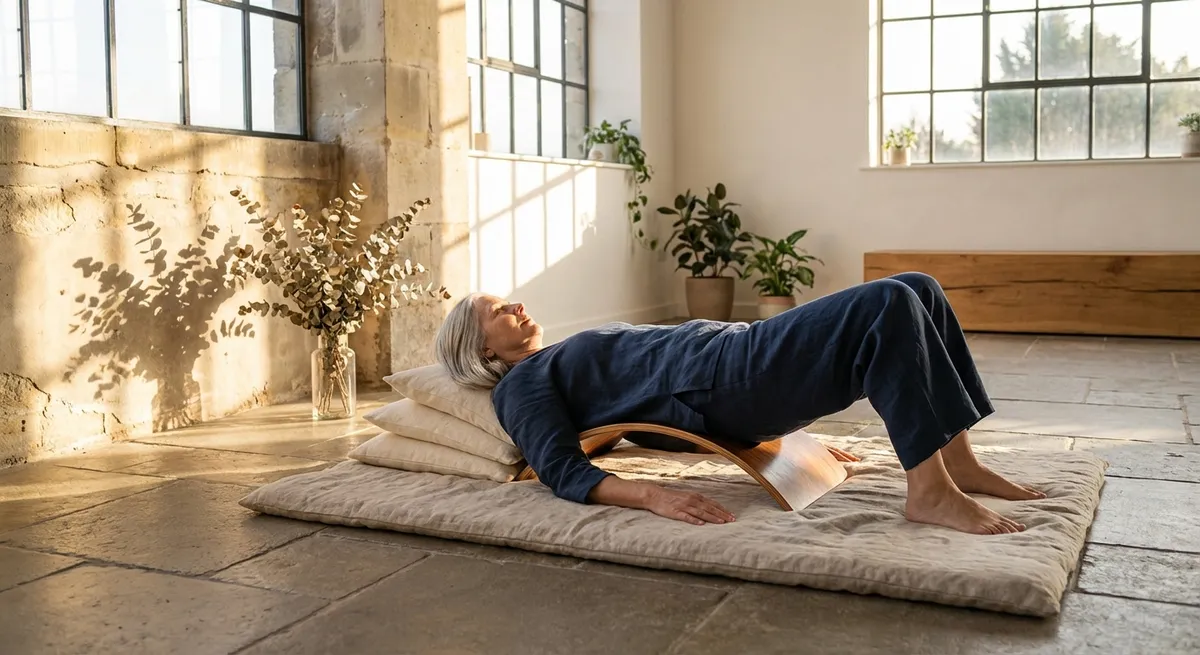
These interludes might include: gentle supported backbends over the edge of a sofa or foam roller; lying on the floor with legs elevated on a chair to neutralize spinal load; slow, controlled pelvic tilts to awaken deep stabilizers; or standing spinal extensions after prolonged sitting. The goal is subtle but consistent decompression—reminding your spine, multiple times a day, what alignment and space feel like. Over weeks, this regular micro-care can be more transformative than any occasional, dramatic intervention.
Insight 3: Build a Personal “Back Care Protocol” for High-Risk Days
Not all days demand the same level of spinal resilience. Travel days, intense deadlines, extended social events, or hosting obligations often mean long periods of standing, sitting, or compromised movement patterns. Instead of hoping your back will “cope,” a more sophisticated approach is to design a specific, repeatable protocol for these high-risk days.
This protocol might begin the night before, with a deliberate wind-down that includes gentle spinal mobility (such as cat-camel movements or side-lying rotations) and sleep in a position that supports neutral spinal alignment. The morning of, you might prioritize a brief but focused core and hip activation routine to prime stabilizing muscles before the day places demands on them.
During the event or trip, your protocol can include strategic movement “anchors”—for example, standing and walking for five minutes every hour at an airport, or taking a brief lap between agenda blocks at a conference. If sitting is unavoidable, you might bring a minimal travel lumbar support or fold a scarf or jacket in a precise way to support your lower back. After the day is done, the protocol concludes with gentle decompression (lying on your back with knees bent, light hip stretching, or supported forward folds) rather than collapsing into a soft sofa that encourages spinal slouching.
By pre-planning how you will sit, stand, move, and decompress on demanding days, you remove guesswork and reduce the likelihood of waking up with a “mysterious” flare-up. Over time, this protocol becomes as natural as packing your essentials—simply part of how you move through high-demand scenarios with composure.
Insight 4: Refine the Way You Transition—Not Just the Way You Sit or Stand
Conversations about back health often fixate on static positions: perfect sitting posture, ideal standing posture, correct sleeping position. While these are important, many injuries and flare-ups occur not in stillness, but in transition: getting out of bed, lifting a suitcase into a car, twisting to reach something behind you, or lowering yourself hastily into a chair.
Elevated back care requires attention to these “in-between” movements. This might mean rolling onto your side and using your arms to assist when getting out of bed, rather than jackknifing forward from your back. It might mean consciously stepping closer to an object before lifting it, aligning your feet with your hips, and hinging at the hips instead of rounding through the spine. Even getting out of a car can be refined: bring both legs out together, plant your feet, and stand using your legs rather than twisting through the lower back.
Deep stabilizing muscles of the trunk, such as the multifidus and transverse abdominis, are designed to activate fractionally before movement to protect the spine. Pain, fatigue, or sedentary habits can disrupt this timing. Slow, mindful transitions—where you briefly “brace” the midsection and move with intention—help retrain these subtle protective patterns. Over time, the simple art of moving thoughtfully between positions becomes a discreet yet powerful safeguard for your spine.
Insight 5: Align Your Back Care With Your Identity, Not Just Your Symptoms
People often engage deeply with back care when pain is acute—only to abandon those practices when symptoms recede. A more enduring, elevated approach is to integrate back health into your sense of self: not as “something I do when I hurt,” but as “part of who I am and how I live.”
This identity-based shift might start with language. Instead of thinking, “I have to do my exercises,” consider, “I am someone who protects and maintains my spine as a priority.” You might invest in a few well-chosen tools—a premium mattress tailored to your sleep style, a quality office chair or sit-stand setup, a well-designed lumbar support for your car—that silently affirm this identity every day.
You can also align back care with what you value most: longevity for travel, the ability to pick up your children or grandchildren with ease, the capacity to work and create without being distracted by discomfort. When back health becomes a core value rather than a temporary project, consistency follows naturally. This is what distinguishes a reactive approach from a cultivated one: you are no longer chasing relief, but carefully curating the conditions for a spine that quietly supports an exceptional life.
Conclusion
Exceptional back health is rarely the result of a single technique or device. It is the product of a refined philosophy: treating the spine as a long-term asset, layering micro-moments of care into demanding days, elevating the quality of everyday transitions, and allowing spinal wellbeing to become part of your identity rather than an afterthought. For those who expect more from their bodies and their environments, back care evolves from a response to pain into an ongoing, discreet art—one that quietly supports a life of movement, focus, and ease.
Sources
- [National Institute of Neurological Disorders and Stroke – Low Back Pain Fact Sheet](https://www.ninds.nih.gov/health-information/disorders/low-back-pain) - Overview of causes, risk factors, and evidence-based approaches to low back pain
- [Harvard Health Publishing – 6 Tips for a Healthy Back](https://www.health.harvard.edu/pain/6-tips-for-a-healthy-back) - Practical, research-informed strategies for daily back care and protection
- [Mayo Clinic – Back Pain: Symptoms and Causes](https://www.mayoclinic.org/diseases-conditions/back-pain/symptoms-causes/syc-20369906) - Detailed explanation of common sources of back pain and contributing lifestyle factors
- [Cleveland Clinic – Lumbar Spine Anatomy and Low Back Pain](https://my.clevelandclinic.org/health/articles/10314-back-pain) - Accessible breakdown of spinal structure and its relationship to pain and function
- [American Academy of Orthopaedic Surgeons – Low Back Pain Exercise Guide](https://orthoinfo.aaos.org/en/recovery/low-back-pain-exercise-guide/) - Evidence-based exercise recommendations to support and stabilize the lower back
Key Takeaway
The most important thing to remember from this article is that this information can change how you think about Back Health.