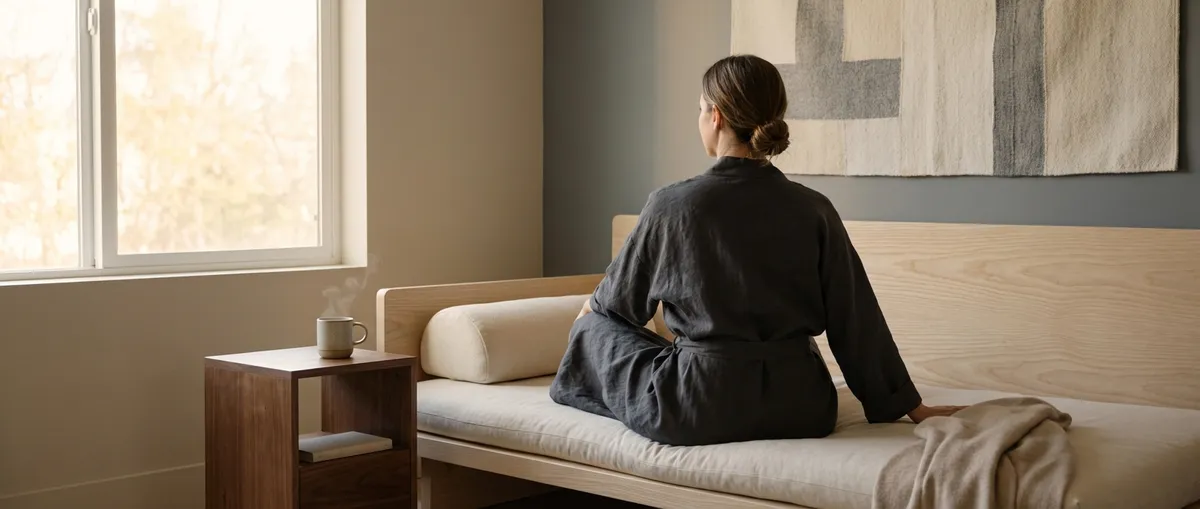
For many professionals, “back care” conjures images of quick fixes and utilitarian supports. Yet genuine spinal wellbeing is less about gadgets and more about the quiet refinement of how you move, rest, and recover. When approached with intention, back care becomes less a medical obligation and more a curated lifestyle choice—one that protects your productivity, preserves your ease, and elevates your daily experience.
Below are five exclusive, often overlooked insights that treat back health not as damage control, but as a high-standard of personal stewardship.
Insight 1: Curating a Signature Sleep Environment for Your Spine
Sleep is the longest continuous posture of your day, yet it is often the least designed. Rather than asking, “Which mattress is best?” the more discerning question is, “Which sleep environment allows my spine to remain neutral and unprovoked for 7–9 hours?”
Start with alignment, not softness. Your goal is to keep ears, shoulders, and hips in one line—whether you sleep on your back or side. For side sleepers, a slightly firmer mattress paired with a pillow that fills the space between your ear and shoulder helps prevent lateral bending of the neck and spine. Back sleepers benefit from a pillow that supports the natural curve of the neck without forcing the head forward, and occasionally a small pillow or rolled towel under the knees to reduce lumbar tension.
Consider your sleep as a multi-layer system:
- Base support: A quality mattress that does not sag under your body’s heaviest points.
- Micro-adjustments: A well-chosen topper to tune firmness, and pillows that can be subtly reshaped for neck and lumbar support.
- Thermal neutrality: Overheating can fragment sleep and increase night-time restlessness, which often translates into awkward, twisting positions. Breathable bedding materials and temperature regulation help preserve stillness and alignment.
By treating your sleep environment as an investment-grade asset, you transform nighttime from a passive break into an active restoration ritual for your spine.
Insight 2: Viewing Your Spine as an Executive Resource, Not an Afterthought
High-performing professionals protect their calendars, inboxes, and attention—but rarely extend the same respect to their spine. Yet your back is an executive resource: it determines how long you can sit in high-focus work, travel comfortably, and execute decisions without the dulling effect of pain.
Begin by re-framing back comfort as non-negotiable infrastructure, rather than a perk. This shifts your decisions—from office chair selection to travel habits—into the realm of strategic planning. Instead of tolerating a chair that “will do,” you evaluate seating the way you would evaluate a key tool or software platform: Does it reduce friction and support your long-term output?
Introduce “spinal appointments” into your day—short, scheduled interludes where you deliberately reset posture, stand, and move. Think of them as micro-board meetings with your body. A 90–120-minute cadence works well for many: briefly standing, walking a corridor, or performing two or three gentle mobility exercises. The aim is not to “work out” but to interrupt the monotony that accelerates disc and joint stress.
When you begin to manage your spine with the same seriousness as your most valuable assets, back care stops feeling indulgent and starts looking like good governance.
Insight 3: Mastering Micro-Movement in a Nominally “Still” Day
Many people assume their backs fail under heavy, dramatic loads—moving furniture, intense gym sessions, or awkward lifting. In reality, the more insidious threat is the absence of movement: the silent, sustained postures that compress discs and fatigue supporting musculature over hours.
The antidote is not radical activity, but refined micro-movement: subtle, deliberate shifts built into otherwise “still” tasks.
Examples include:
- Seated weight shifts: Gently alternate how your weight rests on each sit-bone, maintaining an upright spine. This keeps muscles active and reduces pressure hotspots.
- Standing posture play: While standing (in meetings, at a standing desk, or in a queue), alternate between slightly bending and fully extending the knees. Locking the knees transmits tension up the chain into the back; softening them diffuses load.
- Breath-driven mobility: Periodically take three slow, diaphragmatic breaths, allowing the ribs to expand laterally. This subtly mobilizes the thoracic spine and can reduce upper-back stiffness from prolonged sitting.
- Texting and laptop habits: Rather than letting your head hang forward, bring the screen up to you. Even a few degrees of chin tuck and rib lift, repeated throughout the day, dramatically reduces neck and upper-back strain.
Micro-movement is elegant because it is invisible to others—no dramatic stretching routines in the middle of a boardroom—yet profoundly protective for your spine over months and years.
Insight 4: Cultivating a “Soft Power” Core Rather Than a Braced Armor
Core strength is frequently misunderstood as constant bracing: the instinctive tightening of abdominal muscles at all times. This “hard armor” approach can actually overload the spine by restricting natural movement and driving tension upward into the neck and downward into the hips.
A more intelligent strategy is a “soft power” core—muscles that can activate fluidly when needed, then release. This doesn’t require advanced athleticism; it requires subtle, well-practiced awareness.
Two refined principles guide this approach:
- Dynamic support over static rigidity: When you lift a suitcase, rise from a chair, or turn to reach for something in the car, the goal is a brief, coordinated engagement of the abdominal wall and deep spinal stabilizers—not a permanent clench. You “organize” the torso for a moment, then allow it to soften.
- Integration rather than isolation: Rather than endless sit-ups or crunches, favor movements that recruit hips, glutes, and mid-back along with the abdomen. Simple patterns—like controlled sit-to-stand repetitions, gentle bridges, or standing hip hinges—mirror real life and train your core to function as part of a team, not a lonely hero.
A sophisticated back care practice recognizes that resilience lies in responsive strength. The most reliable spine is not the most rigid, but the most adaptive.
Insight 5: Choosing Diagnostic Clarity Over Reactive, One-Off Treatments
When back discomfort appears, the default response is often reactive: a massage here, a painkiller there, perhaps a hasty purchase of a new chair or cushion. While these may provide transient relief, they rarely answer the more powerful question: Why is this particular back, in this particular body, in this particular lifestyle, under strain?
Elevated back care prioritizes diagnostic clarity. This does not necessarily mean expensive scans for every ache; instead, it means pairing clinical evaluation with context:
- Clinical assessment: A consultation with a qualified clinician (such as a physiatrist, spine-focused physician, physical therapist, or sports medicine specialist) to categorize your pain pattern—mechanical, nerve-related, inflammatory, or referred—and identify red flags that require urgent imaging or specialist input.
- Pattern recognition: Keeping a minimal, precise log for 2–3 weeks: when your pain increases, what you were doing prior, sleep quality, stress level, and device use. This transforms your story from “my back hurts” into “my back predictably worsens after three consecutive days of late-night laptop work on the sofa.” That level of specificity is invaluable.
- Strategic intervention: Instead of cycling endlessly through passive treatments, you co-design a targeted plan: mobility drills for your specific stiffness, strength exercises for your precise weak links, ergonomic or behavioral shifts tailored to your actual triggers.
You move from chasing treatments to curating an intelligent, evidence-informed back health strategy—one that respects both science and your lived experience.
Conclusion
Exceptional back care is not loud. It rarely announces itself with dramatic routines or extreme restrictions. Instead, it reveals itself in the quiet details: the way your mattress meets your spine, how often you interrupt stillness, the intelligence of your core engagement, the seriousness with which you treat discomfort as data rather than as an inconvenience.
When you approach your spine with this level of discernment, back health stops being a recurring problem to manage and becomes an element of your personal standard—a composed, sustainable foundation for every ambition you carry.
Sources
- National Institute of Neurological Disorders and Stroke – Low Back Pain Fact Sheet - Overview of causes, risk factors, and evidence-based approaches to low back pain
- Harvard Health Publishing – 4 ways to turn good posture into less back pain - Explains postural strategies and their impact on spinal comfort
- Mayo Clinic – Back pain: Symptoms and causes - Details common mechanisms behind back pain and when to seek medical evaluation
- Cleveland Clinic – How to Sleep if You Have Back Pain - Provides guidance on sleep positions and mattress considerations for back health
- American Physical Therapy Association – Physical Therapy Guide to Low Back Pain - Describes evaluation and active treatment strategies used by physical therapists
Key Takeaway
The most important thing to remember from this article is that this information can change how you think about Back Health.