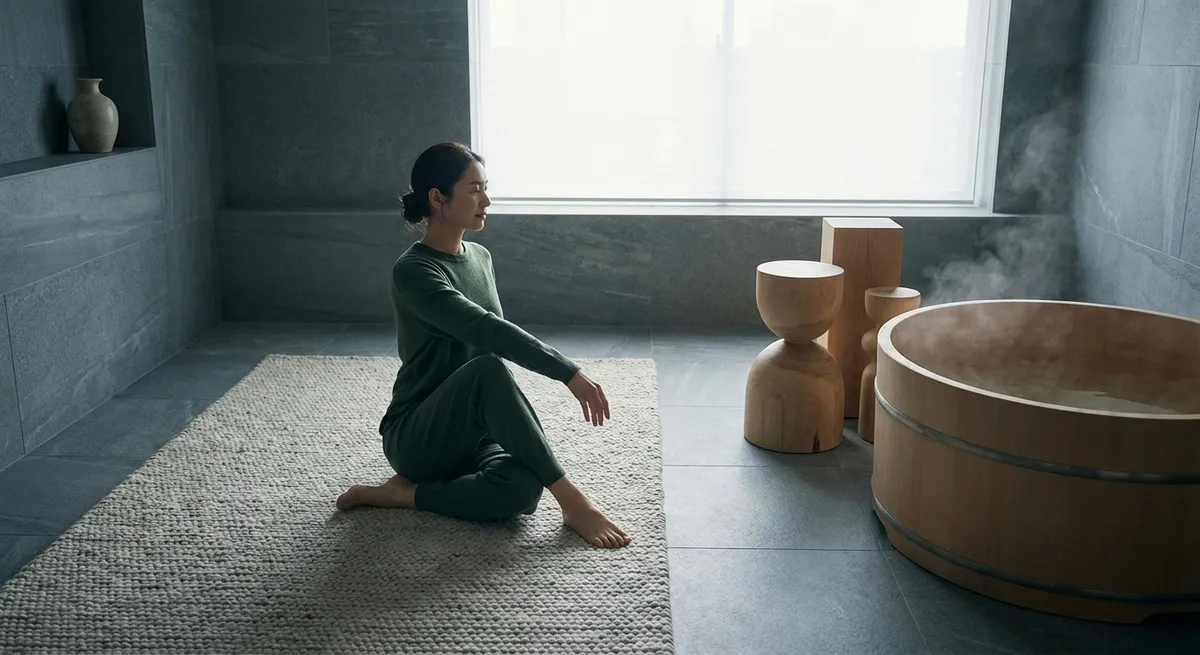
The back rarely demands attention with drama at first. It murmurs, negotiates, compromises—until, eventually, it refuses. For those who live and work at a high level, the usual slogans about “sitting up straight” and “strengthening your core” feel insultingly simplistic. What follows is a more refined lens: five exclusive, often-overlooked insights that treat your back not as an afterthought, but as a central asset in a demanding life.
Beyond Posture: Training Your “Movement Signature”
Most people think of posture as a static pose—shoulders back, chest open, chin tucked. In reality, your spine is defined less by how you hold yourself and more by how you move through ordinary tasks. This is your “movement signature”: the subconscious way you reach for your phone, pivot in your chair, bend to pick up a dropped pen, or slide into a car seat.
A sophisticated back-care strategy looks at these micro-movements. Instead of reserving “good form” for the gym, you treat every repeated action as a mini-training session. How do you rotate to exit a video call and stand up? Are you hinging at the hips or collapsing through the lumbar spine? Are your ribs subtly flaring when you reach overhead, shifting stress to the low back?
You can begin rewriting your movement signature by choosing one daily action and upgrading it. Stand up from your chair by leaning slightly forward, engaging your hips, and keeping your spine long instead of rounding and pushing through the lower back. Reach to the side by shifting your weight through your feet and turning your whole body, rather than twisting solely from the waist. Over weeks, these subtle adjustments accumulate, de-pressurizing your spine in the very moments you repeat dozens of times each day.
The Quiet Power of “Tissue Literacy”
Most of us speak about our back as if it were one monolithic structure: “my back hurts.” In truth, the back is an orchestra of tissues—discs, muscles, fascia, ligaments, joints—each capable of discomfort for different reasons. Developing “tissue literacy” means learning to distinguish what is complaining, not just that something hurts.
A sharp, localized jab with certain movements often points toward a joint or nerve irritation. A broad, dull ache after long sitting can suggest fatigued muscles or overloaded fascia. A sense of stiffness in the morning that eases after gentle movement may reflect joint or disc sensitivity responding well to motion.
You do not need to self-diagnose complex pathology—this remains the domain of professionals. But learning to describe your discomfort with nuance (“deep, central ache after four hours of sitting” versus “sharp, one-sided pinch when I bend and twist”) elevates every clinical conversation you have. Your physiotherapist or physician can then tailor interventions more precisely: targeted mobility for stiff segments, load modification for irritated discs, or strength work for underperforming muscle groups. Tissue literacy turns you from a passive patient into an informed collaborator.
Breathing as Structural Support, Not Just Relaxation
Breathwork is often presented as a relaxation tool. For the back, it is also architecture. The way you breathe changes how pressure is distributed through the spine, how your deep core engages, and whether your back muscles are forced to overcompensate.
Shallow, upper-chest breathing—especially during concentration or stress—tightens the neck and upper back while under-utilizing the diaphragm. The diaphragm, in turn, is not just a respiratory muscle; it partners with the deep abdominals, pelvic floor, and spinal stabilizers to create a subtle “pressure corset” that supports your spine from within.
A refined approach is to practice what some clinicians call “three-dimensional breathing”: inhaling so the breath subtly expands the lower ribs outwards and backwards, not just forwards. The back of your ribcage should gently widen, as if you are breathing into the space behind your heart. On the exhale, feel a quiet gathering through the lower abdomen—not a harsh bracing, but an elegant, steadying support. Over time, this pattern lessens the tendency to grip with the superficial back muscles and invites the deeper stabilizers to do their intended job.
Breath, done well, becomes invisible scaffolding—a calm, continuous support system for the spine rather than a mere stress-management trick.
The “Load Portrait” of Your Day: Where Your Back Actually Works Hard
We often obsess over single events (“I hurt my back lifting a suitcase”) and overlook the cumulative portrait of load our back carries daily. This “load portrait” includes hours of sitting, brief bouts of intensity, awkward travel positions, even the way we hold tension during demanding conversations.
Mapping your day through the lens of spinal load is revealing. Perhaps you start in bed scrolling, spine flexed; then spend hours slightly hunched over a laptop; then stand in one fixed position in meetings; then commute, again seated; and finally decompress on a soft sofa that collapses the lumbar curve. None of these positions is inherently catastrophic—but together, they create volume and monotony. The back rarely struggles with one position; it struggles with only one position.
A more advanced back-care strategy doesn’t merely correct posture; it curates variety. That might mean converting one daily meeting into a walking call, spending 10 minutes working at a higher surface or counter, or setting intentional “micro-pivots”: every 30–40 minutes you change something—seat height, foot position, standing vs. sitting—without disrupting your focus. You are not chasing the perfect position; you are engineering a richly varied load portrait so no single segment of your spine is asked to endure the entire day alone.
Recovery as a Skilled Practice, Not an Afterthought
People with demanding lives often invest heavily in performance—workouts, productivity systems, high-stakes projects—yet treat recovery as passive or optional. For the back, recovery is not simply “doing nothing”; it is an active, skilled practice that determines whether your tissues adapt positively or simply erode.
Consider the difference between collapsing on the sofa after a long day and engaging in ten minutes of intentional decompression. Gentle spinal mobility (such as slow, controlled pelvic tilts while lying on your back), light supported stretches, or a brief walk at an easy pace can help circulate fluid through the discs and reduce residual muscle tension. Even small rituals—lying in a comfortable position with your calves supported on a chair to unload the lower back, or using a firm pillow to maintain a neutral neck and thoracic curve in bed—signal to your tissues that the day’s loads are complete and integration can begin.
Autoregulation is the hallmark of a sophisticated recovery practice. If your back feels irritable after a high-load day (long driving, heavy lifting, intense training), you reduce the next day’s intensity, substitute a gentler session, or add extra movement breaks. Instead of viewing this as “skipping” or “falling behind,” you treat it as strategic investment—preserving spinal resilience so you can continue to perform, year after demanding year.
Conclusion
The most valuable shifts in back health are rarely dramatic. They are understated, intelligent upgrades to how you move, breathe, recover, and interpret your body’s signals. By refining your movement signature, cultivating tissue literacy, harnessing breath as structural support, curating your daily load portrait, and treating recovery as a skilled practice, you elevate back care from damage control to deliberate stewardship.
In a world that often glorifies endurance at any cost, choosing to care exquisitely for your spine is both practical and quietly radical. Your back is not just a structure that carries you; it is a partner in how you work, create, and live. It deserves nothing less than your most considered attention.
Sources
- National Library of Medicine – Low Back Pain Fact Sheet – Overview of causes, risk factors, and management of low back pain
- Harvard Health Publishing – 4 Ways to Turn Good Posture Into Less Back Pain – Discussion of posture, movement, and back pain in everyday life
- Mayo Clinic – Back Pain: Symptoms and Causes – Authoritative summary of common back pain mechanisms and contributing factors
- Cleveland Clinic – Diaphragmatic Breathing – Explanation of diaphragmatic breathing and its role in core stability and relaxation
- NIH – Physical Activity and Musculoskeletal Health – Research discussion on how physical activity and load influence musculoskeletal tissues, including the spine
Key Takeaway
The most important thing to remember from this article is that this information can change how you think about Back Health.