Back comfort is rarely an accident. For most people living with back issues, genuine relief emerges when the spaces they inhabit are designed with the same care as a tailored garment or a well-balanced meal. Ergonomics, at its most refined, is not about gimmicky chairs or trending gadgets; it is about quietly re‑architecting how the body meets the world. When approached with intention, ergonomics becomes an invisible luxury—a daily backdrop that allows the spine to feel supported, unhurried, and unmistakably at ease.
Below are five exclusive, deeply practical insights that move beyond generic advice and into the realm of genuinely elevated back care.
Insight 1: Curate a “Neutral Spine Zone” Instead of a Single Perfect Posture
For many people with back issues, the pursuit of “perfect posture” quickly becomes a source of tension rather than relief. A more sophisticated approach is to design a neutral spine zone—a range of supported positions that your body can move through, rather than one rigid pose to hold.
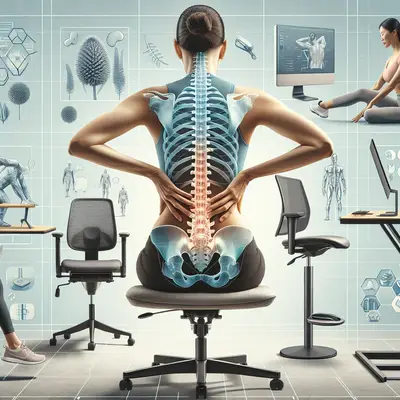
In a neutral spine, the natural curves of the neck, mid-back, and lower back are preserved rather than flattened or exaggerated. Instead of asking, “Am I sitting perfectly?” ask, “Does my environment make it easy to remain close to neutral without constant effort?” This means that your chair height, desk height, and screen placement do most of the work, so your muscles do less.
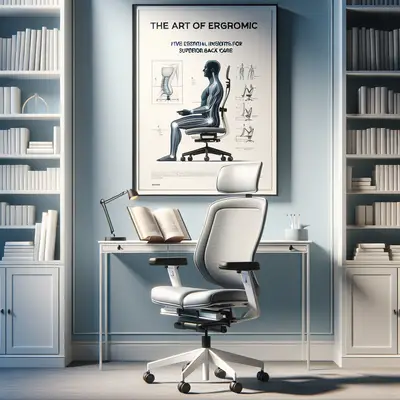
For example, adjust your chair so your hips are slightly higher than your knees, allowing the pelvis to tilt gently forward and the lower back to maintain its natural curve. Position your screen so the top is at or slightly below eye level, reducing neck strain and the slow creep into a rounded spine. Then, rather than freezing in place, shift subtly within this neutral zone—small adjustments every 10–15 minutes that preserve comfort without collapsing into slouching.
By reframing ergonomics as a zone of ease instead of a rigid demand, you respect both the anatomy of your spine and the reality of daily life.
Insight 2: Treat Surfaces as Instruments, Not Background
Most ergonomic advice fixates on the chair, but for a back‑sensitive body, surfaces—the desk, the floor, armrests, even the mattress—are equally important. Each surface that meets your body can either subtly support spinal alignment or quietly erode it.
Your desk is not just a tabletop; it is a height-setting instrument. A surface that is too high forces the shoulders to elevate; too low, and the upper back rounds forward. For typing, your elbows should rest close to your sides at roughly 90 degrees, with forearms parallel to the floor. Adjust the desk, keyboard tray, or chair until this becomes your default, not your forced correction.
The floor, too, is part of your ergonomic toolkit. A stable, supportive surface enables your feet to bear weight evenly. If your feet dangle or rest on a bar, your lower back often compensates with extra tension. A simple, well‑placed footrest—or even a sturdy box—can quietly offload your lumbar spine by allowing your thighs to rest more comfortably and your pelvis to settle.
At home, mattress and pillow quality become foundational surfaces. A mattress that is too soft can permit excessive sagging, while one that is too firm may fail to accommodate the hips and shoulders, forcing the spine to curve unnaturally. The goal isn’t hardness or softness, but even support—where the spine maintains its natural curves, whether you sleep on your back or side. When each surface participates in supporting your body, your back no longer has to fight to find a comfortable shape.
Insight 3: Design Transitions, Not Just Static Positions
Most ergonomic conversations stop at “how to sit” or “how to stand,” but the spine often protests during the transitions—getting up from a chair, leaning forward to reach something, twisting to grab a bag, or bending to tie a shoe. These are the micro‑moments where many people with back issues experience sharp discomfort.
A more advanced ergonomic strategy is to design your environment so high-risk transitions become smoother, smaller, and less frequent. Place frequently used items within a comfortable arm’s reach and between shoulder and hip height to avoid repeated bending or twisting. Consider how you get in and out of your chair: can you slide forward first, then hinge at the hips with a straight back, rather than curling forward from the spine?
Even the way you transition from sitting to standing can be optimized. Plant your feet firmly under your knees, bring your nose slightly over your toes, and use your hips and legs to drive the movement upward, rather than flexing through the lower back. This tiny refinement, repeated dozens of times per day, is a quiet yet powerful protection for a vulnerable spine.
When ergonomics includes how you move between positions, not just the positions themselves, your daily life feels less abrupt, more fluid—and your back often responds with less reactivity.
Insight 4: Synchronize Technology with Your Spine, Not the Other Way Around
Devices have quietly re‑shaped posture around their demands—small screens, fixed camera angles, and flat keyboards that reward hunching and craning. A spine‑conscious life in a digital world requires reversing that relationship: technology must adapt to the body, not vice versa.
Start with your primary device. For laptop users, a separate keyboard and mouse can be transformative. Elevate the laptop screen to eye level using a stand or a stack of books, then bring your arms down to a neutral position with an external keyboard and mouse. This simple redesign allows the neck and upper back to relax, no longer dragged forward by a low screen.
For smartphones and tablets, consider the cumulative cost of hours spent looking down. Train a new habit: bring the device closer to eye level instead of dropping your head. If reading for extended periods, prop the device on a stand or pillow so your arms and neck are not constantly straining to hold it in place. Video calls can also become ergonomic allies if you raise the camera to face level, decreasing the urge to slump or crane forward.
By treating technology as adjustable, modular components of your environment, you reclaim your posture from the tyranny of the screen—and your spine often feels immediately less burdened.
Insight 5: Honor Micro‑Recovery as a Daily Luxury, Not an Emergency
For those living with back issues, rest is often treated as a response to pain flare‑ups. A more elevated approach to ergonomics weaves micro‑recovery into the rhythm of the day—short, deliberate resets that prevent tension from accumulating into pain.
Think of these as brief, luxurious interludes rather than interruptions. Every 30–60 minutes, step away from your primary position. Stand, gently lengthen the spine, or walk for a minute. Use a doorway to open the chest, or simply place a hand on your lower ribs and cue yourself to breathe more expansively. These intentional pauses renew circulation, relieve stiffness, and give overworked postural muscles a temporary release.
You can also create one or two “recovery stations” in your environment: a firm, supportive spot on the floor with a cushion for gentle supine rest, or a reclined chair that allows the lower back to decompress. Spending even three to five minutes in these setups can help reduce the load on sensitive spinal structures, especially after intensive computer work or long meetings.
When micro‑recovery is designed into your day, relief is no longer reactive. It becomes part of an ongoing, curated experience of comfort—an everyday ritual of respect for your spine.
Conclusion
Remarkable back care is rarely about a single chair, desk, or device. It is about a deliberate composition of details—angles, heights, surfaces, and transitions—that together create an environment where the spine no longer has to struggle for support.
By embracing concepts like a neutral spine zone, treating surfaces as active partners, refining transitions, taming technology to suit your body, and honoring micro‑recovery as a daily luxury, ergonomics evolves from a checklist into an art form. For those living with back issues, this artful approach can transform the ordinary acts of sitting, standing, and working into a quietly protective architecture of ease.
Sources
- National Institute of Neurological Disorders and Stroke – Low Back Pain Fact Sheet – Overview of causes, risk factors, and management of low back pain
- Occupational Safety and Health Administration (OSHA) – Computer Workstations eTool – Detailed guidance on ergonomic setup for seated computer work
- Mayo Clinic – Office Ergonomics: Your How-To Guide – Practical advice on chair, desk, and device positioning to reduce strain
- Harvard Health Publishing – The Best Positions for Office Work – Discussion of posture, movement breaks, and workstation design for spine health
- Cleveland Clinic – Back Pain: Prevention – Strategies for minimizing back pain through posture, movement, and environment adjustments
Key Takeaway
The most important thing to remember from this article is that this information can change how you think about Ergonomics.