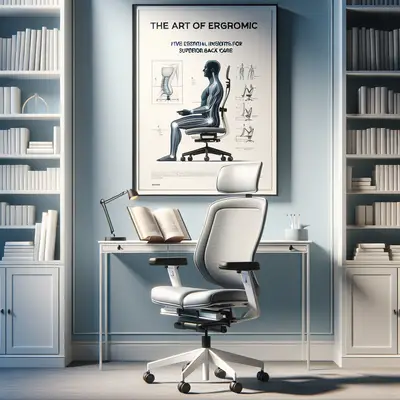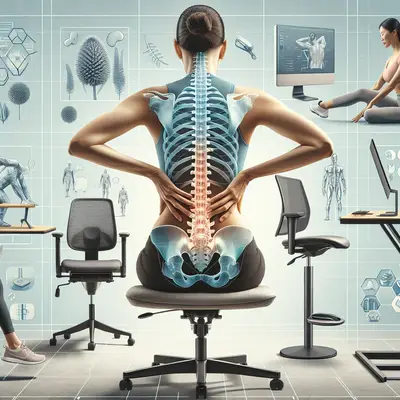
Back care is no longer just a medical concern; it has become a design decision that touches every object you sit on, every surface you work at, and every device you hold. For those who live and work at a demanding pace, ergonomics is less about gimmicky chairs and more about a cultivated relationship with one’s own spine—quietly protective, deeply intentional, and almost invisible to the outside world.
This is ergonomics as quiet luxury: subtle, precise, and tailored to the way you actually live. Below are five exclusive, often overlooked insights that those dealing with back issues can use to refine their environments and routines with the same discernment they bring to their wardrobes, homes, and work.
Ergonomics as Curation: Designing the Spine’s “Visual Line”
Most ergonomic advice fixates on single items—a chair, a keyboard, a cushion. A more sophisticated approach considers the entire “visual line” of your spine from head to pelvis as a curated composition.
Instead of asking, “Is my chair ergonomic?” ask, “Does my whole setup create an uninterrupted line from ear to hip?” That means your screen centered at eye level, your pelvis slightly higher than your knees, your shoulders floating naturally over your ribs, and your head not jutting forward to chase the screen. Think of your spine as the central axis of a well-designed interior: every element in the room either supports or distorts that axis.
This shift—from individual objects to spatial harmony—often explains why a premium chair still feels wrong. The chair might be well-engineered, but if your desk is too high, your monitor too low, or your feet unsupported, your spine pays the price. A genuinely refined ergonomic environment treats your body as the primary “luxury item,” and the furniture as supporting players.
The Two-Hour Rule: Micro-Renewal Instead of All-Day Endurance
People with back issues are frequently told to “sit up straight” or “hold good posture all day,” as though posture were a test of moral endurance. In reality, the spine craves variation. The most intelligent ergonomic principle is not perfect posture; it is deliberate change.
A practical, research-aligned pattern is to reconfigure your posture or setup roughly every two hours—earlier if your back starts to whisper its objections. This does not require elaborate equipment. It could mean:
- Slightly reclining your chair for 20 minutes to offload your lumbar spine
- Standing for a call with one foot resting on a low support
- Perching closer to the front of the chair to activate core engagement for a short period
- Briefly using a cushion or rolled towel behind the lower back, then removing it
For those already living with back pain, this two-hour micro-renewal can be more effective than obsessing over one “perfect” posture. You are, in essence, rotating through a repertoire of supportive positions, rather than asking any single one to carry you from dawn to dusk.
Precision in Height: The Subtle Power of One Inch
A single inch can be the difference between ease and irritation in your spine—especially at the desk. Many refined interiors overlook this, prioritizing aesthetic lines over functional heights. Your back, however, is acutely sensitive to these small discrepancies.
A few targeted checks:
- Desk height: Your elbows should rest at about 90–100 degrees, shoulders relaxed, forearms parallel to the floor. If your shoulders creep upward or your wrists press into the edge of the desk, the surface is too high.
- Seat height: Your feet should rest flat, with knees at or slightly below hip level. If your hips are lower than your knees, your lumbar spine is quietly being pushed into flexion (a frequent trigger for lower back issues).
- Screen height: The top of your screen should be near eye level, so your gaze falls slightly downward, not sharply. Looking down by even 15–20 degrees for hours feeds neck and upper back tension.
Rather than replacing major items, consider subtle modifications: a low-profile footrest, a slim seat cushion to increase hip height, or a monitor stand that adds a discreet inch or two. Such understated adjustments often yield outsized relief for a sensitized back.
The Refined Grip: Protecting the Back Through the Hands
Those with back issues often underestimate the role of the hands and wrists in spinal stress. A tense grip, a misaligned wrist, or a poorly positioned mouse can send subtle strain all the way into the neck and upper back.
A premium ergonomic practice extends to these micro-contact points:
- Keyboard and mouse proximity: Bring them close enough that your upper arms hang naturally by your sides, without reaching forward. That small reach pulls the shoulder girdle forward and invites upper back fatigue.
- Neutral wrist angle: Your hand should be a natural extension of your forearm, not bent upward to reach a tall keyboard or downward toward a low laptop trackpad. A slender wrist rest or a low-profile keyboard can quiet this strain.
- Gentle touch typing: Heavy key strikes or constant mouse-click pressure generate unnecessary muscular effort, reverberating up through the forearm and shoulder. A lighter touch is not just refined—it is protective.
By softening the way you interact with your tools, you indirectly soften the demand on your spine. This is ergonomics at its most understated: microscopic adjustments with macroscopic consequences.
Evening Ergonomics: Closing the Loop Before Sleep
Most ergonomic advice ends at the office door, yet many with back issues know that the most unforgiving hours can be late at night—on the sofa, in bed, or scrolling on a device. A sophisticated approach to back care includes an evening ergonomic ritual that “closes the loop” of the day.
Consider three deliberate evening elements:
- Seating with intention: If you watch or read in the evening, avoid long sessions in overly soft, deep seating that tucks your pelvis and rounds your lower back. Add a small, firm cushion behind the lumbar area and keep your hips slightly higher than your knees.
- Device distance and angle: Bring phones and tablets up to eye level rather than dropping your head toward them. Rest elbows on cushions or armrests to lift the device instead of suspending your arms in mid-air. This protects the neck and upper back from end-of-day strain.
- Sleep interface: Your mattress and pillow are, in effect, eight-hour ergonomic devices. Side sleepers often benefit from a pillow that keeps the neck aligned with the rest of the spine and, frequently, a small pillow or cushion between the knees to maintain pelvic alignment. Back sleepers may find relief with a modest pillow under the knees to ease lumbar tension.
This evening refinement is not indulgent; it is restorative strategy. For a spine already under pressure, these final hours can either undo the day’s careful work—or quietly complete it.
Conclusion
Ergonomics, at its most elevated, is not a chair, a desk, or a single device. It is an ongoing negotiation between your spine and the environments you inhabit, conducted with discretion and intention. For those living with back issues, the distinction between generic advice and truly refined practice lies in the details: an inch of desk height, the timing of a posture change, the angle of a wrist, the quality of the evening wind-down.
By approaching ergonomics as a form of design—where your spine is the central, non-negotiable element—you move beyond trendy equipment and into a quieter, more enduring luxury: a back that is actively protected, subtly supported, and able to carry a demanding life with greater ease.
Sources
- National Institute of Neurological Disorders and Stroke – Low Back Pain Fact Sheet – Overview of causes, risk factors, and evidence-based approaches to managing low back pain
- NIOSH (CDC) – Computer Workstations eTool – Detailed guidance on optimal workstation setup, including chair, desk, and monitor positioning
- Mayo Clinic – Office Ergonomics: Your How-To Guide – Practical recommendations for desk height, chair adjustments, and equipment placement
- Harvard Health Publishing – Is Sitting Really the New Smoking? – Discussion of prolonged sitting, movement variation, and implications for musculoskeletal health
- Cleveland Clinic – How to Sit with Good Posture – Evidence-informed advice on posture, seating, and small adjustments to reduce back and neck strain
Key Takeaway
The most important thing to remember from this article is that this information can change how you think about Ergonomics.