Back pain has a way of narrowing life. It steals attention from conversations, subtly edits travel plans, and inserts hesitations into movements that were once effortless. Yet modern pain management, when approached with discernment, is no longer about merely “getting through the day.” It can be about reclaiming precision, grace, and authority over how your spine feels and functions.
This is not a catalogue of generic tips. Instead, consider it a curated exploration of five exclusive, often-overlooked insights that elevate back pain management from survival to refinement.
Pain as Data, Not Destiny
Pain is frequently treated as a verdict: something to mute, fear, or push through. A more sophisticated approach treats pain as information—data about load, movement, context, and capacity.
Acute pain is your nervous system’s alarm; chronic pain is closer to an overprotective security system. The underlying tissues may have healed, yet the brain continues to predict danger and broadcasts pain as a precaution. Understanding this distinction is transformative: it invites you to ask, “What is my body trying to predict?” rather than, “What is wrong with my back today?”
This shift reframes your role. You move from passive recipient of discomfort to active interpreter of signals. Not every flare-up demands dramatic intervention; sometimes it calls for a minor recalibration—less sitting, more movement variety, softer lighting, or a quieter schedule. When pain becomes data, you can modulate your response: negotiate load, modify posture, or slow your pace without panicking or abandoning your plans.
Over time, this measured curiosity reduces the emotional charge of pain. Fear, catastrophizing, and frustration—each known to amplify pain—begin to soften. What remains is a conversation between you and your spine that is informed, respectful, and nuanced.
The Nervous System: The Unseen Conductor of Back Pain
We often imagine back pain as purely structural—discs, joints, muscles. Yet the nervous system is the true conductor, deciding what you feel, when you feel it, and how intensely. The same lumbar MRI can correspond to agony in one person and mild stiffness in another, because perception is not dictated by anatomy alone.
Stress, sleep quality, mood, and even anticipation shape how the brain processes signals from the back. Under high stress, the brain lowers the threshold for danger and interprets benign sensations as threatening, turning minor tightness into considerable pain. Conversely, when your nervous system is well regulated—rested, safe, and supported—it is more discerning and less reactive.
Working with the nervous system, therefore, becomes a central pillar of refined pain management. Gentle breathwork, for example, is not merely “relaxation.” Slow, diaphragmatic breathing stimulates the vagus nerve, encouraging a shift from fight-or-flight to rest-and-digest, which can diminish pain intensity. Similarly, consistent, high-quality sleep is not a luxury; it is a daily recalibration of your brain’s capacity to dampen pain signals.
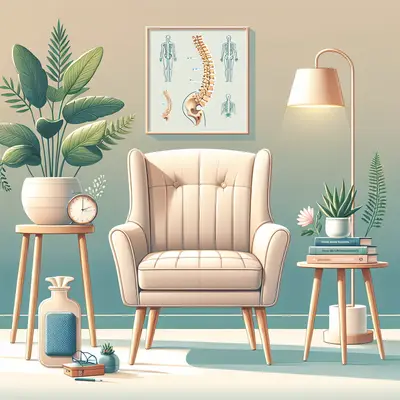
Equally important is the environment you inhabit. Visual calm—uncluttered spaces, soft lighting, ergonomic seating that feels inviting rather than clinical—provides subtle reassurance to an anxious nervous system. Over time, these seemingly aesthetic choices contribute to a body that hurts less, not by accident, but by design.
Precision Over Power: The Art of Thoughtful Movement
The instinctive response to back pain often swings between extremes: rigid protective stillness or aggressive “I must fix this with exercise” intensity. Both can aggravate your spine. The more refined approach is precision over power—choosing movements that are deliberate, measured, and respectful of current capacity.
Thoughtful movement does not necessarily mean elaborate routines. It can mean smaller arcs of motion performed slowly, with real attention to how your spine, hips, and ribcage share the workload. It means moving just to the edge of discomfort, not through it, and gradually expanding that edge over time.
This approach acknowledges that the spine does not perform in isolation. Hips that do not rotate, ankles that do not flex, and a ribcage that barely moves with each breath all funnel extra demand to the lower back. Targeted, high-quality mobility and strength work for these neighboring regions subtly reduces the mechanical burden on your spine, often decreasing pain without directly “attacking” the painful area.
Just as important is variability. A refined movement practice avoids locking you into a single “correct” posture or exercise. Instead, you cultivate a wide repertoire of comfortable options: multiple ways to sit, stand, bend, lift, and rest. This diversity is the musculoskeletal equivalent of a diversified investment portfolio—resilient, adaptable, and less likely to crash when stress appears.
Micro-Decisions: The Luxurious Discipline of Everyday Choices
For many people, back pain management is imagined as a series of major interventions: specialist appointments, procedures, intensive therapies. In reality, it is the accumulation of micro-decisions—hundreds of small choices made each day—that often determine whether discomfort escalates or recedes.
These micro-decisions are deceptively simple:
- The way you transition from sitting to standing—braced and deliberate, or rushed and twisted.
- Whether you take a 90-second movement break every 30–45 minutes, or remain immobile for hours.
- How you stand in line—locked knees and arched back, or softly bent knees with weight gently shifting.
- Whether your evening wind-down involves calming the nervous system or overstimulating it with screens and tension.
Individually, these choices seem inconsequential. Collectively, they form the daily architecture that either soothes or provokes your spine. Treating these micro-decisions as an elegant discipline—akin to maintaining a fine instrument—reframes them not as chores, but as acts of thoughtful self-stewardship.
You may notice that the most effective habits are often the least dramatic: a supportive chair that you genuinely enjoy using; subtle foot support that aligns your pelvis; a gentle morning sequence that wakes your back before demands arrive. This is where luxury meets utility: the quiet investment in objects, environments, and routines that make the comfortable choice the natural one.
Strategic Relief: Using Interventions Without Letting Them Use You
From medications and injections to manual therapy, heat, ice, and advanced procedures, modern pain management offers a substantial menu of options. The sophisticated challenge lies in using these tools strategically—neither glorifying nor demonizing them.
Medication, for instance, can be invaluable in acute flares, creating a window in which you can move, sleep, and engage in rehabilitative practices. But when relief becomes the only strategy, the nervous system receives a different message: “We are helpless without this.” Over time, reliance grows while resilience shrinks.
Similarly, manual therapies—massage, spinal manipulation, soft tissue work—can ease muscle guarding and provide a sense of physical and emotional relief. Used wisely, they become a complement to your broader plan: a way to reduce pain enough that you can move better, train smarter, and restore confidence in your body. The danger is in using them as the sole solution, returning repeatedly to be “fixed” rather than gradually reclaiming authority over your own spine.
The refined standard is this: any intervention should serve a clearly defined role within a long-term strategy that includes movement, nervous system regulation, and lifestyle design. Ask your clinician not only, “Will this help?” but also, “How does this fit into the larger plan for my back over the next 6–12 months?”
By doing so, you preserve what is truly luxurious in pain management: options, autonomy, and the ability to choose interventions as enhancements, not lifelines.
Conclusion
Back pain does not have to dictate the terms of your life. When you treat pain as data, honor the nervous system as the central conductor, favor precision over brute force in movement, cultivate luxurious discipline in daily choices, and employ relief tools with strategy rather than desperation, you construct something rare: a relationship with your spine grounded in respect, not fear.
This is the quiet command of discomfort—not the absence of pain at all times, but the presence of clarity, agency, and refined care practices that allow your back to support the life you intend to live.
Sources
- [National Institute of Neurological Disorders and Stroke: Low Back Pain Fact Sheet](https://www.ninds.nih.gov/health-information/disorders/low-back-pain) - Overview of causes, risk factors, and treatment approaches for low back pain
- [Harvard Health Publishing – “Understanding chronic pain”](https://www.health.harvard.edu/pain/understanding-chronic-pain) - Explains the role of the nervous system and brain in chronic pain perception
- [Mayo Clinic – “Back pain”](https://www.mayoclinic.org/diseases-conditions/back-pain/symptoms-causes/syc-20369906) - Discusses symptoms, common causes, and evidence-based management strategies
- [American College of Physicians – Clinical Practice Guideline for Low Back Pain](https://www.acpjournals.org/doi/10.7326/M16-2367) - Evidence-based recommendations on noninvasive treatments for low back pain
- [Cleveland Clinic – “Chronic Pain: What You Need to Know”](https://my.clevelandclinic.org/health/diseases/4798-chronic-pain) - Reviews chronic pain mechanisms, treatment options, and self-management principles
Key Takeaway
The most important thing to remember from this article is that this information can change how you think about Pain Management.