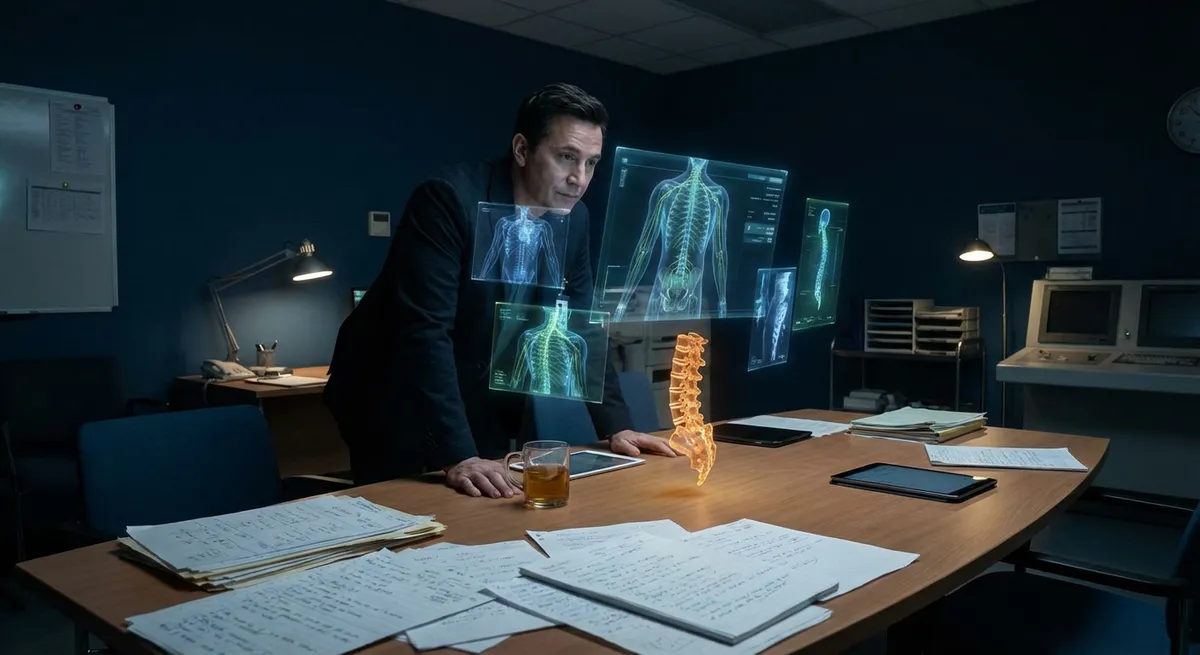
The most effective back pain strategies rarely shout. They operate with quiet authority—deliberate, precise, and designed to preserve your capacity for a demanding life. Rather than chasing quick fixes, strategic pain stewardship treats your back as an asset to be managed with care, foresight, and intelligence. This is pain management not as crisis control, but as an ongoing, elevated practice of self-governance.
Below are five exclusive insights for those who expect more than generic advice—people who view their spine not as a problem to be “fixed,” but as a structure to be expertly curated over time.
Insight 1: Treat Pain as Data, Not a Verdict
Most back pain is not a final sentence—it is information. The distinction is subtle but transformative.
Pain signals are your nervous system’s language for perceived threat, not a perfectly calibrated report on tissue damage. Two people with identical MRI findings can have profoundly different pain experiences; conversely, severe pain can exist with minimal structural change. High performers often push through pain or suppress it; refined pain management instead asks: What is this signal trying to protect me from?
Begin to observe patterns without judgment: time of day, posture, stress load, recent sleep, and activity levels. Did pain intensify after a day of intense focus at your desk? After travel? After a conflict or demanding negotiation? You are not merely collecting complaints—you are building a personal archive of data.
This shift allows more calibrated decision-making: when to move, when to pause, when to seek hands-on care, and when to reframe the pain as a false alarm. Over time, you become less reactive and more discerning, transforming pain from a disrupter into a quietly informative metric in your overall health portfolio.
Insight 2: Design Pain “Margins” into Your Day
High-functioning people design margins into their finances, calendars, and organizations. Very few apply the same sophistication to their bodies.
A pain margin is a buffer zone—physical and neurological—that keeps you from living on the edge of flare-ups. Instead of operating at 95–100% of what your back can tolerate, you aim for 70–80% as your norm, preserving a cushion for the inevitable demands of travel, deadlines, and unexpected stress.
This can look like:
- Intentionally underloading certain exercises even when you “could” do more
- Stopping a sitting session before discomfort appears, not after
- Scheduling micro-movements every 45–60 minutes as non-negotiable, like executive briefings
- Planning recovery days after long flights or high-stress events, as you would after a major presentation
By normalizing margins, you reduce reliance on crisis interventions—urgent therapy, last-minute medications, or forced rest days. Pain episodes may still occur, but the amplitude and duration tend to decrease. Your back becomes less volatile, more predictable, and more compatible with a sophisticated, high-output life.
Insight 3: Curate Your Pain Team Like You Curate Professional Advisors
Executive-level problems rarely have one-dimensional solutions; the same is true of meaningful back pain.
Instead of searching for a single “guru,” consider yourself the curator of a small, select advisory board for your spine. Each expert brings a distinct lens; your role is to orchestrate rather than outsource judgment.
Your team might include:
- A physiatrist (rehabilitation physician) or spine-focused physician for diagnostic clarity
- A physical therapist with a nuanced, movement-based approach rather than generic handouts
- A manual therapist (such as a highly trained chiropractor, osteopath, or massage therapist) with a gentle, evidence-informed style
- A psychologist or pain specialist familiar with modern pain science and cognitive-behavioral or acceptance-based approaches
- A primary care physician who understands your broader medical context
Refined pain management acknowledges that imaging, hands-on care, movement re-education, nervous system regulation, and medication (when appropriate) each have a place. The sophistication lies in combination, timing, and dosage. As with a well-run board, the goal is alignment, not uniformity: diverse expertise in the service of a focused, long-term outcome—sustainable function with minimal disruption.
Insight 4: Train Your Nervous System to Trust Movement Again
For many individuals with persistent back pain, the nervous system—not the spine itself—becomes the most influential player. It learns to associate certain movements or contexts with danger: bending, lifting, sitting, even waking up in the morning.
A premium approach to pain management involves not only strengthening muscles, but rehabilitating your confidence in movement. This is not bravado; it is precise, graded exposure.
You might start with movements that are symbolically important but technically modest—such as a gentle hip hinge, an elegant sit-to-stand, or a controlled lunge—performed in a slow, deliberate, and painless range. The intent is to send a repeated message to your system: “This is safe. We can do this.”
Layer in:
- Calm breathing as you move, to keep your nervous system from escalating
- A focus on smoothness and control rather than intensity or volume
- Subtle progression in load, range, or complexity over weeks, not days
With time, the fear-memory loop weakens. Your body no longer anticipates disaster every time you lean forward or twist. This restoration of trust is often the difference between a back that merely hurts less and a back that feels available to you again—reliable, capable, and part of your identity as a person who moves well.
Insight 5: Elevate Recovery from Afterthought to Ritual
In elite environments, performance is often glorified while recovery is treated as a technicality. Yet with back pain, recovery is not the quiet background—it is the architecture that sustains everything else.
Advanced back stewardship views recovery as a curated ritual, customized to your spine’s preferences. Instead of generic rules (“stretch more,” “sit less”), you define a personal suite of recovery elements:
- Sleep as structural maintenance: selecting a mattress and pillow combination that supports spinal neutrality, and protecting sleep duration as non-negotiable infrastructure, not a negotiable luxury.
- Thermal strategies with intention: using heat to coax muscle relaxation and cold in select situations to manage acute spikes, not as reflexive, indiscriminate tools.
- Intentional decompression: gentle positions that reliably ease your back—such as supported reclining, legs elevated on a cushion, or carefully chosen yoga-inspired poses—used proactively rather than only in crisis.
- Digital boundaries: firm limits on late-night laptop marathons in bed and prolonged phone use in flexed positions that quietly accumulate strain.
The goal is not asceticism but discernment. Your recovery rituals become as precisely chosen as your wardrobe or your workspace—each element contributing to a cohesive, supportive environment in which your back can quietly restore itself.
Conclusion
Sophisticated pain management is not flashy. It does not rely on miracle devices or dramatic interventions. Instead, it is characterized by quiet consistency, thoughtful boundaries, curated expertise, and a deep respect for the dialogue between your spine and your nervous system.
By treating pain as data, building margins, curating a team, retraining movement confidence, and elevating recovery into ritual, you step into a role that is both practical and powerful: steward of your own back. In that role, pain becomes less of a disruptive force and more of a manageable variable—one you navigate with composure, clarity, and enduring authority.
Sources
- National Institute of Neurological Disorders and Stroke – Low Back Pain Fact Sheet – Overview of causes, diagnosis, and treatment approaches for low back pain
- American College of Physicians – Clinical Practice Guideline for Low Back Pain – Evidence-based recommendations emphasizing non-pharmacologic therapies and judicious use of medication
- Harvard Health Publishing – Understanding Pain: How the Brain Interprets Pain Signals – Explains the role of the nervous system and brain in the experience of pain
- Mayo Clinic – Chronic Pain: Medication Decisions – Discusses when and how medications can be used as part of a broader pain management strategy
- Cleveland Clinic – Cognitive Behavioral Therapy for Chronic Pain – Describes how psychological approaches can help reframe and manage ongoing pain
Key Takeaway
The most important thing to remember from this article is that this information can change how you think about Pain Management.