Our backs are shaped as much by our spaces as by our habits. The chair you sink into at 10 a.m., the kitchen counter you lean on at 6 p.m., the mattress you fall into at midnight—all of them are making small, cumulative decisions about your spine on your behalf. Thoughtful ergonomics is not about turning your home or office into a medical clinic; it is about crafting an environment where comfort feels effortless and good posture becomes the path of least resistance.
This is ergonomics as quiet architecture: subtle design choices that protect your back without announcing themselves.
Ergonomics as Spatial Storytelling, Not Just Furniture
Ergonomics tends to be reduced to a shopping list: a “good” chair, a “good” desk, a “good” mattress. The more refined approach is to see it as spatial storytelling—how each area invites your body to move, rest, and recover throughout the day.
Instead of asking, “Is this an ergonomic chair?” a better question is, “What postural story does this room tell?” If your office encourages only sitting, your kitchen demands constant bending, and your living room promotes slumping, your spine is being asked to live a single, repetitive narrative. The result is often stiffness, fatigue, and a back that feels older than you are.
By contrast, a well-designed day includes:
- Spaces that invite standing as naturally as sitting.
- Surfaces at heights that reduce the need to hunch or crane.
- Lighting that prevents you from leaning forward to see.
- Pathways that are clear, so your gait stays natural and confident.
In this framing, ergonomics becomes less about isolated products and more about orchestrating a flow of micro-comforts that preserve your back’s resilience from morning to night.
Exclusive Insight #1: Your Back Has a “Preferred Height Range”
Every spine has a range of working heights where it performs with more ease and less strain. Most people obsess about seat height but ignore the full vertical spectrum of their day: countertops, sinks, bedside tables, monitors, and even laundry baskets.
A refined ergonomic approach is to map your “preferred height range” and curate your environment accordingly. For many adults, this comfortable working band tends to be roughly between the height of the elbows and mid-chest when standing, and just above the thighs to just below the elbows when seated—though individual proportions matter.
Consider these subtle adjustments:
- Kitchen and bathroom: Store frequently used items between mid-thigh and chest height. Reserve high shelves and low cabinets for light, rarely used items.
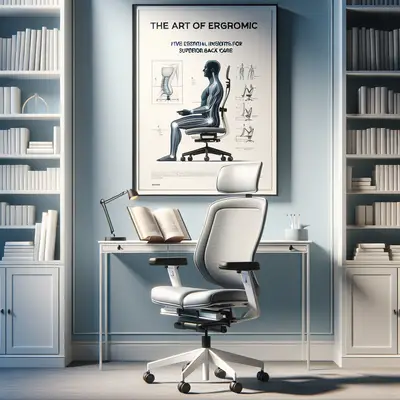
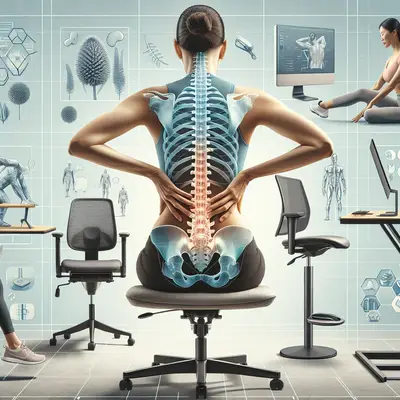
- Work surface: When typing, your elbows should rest near a 90-degree angle, forearms level, shoulders relaxed. If your desk is too high, your shoulders creep upward; too low, your spine collapses.
- Household tasks: Elevate laundry baskets onto a bench, use a step-stool for high shelves, and avoid prolonged bending “from the waist” for repetitive chores.
Thinking in vertical ranges—rather than individual objects—protects your back from hundreds of unnecessary micro-strains each week.
Exclusive Insight #2: Micro-Rotation Is the Silent Aggravator
Most people focus on bending and lifting as the main culprits of back pain. Less obvious—but often more insidious—is micro-rotation: those subtle, repeated twists of the spine done absent-mindedly at a desk, in the car, or in bed.
Common micro-rotation traps include:
- A monitor slightly off-center, requiring a small, constant head and trunk turn.
- Frequently reaching to one side for a mouse, phone, or notepad.
- Driving with the seat rotated slightly or twisting to reach the back seat.
- Sleeping half-rotated with the upper body twisted relative to the pelvis.
Individually, these rotations feel harmless. Accumulated over hours and days, they can be the quiet background noise that keeps your back irritated.
To refine your environment:
- Center your work: Align your keyboard, monitor, and main document directly in front of you. Your nose, sternum, and navel should generally face the same direction.
- Symmetrical reach zones: Place frequently used objects (phone, notebook, mouse) within a semi-circle in front of you, reachable without twisting the torso.
- Driving posture: Set mirrors so you can see without rotating your trunk or over-rotating your neck; adjust the seat so your hips and shoulders face directly forward.
- Sleep alignment: Use pillows to support the upper leg and trunk when side sleeping, so your spine remains neutral instead of half-rotated.
Reducing micro-rotation is a subtle but powerful way to soothe a sensitized back without feeling constrained or rigid.
Exclusive Insight #3: Luxury for the Back Is Predictability, Not Plushness
Many people equate back comfort with softness: deep sofas, plush beds, and overstuffed cushions. For spines that are already irritated, however, the real luxury is predictability—consistent, supportive surfaces that don’t lure you into prolonged collapse.
Plush environments often create two problems:
- Lumbar disappearance: The lower back sinks and rounds, losing its natural curve and placing more load on discs and ligaments.
- Effortful exits: Getting out of an overly soft or low seat demands a powerful, awkward push from the back and hips, especially challenging for already painful spines.
A more refined strategy is to curate a stable, supportive baseline, then add softness selectively:
- The “smart” living room seat: Choose seating with firm, even support, seat height close to knee level, and backrests that meet the natural curve of your lumbar spine. Add slim, strategic cushions rather than oversized pillows that swallow posture.
- The considered mattress: Medium-firm support, with slight contouring, often performs better for back pain than extremes of very soft or very hard. The aim is to keep the spine aligned while allowing shoulders and hips to settle comfortably.
- Structured lounging: If you enjoy reclining, do so with the pelvis supported and the lower back gently reinforced—think a small lumbar pillow or rolled towel—rather than fully slumped into a C-shape.
True ergonomic luxury is a surface that remembers your spine’s architecture and supports it quietly, night after night, not one that forces your back to negotiate with gravity every time you sit or lie down.
Exclusive Insight #4: Transitional Moments Are Where Backs Are Won or Lost
Most ergonomic conversations fixate on static positions—how you sit, stand, or sleep. Yet many back injuries and flare-ups happen in the transitions: sitting to standing, bending to lifting, twisting to reaching, rising from the floor, or getting out of bed.
Transitional ergonomics is about designing these movements to be as smooth, stable, and predictable as possible:
- From chair to stand: Choose chairs with stable bases, non-slippery floors, and armrests you can gently press against. Position your feet under your knees, lean your torso slightly forward with a neutral spine, and use your legs to rise rather than yanking from your lower back.
- From bed to upright: Roll to your side first, slide your legs off the bed as a unit, and push up with your arms—rather than jackknifing forward from your lower back.
- From floor to standing: Use nearby furniture for light support, bring one foot forward into a half-kneeling position, then rise with your legs. Avoid sudden, twisting rises from a deep squat or cross-legged sit.
- Lifting as a sequence: Approach the object squarely, keep it close to your body, hinge at the hips instead of rounding the lower back, and engage your legs as the primary engines of the movement.
Thoughtfully designed surroundings—stable seating, appropriate heights, non-slip surfaces, and clear handholds—turn these transitions from risky improvisations into controlled, back-respecting routines.
Exclusive Insight #5: The Back Thrives on Variability Within Boundaries
A sophisticated ergonomic environment is not one in which you hold a “perfect” posture all day. The spine is a living structure; it prefers variability—different positions, small movements, gentle shifts. What matters is the range in which you vary.
Think of your spine as having a “comfort envelope”: a set of postures and positions that are generally well tolerated. The goal is to move frequently within this envelope, rather than oscillating between rigid uprightness and complete collapse.
Practical ways to cultivate refined variability:
- Alternating work modes: Instead of forcing eight rigid hours in a chair, allow yourself to alternate between seated, standing, and occasionally leaning or perching postures. A sit-stand desk or an elevated counter can facilitate this.
- Micro-movements: Gentle shifts of weight, subtle pelvic tilts, and small changes in leg position refresh the spine’s structures and circulation. Movement does not need to be conspicuous to be beneficial.
- Segmented sitting: Organize your day into 25–45 minute blocks, each with a brief intermission. Use these breaks to walk, stretch lightly, or change posture—just a few minutes is often enough.
- Variety with discernment: Soft sofas, bar stools, and floor sitting can all be part of your repertoire, provided your baseline of support and alignment is strong, and you shift positions before discomfort accumulates.
The most elegant ergonomic strategy is not to chase an ideal posture, but to create an environment in which your body is invited to move often—within thoughtfully designed boundaries that keep your back feeling safe.
Conclusion
Ergonomics, at its finest, is less about gadgets and more about quiet decisions: the height of a shelf, the angle of a screen, the firmness of a chair, the route from sitting to standing. These details compose the everyday architecture in which your spine lives.
By understanding your back’s preferred height range, eliminating subtle rotational stress, favoring predictable support over indulgent softness, refining transitional movements, and embracing intelligent variability, you are not just preventing pain—you are curating an environment where your back is consistently respected.
In this kind of space, comfort is not dramatic. It is understated, reliable, and deeply restorative—a quiet luxury your spine recognizes immediately.
Sources
- Harvard Health Publishing – How to sit correctly – Overview of posture principles and sitting ergonomics from Harvard Medical School
- NIH / National Institute of Neurological Disorders and Stroke – Low Back Pain Fact Sheet – Evidence-based background on causes and management of low back pain
- Mayo Clinic – Office ergonomics: Your how-to guide – Practical guidance on ergonomic workstation setup from a major medical center
- U.S. Occupational Safety and Health Administration (OSHA) – Computer Workstations eTool – Detailed governmental standards and recommendations for ergonomic workstation design
- Cleveland Clinic – The Best Sleeping Positions for Back Pain – Clinical guidance on mattress support and sleep positioning for back comfort
Key Takeaway
The most important thing to remember from this article is that this information can change how you think about Ergonomics.