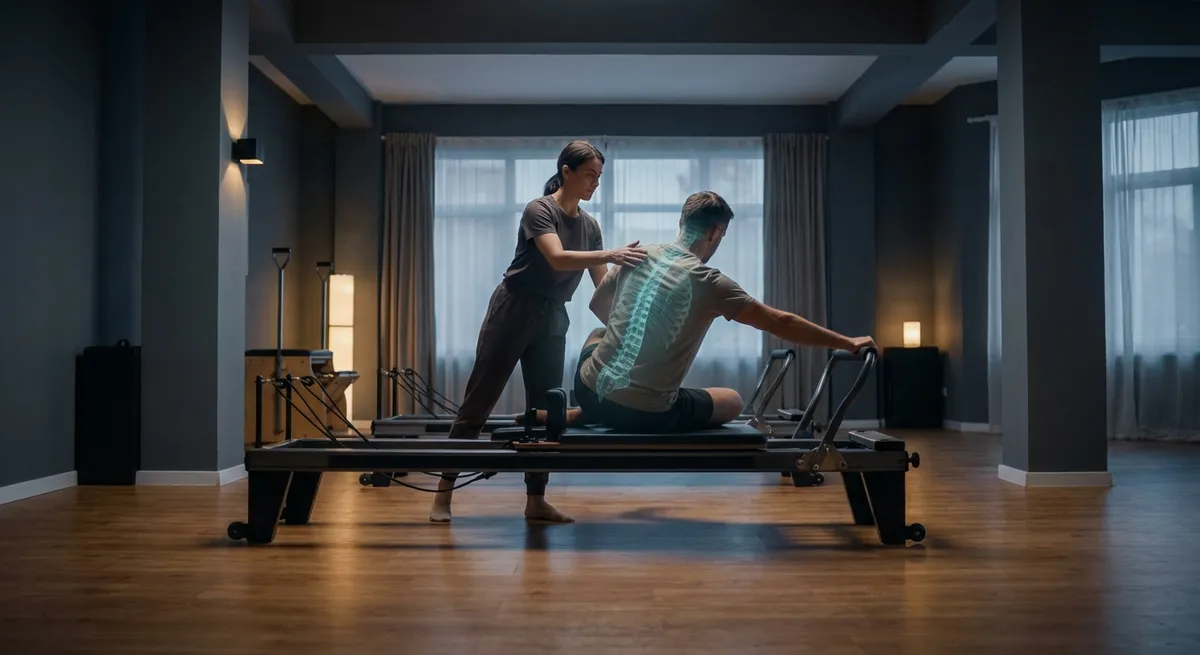
Back care is no longer just about “doing your stretches” and hoping for the best. For a discerning spine, exercise therapy becomes something more akin to bespoke tailoring: measurement, nuance, and adjustment, all in service of a precisely attuned back. When movement is approached as a form of intelligent design, every repetition, breath, and angle carries weight. This article explores how exercise therapy, when refined and intentional, can transform not only how your back feels, but how it behaves under the subtle pressures of a demanding life.
From Generic Routines to Precision Programs
The first quiet revolution in modern back care is the shift away from generic exercise sheets toward precision-built programs. Research increasingly shows that “non-specific” back pain is rarely truly non-specific; it often reflects highly individual combinations of joint stiffness, muscular imbalance, neuromuscular inhibition, and lifestyle-driven strain patterns.
A premium exercise therapy approach begins with a careful assessment: where your spine moves easily, where it resists, which muscles overwork to compensate for weaker ones. This can involve movement screens, strength testing, and even detailed review of how you sit, stand, and transition between postures. Instead of a handful of standard stretches, you receive an architecture of movement that responds to your exact back—its history, its current limitations, and its future demands.
This is not only about comfort. A bespoke program can reduce recurrence of back pain episodes, improve stamina for long workdays, and subtly refine the way your entire body distributes load. Precision in exercise selection—down to the angle of a hip hinge or the tempo of a bridge—becomes a quiet form of insurance for a back required to perform at a consistently high level.
Exclusive Insight 1: Micro-Loading as the New Luxury
In refined exercise therapy, the question is no longer “How heavy can you lift?” but “How precisely can you load?” Micro-loading—using small, carefully dosed increments of resistance—is emerging as a powerful tool for back rehabilitation and long-term resilience.
Instead of dramatic jumps in weight or difficulty, micro-loading respects the nervous system’s preference for gradual change. A minimal increase in load, whether via small dumbbells, resistance bands, or subtle shifts in body weight, can stimulate the deep stabilizing muscles of the spine without provoking protective spasm or flare-ups.
For those managing back issues, this approach feels less like “pushing it” and more like finely tuning an instrument. The body is gently invited, not forced, to adapt. Over time, this incremental strategy builds capacity in the tissues that matter most for spinal health—multifidus, transverse abdominis, gluteal muscles—without the boom-and-bust cycle of overexertion followed by rest. In this sense, micro-loading is the luxury analogue of strength training: understated, deliberate, and surprisingly powerful.
Exclusive Insight 2: The Art of Anti-Fatigue Movement
Most back discomfort in high-performing adults does not come from one dramatic injury, but from thousands of small, accumulated moments of muscular fatigue. The refined answer is not simply “more breaks,” but better breaks: anti-fatigue movement.
Anti-fatigue movement sequences are deliberately short, two-to-four-minute clusters of exercises designed to interrupt the specific patterns that lead to fatigue in your spine. Instead of a random stretch between meetings, you perform a curated micro-routine: perhaps a hip flexor release, followed by a thoracic extension over the back of a chair, concluding with a controlled core activation pattern.
The key is precision: you target the exact muscles that become shortened, locked, or inhibited during your usual work or lifestyle demands. Done two to five times a day, these sequences act as a quiet preservation strategy for your back. Over time, they reduce the end-of-day heaviness many people accept as inevitable. Think of anti-fatigue movement as the spinal equivalent of professional-grade skincare: small, consistent interventions that prevent visible breakdown before it begins.
Exclusive Insight 3: Breathing as a Structural Support System
For a sophisticated approach to back care, breathing is no longer merely about relaxation—it becomes a structural tool. The diaphragm, deep abdominal muscles, and pelvic floor form a dynamic pressure system that supports your spine from the inside. When they are coordinated, your back receives subtle yet continuous support during everyday tasks, from lifting a suitcase to leaning over a sink.
Exercise therapy that deliberately trains this system—through diaphragmatic breathing, 360-degree rib expansion, and gentle bracing during movement—reframes breath as internal architecture. This is particularly valuable for those who experience recurring episodes of “mysterious” back tightness without a clear mechanical cause.
By improving the interplay between breath and movement, you reduce unnecessary gripping in the low back muscles and allow the deeper stabilizers to share the workload. Over time, even simple actions like standing from a chair or rolling out of bed can feel more effortless, because they’re supported not just by muscles you can see, but by pressure systems you can sense.
Exclusive Insight 4: The Strategic Use of Asymmetry
Conventional wisdom often idealizes symmetry, but the human body is naturally asymmetric. We have a dominant side, a favored standing posture, a preferred crossing of the legs. In refined exercise therapy, the goal is not to erase these asymmetries, but to use them strategically.
Targeted unilateral exercises—single-leg bridges, one-arm rows, offset carries—allow you to identify which side of your body over-supports and which side under-contributes. Rather than chasing a vague notion of “evenness,” your therapist can use gentle asymmetrical loading to coax underperforming muscles into the conversation.
For people with back issues, this can be transformative. That persistent tightness on one side of the low back might be less about the back itself and more about a hip that doesn’t fully stabilize, or a thoracic region that rotates more easily in one direction than the other. Correctly applied asymmetry in training reveals these blind spots and addresses them in a controlled, elegant way—without forcing your body into an unrealistic ideal of perfect symmetry.
Exclusive Insight 5: Recovery as a Deliberate Training Variable
In sophisticated back care, recovery is not an afterthought; it is a primary ingredient. Many individuals with recurring back pain are not necessarily “too weak,” but too rarely fully recovered when they ask their backs to perform again. The solution is not simply more rest, but structured recovery.
This may include scheduled low-load movement days, where the emphasis is on circulation and fluidity rather than strength. It can involve mobility rituals that are brief but done with exceptional attention to detail: slow spinal rotations, supported hip openers, or supine decompression positions that unload the lumbar segments.
Sleep quality, hydration, and stress modulation also become part of the therapeutic framework, not lifestyle footnotes. A high-caliber exercise program for the back will integrate these recovery elements explicitly: how many intense sessions per week, how many restoration-focused sessions, how to adjust volume after travel or high-stress periods. In this model, recovery is curated with the same care as training itself—because for a demanding spine, how you restore is as important as how you perform.
Integrating Exercise Therapy into a Refined Daily Life
The true elegance of modern exercise therapy is its ability to integrate seamlessly into a sophisticated lifestyle. This does not require hours in a gym or an identity built around rehabilitation. Instead, it means sprinkling carefully chosen movements into the natural rhythms of your day: a structured two-minute sequence between calls, a five-minute spinal mobility ritual bookending your workday, a weekly session of guided progression with a clinician or specialist.
Over time, this accumulation of precise, intelligent movement alters the baseline of how your back feels and functions. You move through demanding schedules with less background noise from your spine. Lifting, traveling, or sitting through long events become less fraught and more neutral. Exercise therapy, in this context, is not a temporary fix but a cultivated practice—an ongoing dialogue with your back that prizes nuance, foresight, and understated strength.
Conclusion
For those who expect a great deal from their backs—long workdays, intense focus, frequent travel, high performance—exercise therapy offers more than pain relief. When approached with precision and sophistication, it becomes a quiet form of spinal intelligence: deeply personalized, strategically loaded, attuned to breath, asymmetry, and recovery.
The five insights explored here—micro-loading, anti-fatigue movement, structural breathing, strategic asymmetry, and deliberate recovery—are not dramatic interventions. They are subtle upgrades, each one a refined adjustment in how you relate to movement. Together, they compose a new standard of back care: not reactive, but anticipatory; not generic, but exacting. In this realm, your back is no longer something to manage reluctantly, but a system to cultivate with intention.
Sources
- [American College of Physicians – Noninvasive Treatments for Acute, Subacute, and Chronic Low Back Pain](https://www.acponline.org/acp-newsroom/american-college-of-physicians-issues-guideline-for-treating-nonradicular-low-back-pain) - Clinical guideline emphasizing exercise and noninvasive approaches for back pain
- [National Institute of Neurological Disorders and Stroke – Low Back Pain Fact Sheet](https://www.ninds.nih.gov/health-information/disorders/low-back-pain) - Overview of causes, risk factors, and evidence-based management of low back pain
- [Harvard Health Publishing – Strengthening the Core: What You Need to Know](https://www.health.harvard.edu/healthbeat/strengthening-the-core-what-you-need-to-know) - Explains the role of core strength and stability exercises in supporting the spine
- [Mayo Clinic – Back Pain: Self-Management and Exercise](https://www.mayoclinic.org/diseases-conditions/back-pain/in-depth/back-pain/art-20043992) - Discusses beneficial types of exercise and movement strategies for back pain
- [NHS – Exercises for Back Pain](https://www.nhs.uk/live-well/exercise/exercises-to-help-back-pain/) - Provides practical, evidence-informed back exercises and guidance on safe progression
Key Takeaway
The most important thing to remember from this article is that this information can change how you think about Exercise Therapy.