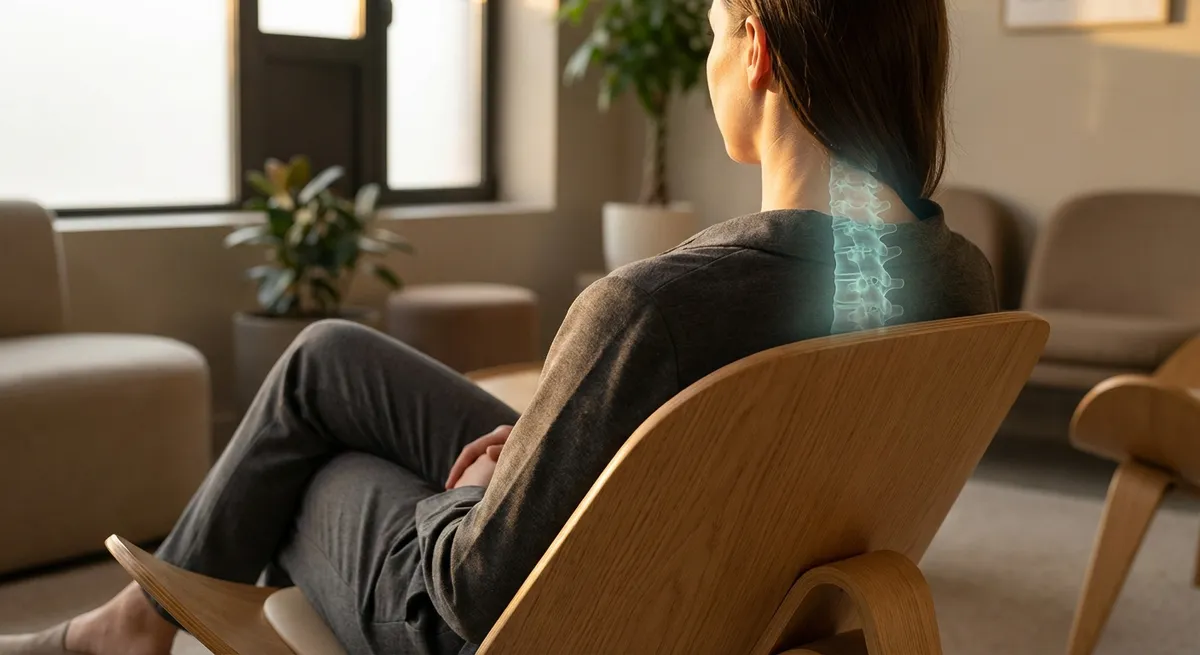
Back pain has a way of shrinking your world. It narrows your focus to the next twinge, the next chair, the next night of sleep. Yet the most effective pain management rarely arrives as a dramatic intervention. Instead, it often emerges as a series of quiet, intelligent decisions that reframe how you move, rest, work, and even think about your spine. This is where back care becomes a refined practice: less about chasing quick fixes, more about curating an environment in which your back is consistently, deliberately respected.
Below are five exclusive, under-discussed insights that people living with back pain—and those who care for them—often find transformative. Each one shifts pain management from crisis response to cultivated habit.
Insight 1: Treat Pain as Data, Not a Verdict
Pain is not a moral failing, nor is it an immutable sentence. It is a biologically sophisticated alarm system—sometimes exquisitely calibrated, sometimes over-protective. Reframing pain as data allows you to respond with discernment instead of fear.
When you interpret pain as information, you begin to observe patterns with clinical curiosity: Which positions are provocative? Which are merely uncomfortable but safe? How does your pain behave across the day—sharp in the morning, dull by evening, or the reverse? This mindset turns you from a passive recipient of symptoms into a meticulous observer of your own body.
This approach is particularly relevant in chronic back pain, where the nervous system can become “sensitized,” amplifying signals and reacting strongly to what may be structurally minor issues. Working with a pain specialist, physiatrist, or physical therapist who understands this concept can help you distinguish between “harmful” pain and “protective” pain. The result is more nuanced choices: modifying rather than abandoning activities, adjusting rather than immobilizing, and gradually restoring confidence in your own movement.
Insight 2: Design Your Day, Not Just Your Desk
Ergonomics is often reduced to the shape of a chair or the angle of a monitor. In reality, your spine responds to the choreography of your entire day. A chair can be perfectly designed yet still become an enemy if you remain in it for three uninterrupted hours.
A refined approach to pain management considers daily rhythm as carefully as furniture design. You might treat posture changes as scheduled “micro-interventions”—standing for phone calls, pacing slowly during virtual meetings, or stretching gently between tasks. The goal is not perpetual motion, but deliberate variation: alternating between sitting, standing, walking, and reclining so that no single posture monopolizes your musculoskeletal system.
This daily design can extend to consistent rituals that “bookend” your spine’s workload. A short, structured morning routine—perhaps a sequence of controlled spinal mobility exercises and light core activation—can prime your back for the day’s demands. An evening wind-down might focus on de-loading the spine, with gentle floor-based stretches, diaphragmatic breathing, and mindful positioning that encourages the nervous system to settle. Over time, these small, predictable touchpoints create a landscape in which pain has less room to dominate.
Insight 3: Curate Your Sleep Environment Like a Treatment Plan
For many people with back pain, night-time is the quiet stage on which discomfort performs its most persistent act. Yet sleep is also one of the most powerful, and most underleveraged, tools in pain management. The quality, duration, and continuity of your sleep influence how intensely you perceive pain and how well your tissues recover.
Curating a sleep environment for back comfort begins with two questions: how your spine is aligned, and how your body is supported. Side sleepers often benefit from a pillow placed between the knees to reduce rotational strain on the lower back, while back sleepers may find relief with a small pillow under the knees to ease lumbar tension. The right mattress is less about marketing language and more about matching firmness to your body type, sleeping position, and pain pattern. For some, a medium-firm surface provides the optimal balance between contour and support; for others, a hybrid approach works best.
Equally crucial is sleep regularity. Research increasingly shows that irregular or fragmented sleep can heighten pain sensitivity, making the same structural issue feel more intense. A cultivated sleep routine—consistent bedtimes, minimized screen exposure beforehand, a slightly cooler room, and perhaps a brief breathing or relaxation practice—does more than feel indulgent. It lowers the nervous system’s baseline arousal, which often translates into calmer pain responses by day as well as night.
Insight 4: Use Movement as Precision Dosing, Not Punishment
Movement is often discussed in broad terms—“Stay active,” “Exercise more”—which can feel vague or even intimidating if every step or bend has become a negotiation with discomfort. A more sophisticated strategy is to think of movement as medication: carefully chosen, precisely dosed, and adjusted over time.
Precision movement begins with clarity. Instead of general “back exercises,” think in categories: mobility (how the joints move), stability (how muscles support those joints), and capacity (how long and how strongly they can work). A tailored plan may emphasize one category more than the others depending on your diagnosis and pain profile. For example, someone with stiffness-dominant low back pain may need controlled repetition of flexion or extension movements, while another person with instability may benefit more from targeted deep core activation.
Dosing matters as much as selection. Too much intensity too soon can stir up symptoms; too little may never create meaningful change. Working with a knowledgeable clinician, you can identify a threshold that is “productively uncomfortable” but not aggravating—a sensation that you can recover from within a reasonable timeframe. Over weeks and months, these micro-progressions quietly expand your physical confidence. Movement stops being a threat and becomes, once again, a tool for self-possession and freedom.
Insight 5: Elevate Recovery Rituals to the Same Status as Treatment
Many people with back pain invest deeply in treatments—manual therapy, injections, medications, targeted exercise—yet treat recovery as an afterthought. In reality, what you do between interventions often determines whether those interventions succeed. Recovery is not idleness; it is deliberate, structured restoration.
A premium approach to back care elevates recovery rituals to the same level of importance as appointments and prescriptions. This might include scheduled “down-regulation windows” during the day: five to ten minutes of guided breathing, body scanning, or simple lying-down rest to give your paraspinal muscles and nervous system a moment of decompression. For those in high-pressure professions, these interludes become a subtle but powerful counterbalance to constant cognitive and physical demand.
Recovery also embraces thoughtful self-care tools—heat or cold applied with purpose, not reflexively; occasional use of well-chosen supports (lumbar rolls, cushions, or braces) without becoming dependent on them; and simple, consistent nutritional habits that favor tissue repair and reduce systemic inflammation. Perhaps most importantly, it includes psychological recovery: acknowledging the emotional toll of persistent pain and, when appropriate, integrating cognitive-behavioral strategies or pain-focused counseling. The aim is not to “think away” pain, but to prevent it from colonizing your identity and choices.
Conclusion
Sophisticated pain management for the back is not defined by a single device, treatment, or trend. It is characterized by discernment: the ability to interpret pain as data, to design your days instead of merely surviving them, to refine your sleep, to treat movement as a calibrated ally, and to honor recovery as a discipline in its own right.
When these elements converge, back care begins to feel less like a struggle and more like a quietly elevated standard of living. Pain may not disappear overnight, but your relationship with it evolves—from adversarial and reactive to informed, composed, and deeply intentional. In that shift lies a more expansive life, with your spine no longer at the center of every decision, but seamlessly supported in the background of what you most value.
Sources
- [National Institute of Neurological Disorders and Stroke – Low Back Pain Fact Sheet](https://www.ninds.nih.gov/health-information/disorders/low-back-pain) - Overview of causes, diagnosis, and treatment options for low back pain
- [Harvard Medical School – Understanding Pain](https://www.health.harvard.edu/pain/understanding-pain) - Explains how pain works, including chronic pain and the role of the nervous system
- [Cleveland Clinic – Sleep and Pain: What’s the Connection?](https://health.clevelandclinic.org/the-connection-between-sleep-and-pain) - Discusses how poor sleep can heighten pain sensitivity and affect recovery
- [Mayo Clinic – Back Pain: Symptoms and Causes](https://www.mayoclinic.org/diseases-conditions/back-pain/symptoms-causes/syc-20369906) - Provides clinical insight on mechanisms, risk factors, and standard management for back pain
- [American College of Physicians – Noninvasive Treatments for Acute, Subacute, and Chronic Low Back Pain](https://www.acponline.org/acp-newsroom/american-college-of-physicians-issues-guideline-for-treating-nonradicular-low-back-pain) - Evidence-based guideline on movement, non-pharmacologic strategies, and stepwise care
Key Takeaway
The most important thing to remember from this article is that this information can change how you think about Pain Management.