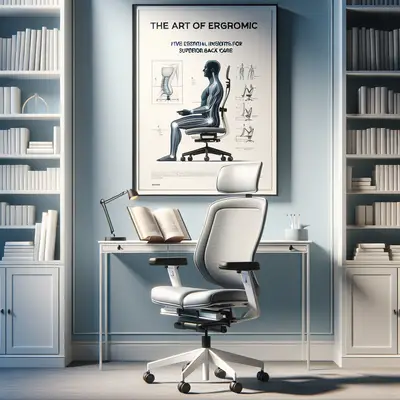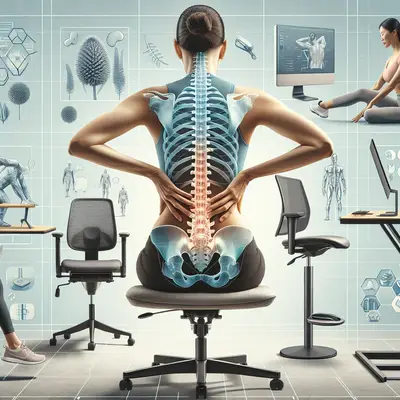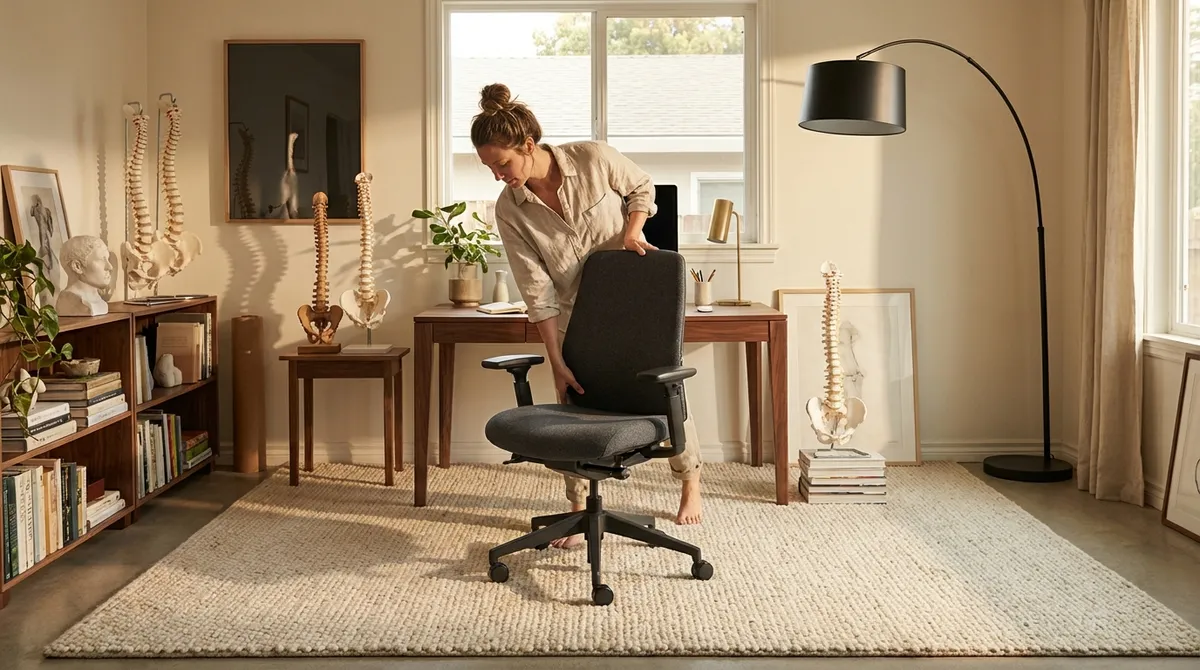
The most powerful changes to your back health often happen in the spaces no one sees—how you angle your screen at 3 p.m., where your feet rest during a late-night email, the way your ribs move when you exhale between meetings. Ergonomics, at its most refined, is less about buying another chair and more about curating a personal environment where your spine is quietly, consistently respected. It is the difference between merely “getting through” the day and moving through it with poise.
For those already living with back issues, the stakes are higher—and the details matter more. Thoughtful ergonomics becomes a daily negotiation between comfort, function, and long-term protection. The following five insights go beyond standard advice, offering a more elevated, precision-driven way to care for your back through how you sit, stand, work, and unwind.
1. The Spine-Informed Desk: Designing Around Your Natural Curves
Sophisticated ergonomics begins with acknowledging that your spine is not a column—it is an elegant series of curves that respond to how you place your tools, not just how you place your body. Instead of starting with your chair, start with where your work actually happens: the desk surface and visual field. Your screen should sit so that the top third is at or slightly below eye level, allowing your neck to remain in a soft, lengthened position rather than a forward glide. The keyboard and pointing device should allow your elbows to hover near your sides at roughly a 90-degree angle, so your upper back is not forced to brace all day.
If you have back pain, micro-adjustments become essential: a slightly negative tilt to the keyboard can reduce shoulder tension; a low-profile mouse or trackpad can minimize wrist extension that tugs upward into the neck. Prioritize depth on your desk—enough space to keep the monitor at arm’s length—to avoid an unconscious forward lean that compresses the lumbar region. Consider your desk as a landscape that should invite upright ease, not constant reaching and hunching. When every frequently used object sits within a comfortable arc of motion, your spine is no longer paying a hidden tax for every small task.
2. Chair as Instrument, Not Throne: Fine-Tuning Support Instead of Sinking
A premium chair is not inherently protective; it becomes protective when tuned to your specific body and back history. Many people sit in a chair the way they sit on a sofa—sinking, relaxing, and unconsciously rounding the lower back. For a spine that has already signaled distress, your chair must behave more like an instrument you learn to “play” with precision. Adjust lumbar support so it lightly meets the natural inward curve of your lower back without pushing you forward; you should feel contact, not pressure. The seat depth should allow two to three fingers of space between the back of your knees and the front edge, so your pelvis can tip freely rather than being wedged.
If your back issues include stiffness or disc sensitivity, prioritize a slightly higher seat height that allows your hips to rest just above knee level, encouraging a more neutral pelvic position. Add a small, high-quality lumbar roll only if the built-in support cannot meet your spine’s contour; more support is not always better if it forces rigidity. Finally, treat the backrest recline as a living setting, not something you pick once and forget—slight recline through the day can systematically unload the lumbar spine. In this approach, your chair is not a passive cushion but a responsive framework that participates in your recovery.
3. The Grounded Base: Foot Position as the Hidden Architect of Spinal Ease
Many people obsess over backrests and cushions yet overlook the most fundamental point of leverage: the feet. When your feet are not firmly supported, your spine is forced to stabilize in compensation. Dangling feet, crossed legs, or perching on the front edge of a chair all subtly twist and torque the pelvis, which then ripples tension upward through the lumbar and thoracic spine. For those with existing back issues, that low-grade instability is often the silent trigger for end-of-day ache.
A truly ergonomic setup starts by ensuring your feet rest fully and symmetrically on a stable surface. If your chair must be high to accommodate desk height, a footrest—ideally one with a gentle angle—restores grounded contact without making your thighs feel compressed. Notice the small luxuries here: the ability to keep knees hip-width apart without effort, to uncross your legs without feeling “unfinished” in your posture, to let your toes spread rather than clench into the floor. These details allow the pelvis to rest in a neutral, dignified position, making upright posture feel supported rather than performed. Over time, this grounded base can reduce compensatory muscle gripping in the lower back and hips, giving your spine a calmer baseline from which to heal.
4. Micro-Movements as Spine Conservation: Refusing the Static Workday
True ergonomic refinement does not freeze you into a perfect posture; it choreographs small, deliberate shifts that prevent your spine from becoming a static sculpture. Your tissues fatigue when they hold any position too long—even an ideal one. For individuals with back pain, this means that the most elegant posture is the one that is gently in motion throughout the day. Instead of thinking in hours, think in segments of 20–40 minutes: within each window, the goal is not to stand up dramatically, but to introduce subtle adjustments that keep circulation and joint nutrition alive.
This can be as understated as slightly altering your recline angle, momentarily sliding your hips back in the chair to reset your lumbar curve, or gently rolling your shoulders and allowing the ribs to expand with a slow breath. If you use a sit-stand desk, avoid the trap of spending entire mornings standing and afternoons sitting; instead, cycle between positions before stiffness appears. Even micro-breaks as brief as 30–60 seconds—standing to reach for a document, resting one foot on a low stool while standing, lightly engaging your deep abdominal muscles as you exhale—can function as spine conservation strategies. These are not interruptions to productivity; they are the maintenance rituals that allow you to keep working without an escalating cost to your back.
5. The Evening Reset: Unwinding Daily Ergonomic “Debts” with Intention
By the end of the day, your spine has accumulated a series of subtle stresses: prolonged flexion over a laptop, rotational bias from always reaching toward the same side, compressive loading from static sitting. An elevated approach to ergonomics recognizes that the workday does not fully end until these accumulated “debts” have been gently unwound. For people with back issues, this reset is not indulgent—it is non-negotiable strategy. Begin by examining your typical tension pattern: Does discomfort pool in the low back, mid-back, or neck? Tailor your reset to the specific region, rather than relying on generic stretching.
For the lumbar spine, lying on your back with lower legs supported on a chair or ottoman can neutralize the curve and allow deep spinal muscles to soften. For the mid-back, positioning a rolled towel lengthwise along the spine while lying on the floor can invite the chest to open and counteract rounded sitting. For the neck, a brief, supported recline with the head resting on a small, firm pillow can help undo forward-head strain. Pair these positions with slow, nasal breathing that lengthens the exhale; this shifts the nervous system toward calm, encouraging tense muscles to let go. Over time, this evening ritual becomes your quiet assurance that, no matter how demanding your day has been, your spine is granted the deliberate care it deserves before tomorrow begins.
Conclusion
When ergonomics is treated as a refined practice rather than a checklist, it transforms into an ongoing conversation between your environment and your spine. Every adjustment—where your feet land, how your chair responds, how often you shift, how you close the day—becomes a deliberate act of preservation. For those living with back issues, this level of attention is not excessive; it is precisely what allows you to participate fully in modern work without sacrificing long-term comfort.
Poised ergonomics does not ask you to live in fear of movement or sitting; instead, it offers a framework in which each choice subtly protects your back. In that quiet refinement lies a powerful promise: a life where productivity and spinal well-being are not at odds, but elegantly aligned.
Key Takeaway
The most important thing to remember from this article is that this information can change how you think about Ergonomics.