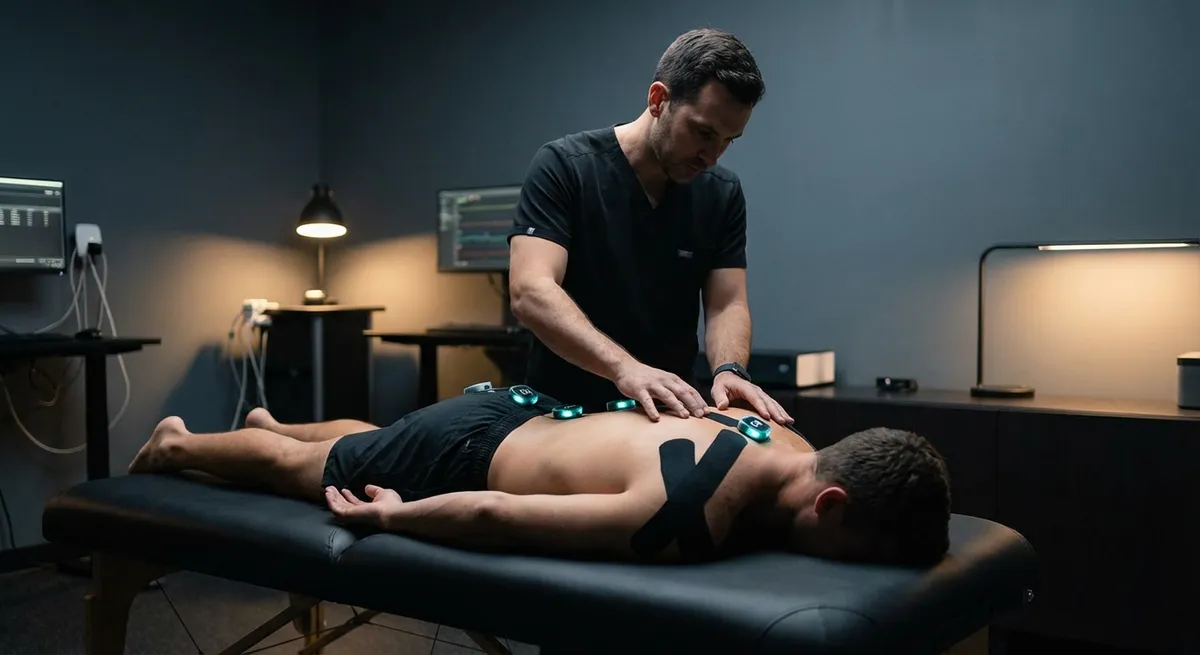
Back care at its most refined is not about doing more; it is about doing exactly enough in precisely the right way. Exercise therapy, when thoughtfully curated, moves beyond generic “back workouts” and becomes a bespoke program for the spine—one that respects your history, your habits, and your ambitions. For those living with back issues, intelligent movement is not punishment for pain, but an elegant, ongoing negotiation with it.
In this piece, we’ll explore how exercise therapy can be elevated from routine rehabilitation to precision care, with five exclusive insights that people with discerning standards—and demanding backs—quietly rely on.
From Generic Protocols to an Individual Spine Profile
Most exercise programs start with a diagnosis. Sophisticated back care starts with a profile. Rather than focusing solely on labels such as “disc herniation” or “facet arthropathy,” a spine profile examines how you sit, stand, sleep, work, and train—then translates these patterns into a tailored exercise strategy.
A refined profile considers your spinal curves (lumbar, thoracic, cervical), where you carry tension, how easily you coordinate breathing with movement, and which planes of motion (flexion, extension, rotation, lateral flexion) are underused or overused. It takes into account your training background: a former dancer, a distance runner, and a frequent flyer with long-haul jet lag will each require a very different therapeutic approach.
Once this profile is established, exercise therapy becomes less about chasing pain and more about upgrading function. You might discover, for example, that your primary issue is not “weakness” but timing—your deep stabilizers recruiting a fraction of a second too late. The exercises then pivot from brute strengthening to finely tuned coordination: slower, smaller, more deliberate. The result is a program that feels less like rehab and more like bespoke physical craftsmanship.
The Quiet Power of Load Literacy
One of the most underappreciated skills in back care is load literacy: the ability to sense, select, and adjust how much your spine is asked to tolerate—moment by moment.
Rather than a simplistic rule of “never lift heavy,” sophisticated exercise therapy teaches you how to dose load like a precision instrument. You learn the difference between beneficial challenge and inflammatory overload, not just in the gym, but in daily life: luggage, grocery bags, a restless child climbing into your arms. Through guided exercises, such as graded hip hinges, careful carries, and controlled step-ups, you train your back to distribute forces through the hips, ribs, and feet, instead of compressing the lumbar segments alone.
Load literacy also means understanding that too little demand on the spine can be as problematic as too much. Extended avoidance of bending or twisting can decondition tissues and heighten sensitivity. When exercise therapy is done well, you return gradually—but deliberately—to movements you once feared, until your back recognizes them as normal again. The result is not just less pain, but less anxiety around movement, which itself is profoundly therapeutic.
Micro-Precision: When Millimeters and Milliseconds Matter
For many people with recurring back issues, the missing ingredient is not another exercise, but more meticulous execution of the ones they already know. In high-level exercise therapy, millimeters and milliseconds become the language of refinement.
A pelvic tilt adjusted by a few millimeters can determine whether you’re truly engaging deep abdominal support or simply bracing superficially. A fractionally slower exhale can unlock more rib mobility and reduce undue lumbar compression. A five-degree change in neck position can stop tension from cascading down the entire spine during otherwise beneficial movements.
In practice, this may look like performing a basic bridge, but with a heightened standard: feet placed relative to hip width and rotation, neutral versus imprinted spine based on your profile, breath coordinated with each lift, and an unwavering focus on whether the movement is starting from the hips or being stolen by the low back. This level of micro-precision transforms familiar “therapeutic” exercises into powerful recalibration tools, often revealing why well-intentioned routines previously plateaued.
Strategic Fatigue: Training Endurance Without Provoking Flare-Ups
For a spine that has endured pain, how you get tired matters as much as whether you get stronger. Strategic fatigue is the art of building endurance in spinal support systems while avoiding the cascading breakdown that leads to flare-ups.
In refined exercise therapy, sessions are structured so that the first muscles to tire are the ones you want to train—often the deeper stabilizers around the trunk and hips—while protecting the more vulnerable segments from brute overuse. This might mean shorter sets with impeccable form, paired with micro-pauses that prevent compensatory patterns from sneaking in. Instead of pushing through “just one more rep,” you stop at the last truly clean repetition and preserve your nervous system’s trust in the movement.
Strategic fatigue also extends to planning the week as a whole. High-demand days—such as travel, long meetings, or intense work deadlines—may be paired with restorative or low-load spinal sessions, while days with less cognitive and emotional load can bear slightly more physical challenge. Over time, the spine learns not only to tolerate more, but to recover more efficiently, which is the hallmark of a resilient back rather than a merely protected one.
Sensory Refinement: Turning Your Body’s Feedback into Data, Not Drama
People with persistent back issues often live with a chorus of bodily messages—stiffness upon waking, occasional sharp twinges, certain chairs that feel subtly “wrong.” A premium approach to exercise therapy treats this sensory feedback as valuable data, not emotional drama.
Rather than categorizing sensations only as “good” or “bad,” refined back care explores their nuances: dull versus sharp, symmetrical versus one-sided, movement-induced versus position-induced, immediate versus delayed. During exercise, you’re taught the difference between a tolerable, training-related discomfort and a signal that demands modification. This might mean adjusting the angle of a lunge, changing the tempo of a spinal mobility drill, or reducing the range of motion of a rotation exercise until tissues adapt.
Over time, this sensory literacy creates a sophisticated internal dashboard. You notice earlier when your back is requesting more hip mobility, more thoracic extension, or simply less time in one fixed posture. Exercise therapy then shifts from being a separate “session” to a responsive toolkit you carry into your day—micro-movements between calls, small decompression sequences after flights, and brief activation routines before demanding tasks. Your spine, once a source of uncertainty, becomes a highly informed collaborator.
Conclusion
Exquisite back care has very little to do with heroic workouts or austere restrictions. At its best, exercise therapy for the spine is measured, perceptive, and tailored—it respects the complexity of your life as much as the complexity of your anatomy. By moving from generic protocols to an individualized spine profile, cultivating load literacy, insisting on micro-precision, applying strategic fatigue, and refining your sensory interpretation, you transform exercise from a chore into an intelligent dialogue with your body.
For those living with back issues, this is the quiet luxury: not merely the absence of pain, but the presence of confidence—a sense that every carefully chosen movement is an investment in a more capable, composed spine.
Sources
- [American Physical Therapy Association – Physical Therapy Guide to Low Back Pain](https://www.choosept.com/guide/physical-therapy-guide-low-back-pain) - Overview of evidence-based physical therapy approaches for low back pain and the role of targeted exercise
- [National Institute of Neurological Disorders and Stroke – Low Back Pain Fact Sheet](https://www.ninds.nih.gov/health-information/disorders/low-back-pain) - Medical background on causes, prognosis, and conservative management strategies for back pain
- [Harvard Health Publishing – How to Ease Back Pain Through Exercise](https://www.health.harvard.edu/pain/how-to-ease-back-pain-through-exercise) - Discussion of how specific exercises and movement strategies can reduce back pain and improve function
- [Mayo Clinic – Back Pain: Self-Management and Prevention](https://www.mayoclinic.org/diseases-conditions/back-pain/in-depth/back-pain/art-20574950) - Practical guidance on activity, posture, and exercise for people with back pain
- [The Lancet – Series on Low Back Pain](https://www.thelancet.com/series/low-back-pain) - Research-based perspective on global back pain management, including the importance of active, exercise-focused care
Key Takeaway
The most important thing to remember from this article is that this information can change how you think about Exercise Therapy.