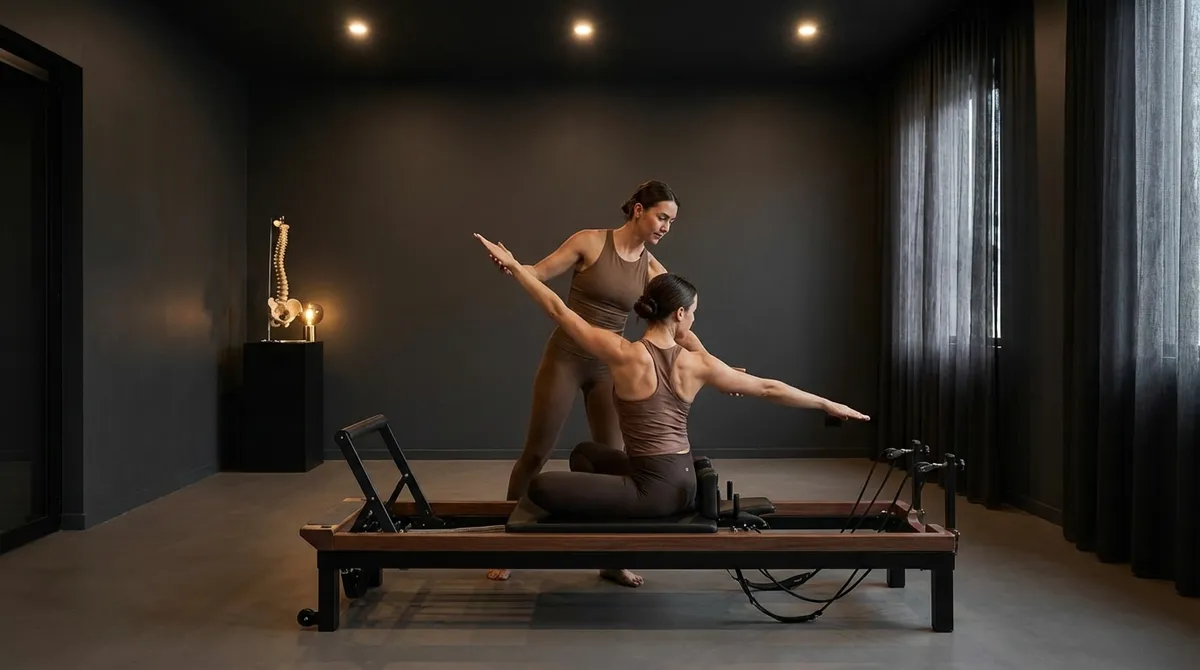
The most discerning approach to back care is no longer reactive—waiting for a flare, then scrambling for relief—but curatorial. Exercise therapy, when thoughtfully designed and exquisitely executed, becomes a form of intelligent stewardship over the spine: deliberate, precise, and quietly transformative. This is not about punishment workouts or generic “core routines.” It is about cultivating a nuanced, evidence-informed practice that respects the architecture of your back as much as it respects your time, energy, and standards.
Below, you’ll find five exclusive insights that reframe exercise therapy from a mundane obligation into a refined, strategic investment in spinal longevity.
Beyond Strength: Training Your Back’s “Decision-Making” System
Most people think of exercise therapy for back pain as a matter of muscle: strengthen your core, activate your glutes, stabilize your spine. All of that is valid—but incomplete. What often distinguishes an ordinary program from a superior one is attention to the nervous system, not just the musculoskeletal system.
Your spine is governed by a complex network of sensors—joint receptors, muscle spindles, fascia, skin—constantly sending information to your brain. Exercise can sharpen this feedback loop so your body makes better micro-decisions: how much to tense, when to relax, how far to reach, how swiftly to pivot. This is the realm of proprioception and motor control, and it plays a powerful role in both performance and pain.
Refined back-care exercise programs incorporate low-load, high-awareness drills: slow, precise movements emphasizing control over range; subtle weight shifts in standing; single-leg stance with gentle head turns; or controlled spinal segmentation (articulating one vertebra at a time in flexion or extension, within comfortable limits). These are not glamorous exercises, but they enhance the spine’s “intelligence”—reducing clumsy, abrupt movements that can provoke pain.
When clients adopt this perspective, they stop asking only, “How strong is my back?” and start asking, “How well is my back coordinated?” That shift alone can elevate a routine from adequate to exceptional.
The Precision of Load: Calibrating Effort Like a Fine Instrument
Backs rarely fail because of “one bad movement” in isolation. More often, they falter when the overall load—sitting, lifting, training, stress, poor sleep—quietly exceeds what the tissues can comfortably tolerate. Exercise therapy’s role is not merely to build resilience, but to calibrate load with the finesse of a well-tuned instrument.
A sophisticated approach to back-focused exercise involves three essential calibrations:
- Intensity – choosing the right level of challenge. For back health, many movements are most effective at modest intensities performed with exceptional control, rather than maximal effort performed sloppily. Gentle to moderate resistance with perfect form often outperforms heavy lifting with marginal technique, especially during vulnerable periods.
- Volume – the total amount. A premium practice doesn’t overload you with 20 exercises; it gives you 4–6 that actually matter, performed consistently. The spine responds to repetition and consistency more than to occasional heroics.
- Frequency – how often you load the system. For many with back sensitivity, shorter bouts of movement distributed through the day often trump one long, exhausting session. Think micro-sessions—5–10 minutes, 2–3 times daily—curated for your specific patterns, rather than a single, punishing block of exercise.
The elegance lies in precision: selecting just enough load to stimulate adaptation without provoking a flare. When this is done well, exercise ceases to feel like a risk and becomes a structured, predictable support for your back.
Subtle Symmetry: Training the “Supporting Cast” Around Your Spine
Exquisite back care rarely targets the back in isolation. Instead, it honors the spine as the central column that coordinates with the hips, ribcage, shoulders, and feet—the “supporting cast” that often determines whether your back moves in harmony or strain.
Refined exercise therapy examines patterns that are frequently overlooked:
- Hip mobility affecting how the lumbar spine bends and rotates
- Thoracic (mid-back) stiffness forcing the low back to move excessively
- Limited ankle dorsiflexion (forward bend) subtly altering your gait, increasing spinal loading over time
- Weak or underutilized hip abductors and external rotators quietly destabilizing the pelvis
Rather than dozens of generic back exercises, a more premium approach might focus on a curated set of movements that address your unique asymmetries: a hip capsule mobilization to free rotation, a thoracic extension drill to reduce lumbar overuse, or targeted lateral hip strengthening to stabilize the pelvis in single-leg stance.
Clients often notice a quietly remarkable effect: by improving the freedom and control of the regions around the spine, the back itself begins to feel less burdened—without ever being aggressively stretched or forced.
The Luxury of Consistency: Designing a Spine-Friendly Ritual, Not a Program
Superb back care is not defined by complexity; it is defined by what you actually maintain. Many people collect exercise programs but lack a ritual. The difference is subtle but consequential.
A program is something you perform when you “have time” or when pain forces you to pay attention. A ritual is embedded into your life—small, non-negotiable anchors that quietly protect your back day after day.
Exercise therapy becomes truly effective when it feels like a natural part of your daily environment rather than a chore that competes with everything else. This might look like:
- A 7-minute morning mobility sequence you can do beside the bed or on a mat
- Two brief mid-day movement breaks between meetings, designed to offset your specific postural habits
- A 5-minute evening decompression ritual—gentle breathing and lumbar unloading positions—to signal your nervous system that the day’s demands are over
The sophistication is not in the length, but in the intentionality and design. Every element has a purpose: to maintain motion where you need it, stability where you crave it, and a sense of ease that accumulates quietly over weeks and months. The luxury is the predictability—your back knows it will be cared for, daily.
Curated Progression: Evolving Your Back Care with Precision, Not Guesswork
Elite exercise therapy does not remain static. As your back adapts—less pain, more strength, better movement—your program should evolve with similar refinement. Far too many people either stay forever at “rehab level” or abruptly jump to aggressive training that their spine is not yet prepared for.
A curated progression respects both physiology and personal goals:
- Phase 1: Reassurance and Reconnection – low-load, controlled movements to restore confidence and motor control, often combined with education about pain and tissue healing.
- Phase 2: Capacity Building – progressive strengthening of the trunk, hips, and legs; gradual exposure to previously feared movements (like bending, lifting, rotation) under safe conditions.
- Phase 3: Integration into Real Life – exercise increasingly mimics the tasks that matter to you: travel, long workdays, parenting, sports, or aesthetic training, all with a spine-conscious lens.
- Phase 4: Performance and Protection – once stable, the goal shifts to performance and longevity: maintaining strength, mobility, and confidence so that “back pain” is no longer your central narrative.
The artistry is in knowing when to advance and when to hold steady. Indicators for progression may include improved sleep, reduced morning stiffness, greater tolerance for sitting or standing, or increased confidence with specific movements. With the right guidance—often from a skilled physical therapist or movement specialist—you step forward deliberately rather than guessing.
In this way, exercise therapy evolves from a temporary intervention into a sophisticated, lifelong framework for spinal resilience.
Conclusion
Exercise therapy at its most refined is not punishment, not penance, and certainly not an emergency measure reserved for painful days. It is a curated, intelligent practice: one that sharpens your spine’s “decision-making,” calibrates load with precision, respects the supporting structures around your back, elevates consistency into a quiet luxury, and progresses with deliberate care.
For those who demand more from their bodies—and from their time—this approach to movement is not merely about “fixing” the back. It is about cultivating a long-term relationship with your spine that feels stable, confident, and deeply considered. In a world of quick fixes and generic programs, that kind of intentional stewardship is the true premium.
Sources
- [American Physical Therapy Association – Low Back Pain Clinical Practice Guidelines](https://www.apta.org/patient-care/evidence-based-practice-resources/cpgs/low-back-pain) – Outlines evidence-based recommendations for exercise and movement in low back pain management
- [National Institute of Neurological Disorders and Stroke – Low Back Pain Fact Sheet](https://www.ninds.nih.gov/health-information/disorders/low-back-pain) – Comprehensive overview of causes, treatments, and the role of physical activity in low back pain
- [Harvard Health Publishing – How Exercise Helps Your Back](https://www.health.harvard.edu/pain/how-exercise-helps-your-back) – Discusses how different types of exercise contribute to back health and pain reduction
- [Mayo Clinic – Back Pain: Self-Management](https://www.mayoclinic.org/diseases-conditions/back-pain/in-depth/back-pain/art-20574901) – Practical guidance on exercise, activity modification, and lifestyle strategies for managing back pain
- [Lancet Series on Low Back Pain](https://www.thelancet.com/series/low-back-pain) – Research articles examining global low back pain management, including the central role of exercise and activity-based therapies
Key Takeaway
The most important thing to remember from this article is that this information can change how you think about Exercise Therapy.