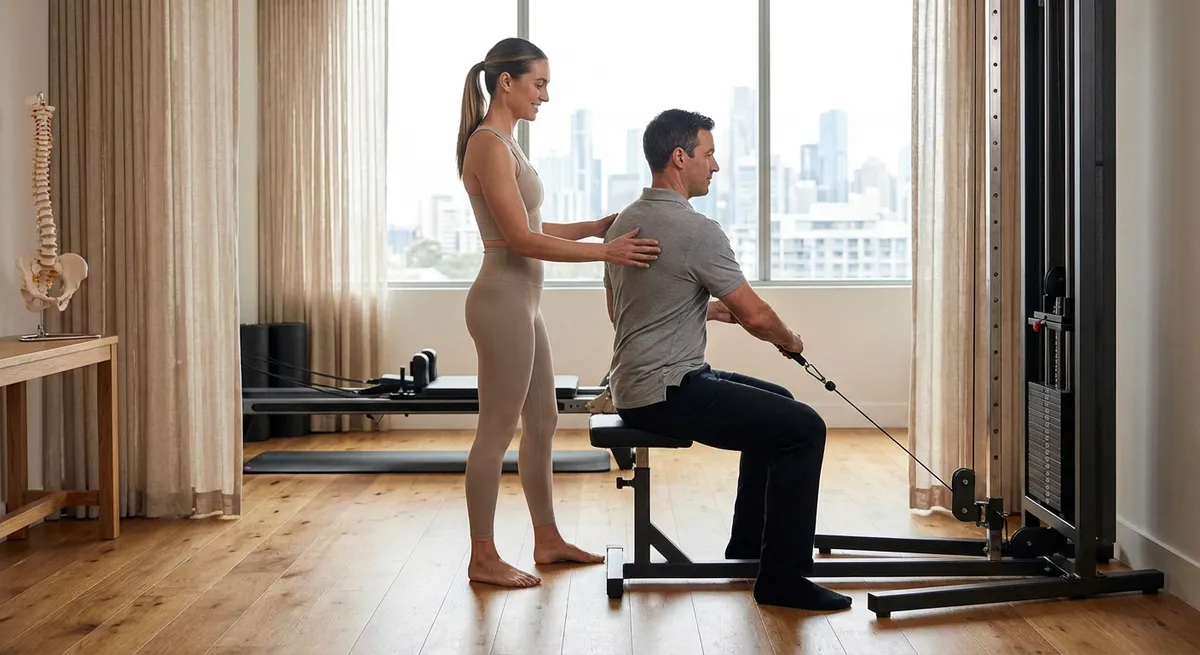
Back pain is rarely just “a sore spot.” It is an ongoing negotiation between your habits, your history, and the demands you place on your body. Exercise therapy, when thoughtfully designed, becomes less about ticking off reps and more about orchestrating movement with precision. For discerning individuals who expect their spine to support an ambitious life, the goal is not simply relief—it is informed control.
This guide explores exercise therapy not as a generic routine, but as a strategic, customizable discipline. Below are five exclusive insights that elevate back-focused exercise beyond the usual “strength and stretch” advice, into something measured, intelligent, and quietly powerful.
Redefining Strength: Training for Endurance, Not Just Power
When many people think of “strengthening the back,” they imagine heavy lifts or dramatic core workouts. Yet for persistent back issues, the quality that matters most is not peak strength, but muscular endurance—your spine’s ability to stay supported hour after hour.
In clinical settings, deep stabilizing muscles (like the multifidus and transverse abdominis) are often found to be underactive or slow to engage in people with chronic back pain. Exercise therapy that focuses on low-load, longer-duration holds—such as precise, well-coached variations of planks, bird-dogs, or side-bridges—helps restore this subtle but essential endurance.
Instead of forcing your back to “work harder,” you are teaching it to work longer, more quietly, and more reliably. You begin to notice that sustained sitting, standing during long meetings, or flying for hours becomes less punishing. The sophistication is in the dosage: modest resistance, carefully controlled movement, and carefully increased hold times. This is strength as stamina—support that lasts through real life, not just the gym.
Precision Before Progression: The Luxury of Slow Refinement
Most generic exercise plans celebrate progression: more weight, more reps, more intensity. With a vulnerable back, however, the true luxury is precision—moving so well that each progression is earned, not rushed.
A refined approach to exercise therapy centers on movement literacy: learning exactly how your pelvis tilts, how your ribs stack over your hips, and how your neck aligns with your thoracic spine. Small details—like whether you hinge from your hips or flex from your lower back—determine whether an exercise restores or irritates your spine.
The most effective programs often begin with deceptively simple drills: controlled pelvic tilts, segmental spinal articulations, or slow, guided bridges. The marker of progress is not simply “I can do more,” but “I can feel more.” You notice asymmetries, subtle stiffness, or compensations that once passed unnoticed. Only when control is consistent under low loads does it make sense to introduce greater resistance, faster tempo, or more complex patterns. Precision first; intensity as a privilege.
The Discipline of Recovery: Architecting Rest as Rigorously as Work
What separates elevated back care from ordinary routines is not just what you do in a session, but how carefully you structure what happens between sessions. Recovery is not an afterthought; it is a central pillar of sophisticated exercise therapy.
Back tissues—discs, ligaments, muscles, and fascia—respond to a cyclical pattern of loading and unloading. Well-designed exercise introduces controlled stress, prompting adaptation. But adaptation occurs during rest. That means sleep quality, post-session posture, and even micro-breaks during the day all influence how your back responds to a training plan.
A premium approach includes deliberate recovery rituals: gentle decompression positions after demanding days, short walks to circulate nutrients through the spine, or breath-focused sessions to reduce muscle guarding driven by stress. The person who treats 24 hours as part of the “program” consistently outperforms the person who thinks only of the 30–45 minutes in the gym. In this model, rest is not laziness—it is calculated regeneration.
Environment-Aware Training: Designing Movement for the Life You Actually Live
The most refined exercise therapy is not based on abstract ideals of posture or strength. It is engineered around your actual life: your chair, your commute, your travel, your laptop, your hobbies, and your ambitions.
If your workday is dominated by back-to-back video calls, your spine faces a different set of stresses than if you are on your feet on a factory floor or traveling across time zones. Thoughtful exercise therapy accounts for this context. Someone whose day is seated may need a bias toward hip extension, thoracic rotation, and active breaks. A frequent flyer may need micro-routines for hotel rooms, airport lounges, and long-haul flights, focusing on circulation, gentle mobility, and low-level activation rather than heavy training.
Rather than asking you to “escape” your lifestyle, high-level programming integrates with it. Your routine might include: a three-minute spinal mobility sequence between meetings, a five-minute decompression protocol after driving, or a carefully timed core endurance circuit on non-travel days. The sophistication lies in calibration—matching the therapy to your world so that your back is supported continuously, not intermittently.
Beyond Pain Relief: Using Exercise Therapy as a Diagnostic Conversation
One of the most underappreciated advantages of structured exercise therapy is its diagnostic power. When done methodically, exercise becomes a conversation with your spine: each session provides data about what your back tolerates, what it resists, and how it changes over time.
By tracking your response to specific patterns—hip hinging, rotation, extension, or loaded carries—you and your clinician or therapist can identify which movements aggravate symptoms and which reliably soothe them. For example, if lumbar flexion exercises consistently worsen your pain but neutral-spine hip hinges feel comfortable, your program can strategically emphasize the latter while gradually, carefully reintroducing the former.
Over weeks, the log of exercises, intensities, and next-day sensations becomes a high-resolution picture of your back’s preferences and thresholds. This turns you from a passive recipient of care into an informed partner. Instead of saying “my back just hurts,” you can say, “my back dislikes prolonged loaded flexion, responds well to neutral loading, and tolerates rotational work in short, controlled sets.” That level of specificity is powerful—and it comes from approaching exercise as a finely tuned experiment, not a random collection of workouts.
Conclusion
For those who expect their spine to keep pace with demanding careers, rich travel, and an active personal life, exercise therapy must be more than generic “back exercises.” It becomes a crafted practice: endurance-focused rather than brute, precise rather than rushed, recovery-conscious rather than impatient, shaped by your real environment, and used as an ongoing diagnostic dialogue.
The reward for this elevated approach is not simply fewer painful days. It is a deeper sense of authorship over how your body moves through the world. Your back is no longer an unpredictable liability—it becomes a well-managed asset, supported by intelligent, intentional movement.
Sources
- American College of Physicians – Noninvasive Treatments for Acute, Subacute, and Chronic Low Back Pain – Clinical guideline highlighting the role of exercise and non-drug therapies for back pain
- Harvard Health Publishing – 4 Core Exercises That Can Prevent Back Pain – Discusses the importance of core endurance and stability in back care
- Mayo Clinic – Back Pain: Self-Management – Overview of exercise, activity modification, and self-care strategies for back pain
- National Institute of Neurological Disorders and Stroke – Low Back Pain Fact Sheet – Evidence-based background on causes of low back pain and treatment options
- Cleveland Clinic – Physical Therapy for Low Back Pain – Explains how targeted exercise therapy is used to manage and prevent low back pain
Key Takeaway
The most important thing to remember from this article is that this information can change how you think about Exercise Therapy.