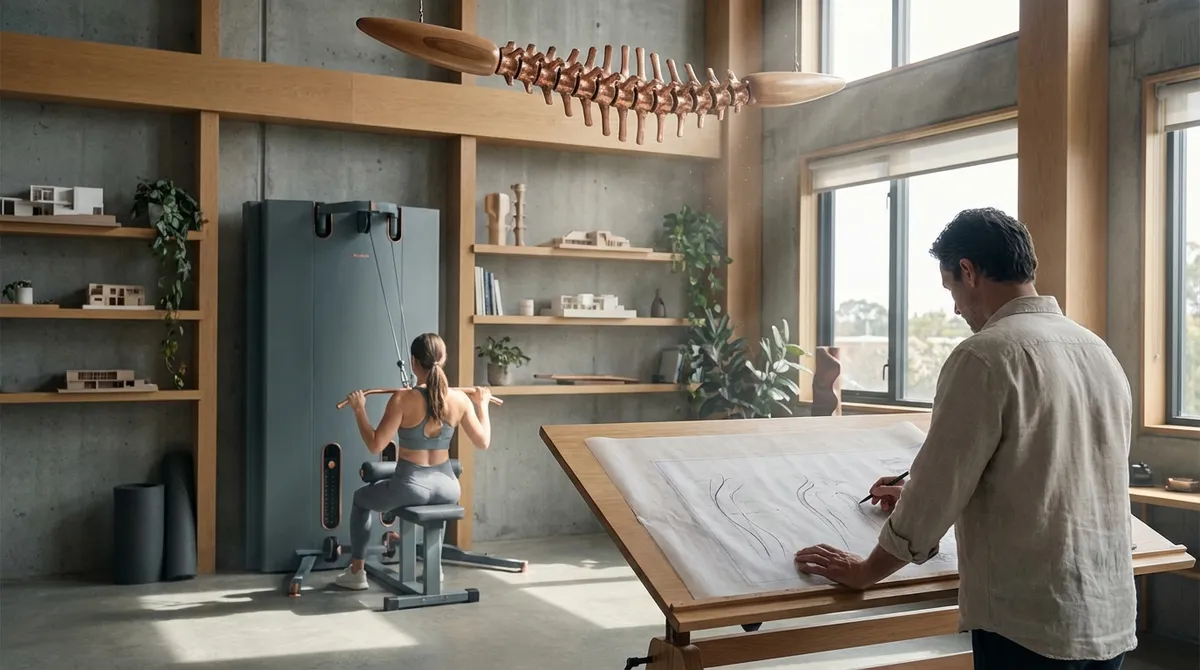
Backs that carry demanding lives deserve more than generic exercise charts and hurried stretches between meetings. They merit a program that feels designed—almost tailored—around the specific architecture of the spine, the rhythms of work, and the subtleties of pain and fatigue. Exercise therapy, when approached with precision rather than as a routine, becomes less about “working out” and more about orchestrating fluent strength: controlled, intelligent movement that protects, restores, and quietly elevates your back over time.
This is not a bootcamp for the spine. It is an intentional practice of refinement—where each movement has a purpose, and each session leaves your back slightly more composed than before.
Reframing Exercise Therapy: From Generic Routine to Precision Practice
Most people encounter exercise therapy through a familiar format: printed handouts, a handful of core exercises, and the vague directive to “keep doing these.” It is helpful, but often insufficient for a back that is repeatedly stressed by long hours, travel, digital work, or high-performance expectations.
A more elevated approach treats exercise therapy as precision practice. Instead of starting with a list of movements, it begins with a clear profile of your back: which segments are stiff, which muscles overwork, which structures are irritable, and which patterns of movement you default to under pressure. This profile is then used to build an exercise framework that is lean but deliberate—only the movements that matter, performed at a quality worthy of the time you invest.
In this paradigm, repetition is not mindless. It is rehearsal for better spinal mechanics, teaching your body to respond more intelligently when you sit, stand, lift, or twist in the real world. The goal is consistency, not exhaustion; adaptation, not strain.
Exclusive Insight 1: Your Back Responds Better to Sequences Than to Isolated Moves
Many people with back issues think in terms of “that one stretch that helps” or “the one core exercise my therapist gave me.” While these can offer relief, the spine rarely benefits most from a single movement in isolation. It responds more intelligently to sequences—deliberate progressions that move from preparation to activation to integration.
A refined back-focused sequence might begin with subtle mobility work to “wake” the joints and surrounding muscles, shift to targeted stability for the deep core and hips, and end with integrative patterns that resemble real life—such as controlled hinge patterns, rotations, and weight shifts. In practice, this might look like: gentle lumbar decompression on the floor, followed by low-load core work, and then precise hip hinging or anti-rotation drills in standing.
The advantage of sequences is neurological as much as mechanical. When you move deliberately from one stage to the next, your nervous system learns to transition more smoothly, linking mobility and strength into a coherent pattern instead of a series of disjointed efforts. Over time, this can mean fewer sudden “twinges” when you change position, stand up, or reach awkwardly—because your back has rehearsed moving through those transitions under control.
Exclusive Insight 2: The Deep Stabilizers Thrive on Subtlety, Not Heroics
The most protective muscles for your spine are not the ones that look impressive in a mirror. They are the deep stabilizers—multifidus, transverse abdominis, and the small muscles around the pelvis and diaphragm—that rarely fatigue with a single session but erode quietly with years of stress and sedentary habits.
These muscles do not respond best to maximal effort or dramatic motions. They prefer low-load, sustained, precise work. That might look like gentle breath-synchronized core activation, tiny pelvic position corrections, or modest resistance exercises that demand control more than power. Someone observing might think you are barely moving; your back, however, understands the difference.
What distinguishes a sophisticated exercise therapy program is its respect for these stabilizers. Instead of skipping to advanced planks, loaded squats, or explosive movements, it lingers in the subtle work that re-educates your nervous system to recruit the right muscles at the right time. When deep stabilizers resume their quiet, stabilizing duty, larger muscles of the back and hips no longer have to overcompensate—reducing the sense of “tightness,” fatigue, and persistent guarding that so often accompanies back discomfort.
Exclusive Insight 3: Tempo and Breathing Can Transform Familiar Exercises
Many people already know the standard exercises: bridges, bird-dogs, gentle twists, hip hinges. What is often missing is the refinement of tempo and breath—two variables that can completely alter how the spine experiences a movement.
A hurried repetition teaches little. A controlled, slow repetition—with a three- to five-second lowering phase, a brief pause in the most demanding position, and a deliberate return—turns the same movement into a neurological lesson in stability. The nervous system has time to sense, adjust, and reinforce better alignment and muscle recruitment.
Breath is equally central. Proper breathing patterns—particularly diaphragmatic breathing—create internal support for the spine, regulate tension, and influence how the core ensemble functions. Coordinating exhalation with effort (for example, exhaling during the lift phase of a bridge or the exertion of a hinge) can reduce strain, improve control, and prevent unnecessary bracing.
Within an elevated practice of exercise therapy, tempo and breath are treated not as minor cues, but as design elements. They turn standard movements into precision tools for cultivating a calmer, more responsive back.
Exclusive Insight 4: Load Is Not the Enemy—Random Load Is
People with back issues often polarize around resistance: some avoid load entirely, living in quiet fear of “making it worse,” while others push aggressively, believing that heavier is always stronger. An intelligent spine-care approach instead distinguishes between load and randomness.
Load, when carefully selected, is therapeutic. It challenges bone, tendon, muscle, and connective tissue to become more resilient. The key is intentional progression, clarity of movement pattern, and predictability. Exercises that respect spinal alignment, appropriately engage the hips and core, and build capacity in small increments can gradually raise your threshold for daily life stressors—lifting luggage, carrying children, working long days at a desk—without provoking the back.
Random load, on the other hand, is what often provokes flares. Sudden, unprepared lifting, twisting while holding weight, or moving under fatigue without proper control can overwhelm tissues that are not conditioned for that demand. The role of advanced exercise therapy is to prepare you for those moments before they happen, by progressively training hinge patterns, rotational control, and endurance at loads that are safe but meaningful.
In a premium exercise program, resistance is treated as a privilege granted over time. Each increase in load is earned by quality of movement, not by the calendar or by ego.
Exclusive Insight 5: The Most Valuable Exercises Are the Ones That Integrate Into Your Day
The most sophisticated program is not necessarily the most complex; it is the one you can sustain. For busy lives, the finest gift exercise therapy can offer is integration—subtle, well-chosen movements and strategies that fold seamlessly into existing routines.
This might mean micro-sessions rather than a single 45-minute block: a two-minute spine decompression practice before opening your laptop, a three-minute hip and core sequence before or after a commute, or a refined standing routine between virtual meetings. It could be a brief anti-rotation drill after carrying shopping bags or a deliberate hip hinge pattern every time you pick something off the floor.
The elegance lies in designing minimal, high-yield practices that accumulate over time. Instead of viewing exercise therapy as a separate “to-do,” it becomes a quiet layer of your day—barely visible to others, but deeply protective for your spine. Your back stops experiencing life as a series of assaults, and instead encounters a rhythm of challenge and support.
Those who experience genuine, lasting change in back comfort and function very often share this trait: they are not perfect, but they are consistent. Their exercise therapy is not heroic; it is woven in.
Conclusion
Exercise therapy for the back does not need to be loud, complicated, or punishing. At its highest form, it is measured, meticulous, and responsive—more akin to crafting architecture than burning calories. It respects the deep stabilizers, pays attention to breath and tempo, uses load as a carefully calibrated ally, and prioritizes sequences and integration over isolated, one-off efforts.
For a back that supports ambitious days and demanding responsibilities, this level of refinement is not indulgence—it is maintenance of the instrument that carries you. With a thoughtful, precision-based approach to exercise therapy, your spine can transition from a constant negotiation with discomfort to a quiet, reliable presence—strong, fluent, and prepared for what your life asks of it.
Sources
- [American Physical Therapy Association – Physical Therapy Guide to Low Back Pain](https://www.choosept.com/guide/physical-therapy-guide-low-back-pain) – Overview of how targeted exercise and physical therapy support back pain management and function
- [National Institute of Neurological Disorders and Stroke – Low Back Pain Fact Sheet](https://www.ninds.nih.gov/health-information/disorders/low-back-pain) – Evidence-based discussion of causes, treatment options, and the role of activity and strengthening
- [Harvard Health Publishing – A Prescription for Better Back Health](https://www.health.harvard.edu/pain/a-prescription-for-better-back-health) – Practical review of strengthening, flexibility, and movement strategies for spine health
- [Mayo Clinic – Back Pain: Self-care](https://www.mayoclinic.org/diseases-conditions/back-pain/in-depth/back-pain/art-20043992) – Guidance on exercise, activity modification, and when to seek professional care
- [National Institute for Health and Care Excellence (NICE) – Low Back Pain and Sciatica in Over 16s: Management](https://www.nice.org.uk/guidance/ng59) – Clinical guideline outlining the role of exercise and manual therapy in evidence-based back care
Key Takeaway
The most important thing to remember from this article is that this information can change how you think about Exercise Therapy.