Back care is often framed as a matter of chairs and cushions. In reality, ergonomics is a language—one spoken by your posture, your gestures, and the way you occupy space. For those already living with back issues, every small interaction with your environment can either nourish your spine or quietly tax it. This article is an invitation to refine those interactions: to treat ergonomics not as a set of restrictions, but as a series of subtle, elevated choices that protect your back while preserving your sense of ease and elegance.
Beyond the Chair: Designing Your “Spine Pathways” at Home
When we think ergonomics, we often jump straight to the office chair. Yet for back pain, the seemingly insignificant transitions between spaces—bed to bathroom, sofa to kitchen, car to front door—carry disproportionate impact.
Begin by mapping your “spine pathways”: the routes you walk most often in your home and daily routine. Observe where you twist, reach, stoop, or pivot. Are shoes and bags stored low, requiring repeated bending? Do you routinely twist to pick up laundry baskets or lift groceries from the floor?
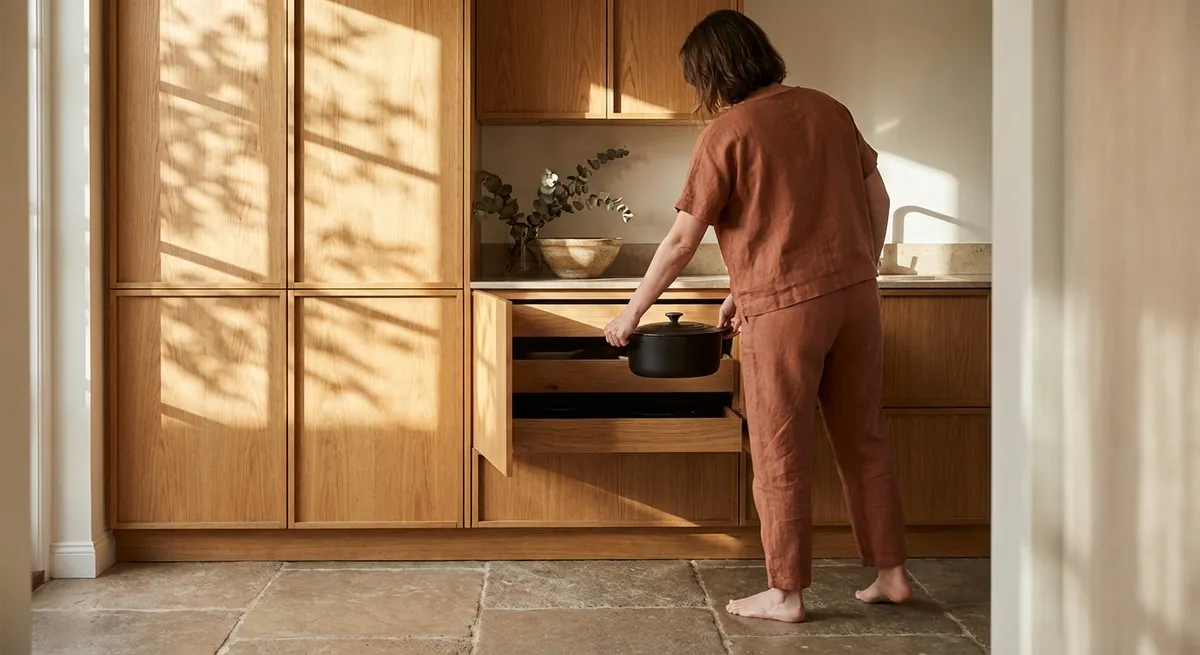
Refinement here is less about buying equipment and more about repositioning what you already own. Place heavy, frequently used items between mid-thigh and chest height. Move laundry baskets, pet food, and storage boxes off the floor and onto benches or low tables. Reserve overhead shelves for very light, rarely used items. Rehearse how you move through your kitchen: can you chop, stir, and plate without excessive twisting? Small shifts in layout can quietly transform your spine’s workload, particularly when repeated hundreds of times per week.
This is ergonomics as choreography: deliberate, fluid, and designed with your back’s comfort as a non‑negotiable.
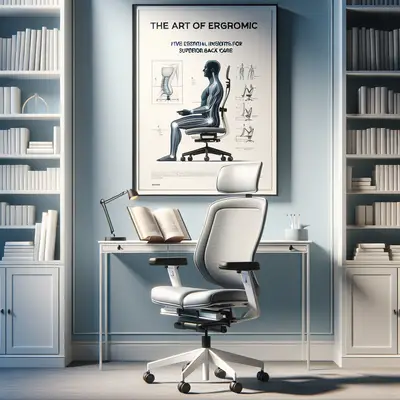
The Precision of Sitting: Micro-Adjustments That Change Everything
Many people living with back issues have already heard the basics of “sit up straight,” yet few are guided through the kind of nuanced sitting that truly protects a sensitive spine. Think of sitting not as a fixed position, but as a series of micro-adjustments that maintain alignment while respecting your pain thresholds.
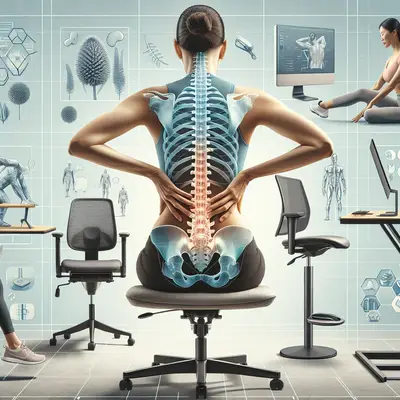
Start by anchoring two points: your sit bones and your feet. Your sit bones (the bony points you feel under you on a firm chair) should rest evenly on the seat, not rolling back onto your sacrum. Your feet should be grounded, roughly hip-width apart, with weight shared between heel and forefoot rather than collapsing into one or the other. This grounded base allows the spine to lengthen upward with less muscular strain.
Then adjust the angle of your hips. A very slight forward tilt (achieved by a wedge cushion or an adjustable seat pan) can help preserve the natural lumbar curve, especially if you tend to slump. The backrest should meet your spine, not push it forward—the aim is support, not flattening.
Finally, normalize variation. Elegant sitting is not rigid; it is composed of small, frequent shifts between equally sound postures. Set a subtle cue—a recurring calendar reminder, a glass of water you keep topping up, or a soft chime—to prompt you every 20–30 minutes to readjust: slide slightly forward, then back; rest your forearms, then release them; gently rotate your shoulders, then return to neutral. For a back that is already vulnerable, this micro‑mobility can be more protective than any single “perfect” posture.
The Art of Standing Still: Transforming Static Posture Into Support
Standing is often mistaken for a neutral activity, yet static standing can be surprisingly provocative for people with back pain. Long queues, social events, or even cooking can become endurance tests. Here, subtle ergonomic strategies can preserve both comfort and composure.
Begin with weight distribution. Instead of locking your knees and leaning into one hip, imagine your weight descending through three contact points in each foot: heel, base of the big toe, base of the little toe. This tripod stance naturally encourages a more balanced pelvis and steadier lumbar spine.
Next, adjust the height of the surfaces you use while standing. For tasks like chopping or ironing, the ideal height is around or just below elbow level when your shoulders are relaxed. Too low, and you fold forward; too high, and your upper trapezius muscles tighten, often aggravating neck and upper back pain that radiates downward.
Introduce deliberate asymmetry that supports, rather than distorts, your posture. A small footrest, low stool, or even a solid box can be used to elevate one foot slightly and reduce lumbar strain, especially if you must stand for prolonged periods. Alternate legs every few minutes. This is a favored strategy in premium kitchen design and can be discreetly implemented at home or in a boutique workspace.
Finally, honor the value of “strategic leaning.” Resting your forearms lightly on a counter or high table, without collapsing your chest or rounding your upper back, can offload the spine while allowing you to remain present and engaged. Standing becomes less of a test, more of a supported presence.
Refined Reaching: Protecting Your Back in the Vertical Dimension
Back pain is rarely triggered by a formal workout alone; it is often the small, thoughtless reaches—overhead, across a table, or into the back seat of a car—that provoke a flare-up. Elegant ergonomics pays close attention to how you extend away from your center.
Imagine a “safe zone” in front of your body: a curved arc between your shoulders and hips, no further than the length of your comfortably bent arm. Items you use daily—dishes, glasses, spices, wardrobe essentials, skincare, chargers—belong within this zone wherever possible. Reaching fully overhead or repeatedly across a deep countertop places your spine and shoulders in compromised positions, particularly if you are also lifting weight.
When you must reach higher, bring your body to the object, rather than projecting your arm alone. Step closer, widen your stance slightly, and if needed, use a stable step stool instead of stretching onto your toes and arching your back. Keep whatever you’re lifting close to your body as you lower it—hug the object rather than holding it at arm’s length.
In cars, refine your technique: instead of twisting from the waist to reach the back seat, pivot your whole body—turn both feet, then your hips, then your torso. Similarly, when placing a child into a car seat or retrieving a bag, bring the item toward you first, then step, rather than rotating and reaching simultaneously.
These are quiet, unremarkable motions to an outside observer—but for a back that has already endured strain or injury, they are the difference between stability and setback.
Rest as an Ergonomic Skill: Reimagining Reclining and Sleep
For many with back issues, sitting and standing receive attention, while rest is treated as a passive state. Yet lying down, reclining, and sleeping are powerful ergonomic interventions—if curated thoughtfully.
Begin with transitions. Moving from standing to lying can be provocative if done with a careless twist. Practice a controlled descent: sit first, then lower yourself to your side with support from your arms, bend your knees, and roll onto your back or adjust into your chosen position. Reverse this sequence to rise. These graceful, segmented movements prevent sudden load and shear forces through the lumbar spine.
Consider the “architecture” of your rest surfaces. A mattress that’s excessively soft may allow the pelvis to sink and increase lumbar lordosis, while an overly firm surface can create pressure points that prompt you to twist into asymmetrical positions. Many people with back pain do well with a medium-firm mattress combined with targeted support: a pillow beneath the knees if lying on the back, or a cushion between the knees and possibly under the waist if lying on the side.
Reclining outside the bedroom also deserves refinement. If you read or work on a sofa, use cushions to bring the backrest to your spine rather than curling yourself forward. Avoid perching at the edge of soft furniture, which often demands a rigid muscular effort to keep you upright. A small lumbar pillow or rolled towel in the lower back can transform a beautiful but unsupportive sofa into something genuinely restorative.
Treat rest not as surrender, but as a carefully curated recovery ritual for your spine—a daily opportunity to realign, decompress, and invite your back to heal.
Five Exclusive Ergonomic Insights for the Back-Sensitive Body
For those already managing back issues, standard ergonomic advice often feels insufficient. These five refined insights go deeper, addressing the subtle realities you actually live with:
- Your “best” posture is the next one, not the current one.
Static perfection is less protective than gentle variability. Aim for a family of well-aligned positions and rotate through them, rather than obsessing over a single “ideal” stance or sitting posture.
- Pain-free does not always mean spine-friendly.
Some compensations (like leaning into one hip or frequently crossing the same leg) may temporarily reduce discomfort but increase long-term strain. Periodically consult your reflection or a short video of your posture to check whether comfort is coming at the expense of alignment.
- Back pain is often a casualty of hand dominance.
Habitual one-sided carrying, reaching, and turning (your phone always in the same pocket, bag always on the same shoulder, child always carried on the same side) creates asymmetric loading. Intentionally cultivate ambidextrous habits for carrying and reaching wherever safe.
- Micro-environments matter more than major purchases.
A high-end chair cannot fully compensate for a low coffee table, a deep sofa, a badly placed monitor, or a frequently used drawer at ankle height. Audit the details in each room where you spend more than 30 minutes daily; these small corrections often yield disproportionate relief.
- Ergonomics is a living practice, not a one-time setup.
As your pain pattern, work style, or physical capacity evolves, your environment should follow. Schedule a quarterly “spine review” of your workspace, car, and home—refining heights, angles, and movement patterns in line with how your back feels today, not how it felt a year ago.
Conclusion
Ergonomics, when stripped of its jargon, is the art of aligning the spaces you inhabit with the body you actually have—especially when that body includes a history of back pain. It is less about rigid rules, more about sophisticated awareness: how your feet meet the floor, how your spine meets the chair, how your hand meets the object just out of reach.
By treating your everyday movements as design decisions rather than afterthoughts, you grant your back something precious: consistency, protection, and dignity. Over time, these refined choices accumulate, shifting the balance from reactive pain management to proactive spine preservation. In this way, ergonomics becomes not only practical, but quietly luxurious—an investment in a future where your back is supported by every space you move through.
Sources
- National Institute of Neurological Disorders and Stroke – Low Back Pain Fact Sheet - Overview of causes, risk factors, and management of low back pain
- National Institute for Occupational Safety and Health (NIOSH) – Ergonomics and Musculoskeletal Disorders - Evidence-based guidance on ergonomic risk factors and workplace design
- Mayo Clinic – Back Pain: Self-care - Practical strategies for managing back pain in daily life
- Harvard Health Publishing – 4 Ways to Turn Good Posture Into Less Back Pain - Discusses posture, alignment, and how everyday habits affect the spine
- National Library of Medicine – Effectiveness of Ergonomic Interventions in Preventing Musculoskeletal Disorders - Research review on the impact of ergonomic changes on musculoskeletal health
Key Takeaway
The most important thing to remember from this article is that this information can change how you think about Ergonomics.