Modern life rarely feels optional. Screens, schedules, and constant connectivity are now the background fabric of our days—and our backs often bear the quiet cost. Ergonomics is typically presented as a checklist of chair heights and monitor distances, but for those living with back issues, this lens is far too narrow. True ergonomic refinement is less about office furniture and more about the subtle choreography of how you inhabit your environment.
This piece explores ergonomics as a cultivated practice—not an aesthetic of expensive chairs, but a disciplined, sensory-aware approach to how you sit, stand, type, read, and even rest. Within that frame, you’ll find five exclusive insights designed specifically for people whose backs are already sending messages, sometimes sharply, sometimes constantly.
Beyond Neutral Spine: Designing for Micro-Recovery, Not Just Alignment
Most ergonomic advice stops at “neutral spine,” as though perfect alignment alone were enough to quiet a sensitized back. Alignment matters—deeply—but for a spine already irritated, you need more than neutrality; you need spaces and setups that facilitate micro-recovery throughout the day.
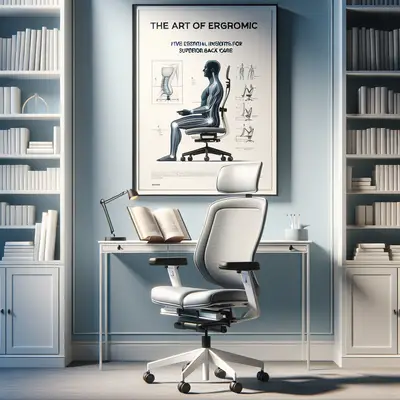
Instead of treating your workstation as a static “correct” posture, think of it as a landscape for microscopic resets. Your chair should allow you not just to sit upright, but to subtly lean, recline briefly, and change thigh angles without strain. Your desk should accommodate small positional shifts: forearms fully supported during typing, then slightly elevated during reading, then pulled back to your lap for reflection. Even the way your feet meet the floor or a footrest becomes a lever for unloading your lumbar spine for 30–90 seconds at a time.
These shifts are barely visible from the outside, but internally they matter: pressure redistributes, muscle activation patterns change, and irritated tissues get interludes of relief rather than hours of unbroken demand. If you live with back issues, “ergonomic” should translate to “makes changing position frictionless.” The fewer obstacles between you and a better posture option, the more your day quietly supports recovery instead of erosion.
The Sensory-First Workspace: Training Your Back to Trust Its Environment
A chronically uncomfortable back is often not just mechanically stressed—it is neurologically vigilant. Pain can prime your nervous system to interpret normal sensations as potential threats. Sophisticated ergonomics, then, is not only about angles and distances; it is also about creating an environment your nervous system can gradually trust.
Start with surfaces your body touches longest: your chair seat, backrest, and arm supports. Too soft can be as provocative as too hard; the goal is stable, predictable support that does not require your muscles to “guard” continually. Fabrics that don’t trap heat, edges that don’t dig into thighs or forearms, and armrests that meet your elbows instead of forcing your shoulders up or down—all contribute to a subtle sense of safety.
Visual ergonomics matter more than they’re credited for. A dim, glary screen or harsh overhead lighting encourages a head-forward, neck-tension posture. A well-placed task light, a properly adjusted monitor, and reduced visual clutter create an environment where your body isn’t constantly leaning, craning, or squinting its way through the day. For a sensitized back, the ideal workspace is not luxurious in appearance; it is soothingly unsurprising in sensation.
Over time, this predictable comfort reduces the background “noise” your nervous system is processing. Muscles that were always slightly braced can begin to soften. The result is not simply less pain, but a more responsive, less reactive spine that tolerates normal movement with greater ease.
The Silent Role of Breath in Everyday Ergonomics
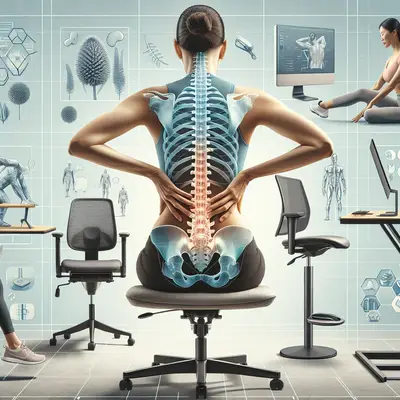
Breathing is rarely mentioned in ergonomic checklists, yet it is inseparable from spine mechanics. The diaphragm, deep abdominal muscles, and pelvic floor form a dynamic cylinder of support around your lumbar spine. When breathing becomes shallow, rushed, or upper-chest dominant—often due to stress or prolonged poor posture—your back loses one of its most elegant, built-in stabilizers.
An ergonomically aware setup should make proper breathing easier, not harder. If your chair back pushes your ribs forward or collapses your chest downward, your diaphragm cannot move freely. If your desk is too high, encouraging shrugged shoulders and neck tension, your breath will naturally migrate upward, reinforcing strain.
Subtle adjustments can change this dynamic. A seat height that allows your pelvis to rest slightly above knee level encourages a gentle anterior tilt and more expansive diaphragmatic motion. A backrest that supports, but doesn’t trap, the lower ribs helps you breathe into the sides and back of the ribcage instead of only the front. The result is improved trunk stability with less brute muscular effort from the lower back.
For those living with back pain, experimenting with quiet, slow, nasal breathing while seated or standing at your workstation can double as both a nervous system reset and a spine-support strategy. Ergonomics, in this elevated sense, is not just about how your body meets furniture—but how your breath animates and supports that posture from the inside.
Transitional Ergonomics: Protecting the Moments Between Positions
Most ergonomic advice focuses on the positions you occupy—sitting, standing, typing. Yet many back flare-ups happen not in the static posture itself, but in the transition: rising from a chair, bending to plug in a cable, reaching for a bag, twisting to grab a file. Transitional ergonomics is the overlooked art of making these mini-movements safer, more deliberate, and less abrupt.
Start with how you leave and return to your chair. A slightly forward position on the seat, feet planted under your knees, and a brief engagement of your legs and hips as you stand can dramatically reduce sudden load on the lower back. When you sit back down, think of guiding yourself under control rather than dropping; this micro-second of intention can spare irritated tissues from jolts they are too tired to absorb gracefully.
Look, too, at where objects live in your space. Frequently used items stored just behind you or below knee level silently demand twisting and bending under fatigue. Reorganize with your most vulnerable days in mind: heavy files near elbow height, chargers accessible without crouching, bags placed so you can lift them close to your body instead of at arm’s length.
For a back already coping with discomfort, the true test of ergonomic refinement is not only how comfortable you are at your desk, but how benign every small, habitual motion becomes. When transitions are thoughtfully supported, your day contains fewer spikes of strain and more continuity of calm.
Night Ergonomics: Extending Spine Care into Rest and Recovery
Back care often ends when the laptop closes, but your spine’s longest uninterrupted posture is usually the one you adopt at night. Poor sleep ergonomics can quietly undo the benefits of an otherwise thoughtful daytime setup, especially for those with lumbar, thoracic, or neck sensitivity.
Rather than chasing a “perfect” mattress or pillow, focus on how your spine is supported in your preferred sleep position. Side sleepers often benefit from a pillow that keeps the neck level (neither tilting toward the bed nor away from it) and a second pillow or cushion between the knees to reduce twisting through the pelvis and lower back. Back sleepers typically do well with a low to medium pillow and, if needed, a small cushion under the knees to reduce lumbar extension. Stomach sleeping is usually the least spine-friendly, but if it is your only truly restful position, a very thin pillow or no pillow at all may mitigate neck strain.
Your pre-sleep environment matters just as much. A few slow, gentle movements—such as pelvic tilts in bed, controlled knee-to-chest motions, or small side-to-side leg sweeps—can signal to your nervous system that it is safe to downshift. Light, sound, and temperature should be optimized not only for general sleep quality but also for minimizing nocturnal tossing that repeatedly loads and unloads the spine.
“Premium” back care is not confined to daytime aesthetics or designer ergonomic tools; it extends into how thoughtfully you arrange the conditions under which your spine is meant to recover. When the night supports healing instead of adding stress, each new day begins with a little more capacity and a little less fragility.
Conclusion
Ergonomics, at its most refined, is not a one-time office makeover but an ongoing conversation between your body, your environment, and your nervous system. For those living with back issues, the goal is not rigid perfection but graceful adaptability: a space that invites small shifts, a setup that calms rather than agitates your senses, transitions that spare your spine, and nights that truly restore.
When you begin to see ergonomics as an ecosystem rather than a checklist, your back stops fighting your surroundings and begins, slowly, to be supported by them. In that shift—from coping to curating—lies the quiet luxury of a calmer spine and a more livable day.
Sources
- [NIOSH – Computer Workstations eTool](https://www.osha.gov/etools/computer-workstations) – U.S. Occupational Safety and Health Administration guidance on setting up workstations to reduce musculoskeletal strain
- [Mayo Clinic – Office Ergonomics: Your How-To Guide](https://www.mayoclinic.org/healthy-lifestyle/adult-health/in-depth/office-ergonomics/art-20046169) – Practical overview of ergonomic principles for desk work and posture
- [Harvard Health Publishing – Why Your Office Chair Is Killing Your Back](https://www.health.harvard.edu/pain/why-your-office-chair-is-killing-your-back) – Discussion of prolonged sitting, posture, and strategies to reduce back pain
- [Cleveland Clinic – Back Pain: Prevention](https://my.clevelandclinic.org/health/articles/4494-back-pain-prevention) – Evidence-informed recommendations on habits and environmental factors that influence back discomfort
- [National Institute of Neurological Disorders and Stroke – Low Back Pain Fact Sheet](https://www.ninds.nih.gov/health-information/patient-caregiver-education/fact-sheets/low-back-pain-fact-sheet) – Medical background on low back pain, risk factors, and approaches to management
Key Takeaway
The most important thing to remember from this article is that this information can change how you think about Ergonomics.