Our backs rarely complain without reason; they whisper for years before they finally protest. Ergonomics, when practiced with discernment, is less about office chairs and more about orchestrating how your body meets the world—at your desk, in your car, on your sofa, and even in bed. For those already acquainted with back discomfort, refinement in these details is not a luxury; it is a quiet form of self-preservation.
This guide explores ergonomics as a series of subtle, elevated choices—five exclusive insights that move beyond generic advice and into the realm of deliberate, long-term spinal care.
Insight 1: Designing a “Neutral Spine Pathway” Through Your Day
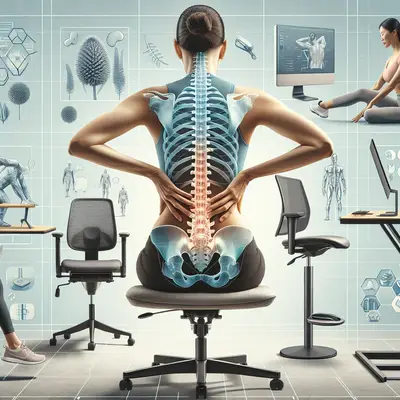
Most ergonomic advice focuses on isolated moments—how to sit at a desk, for example. Yet your spine experiences your entire day as one continuous story. The goal is to craft a neutral spine pathway: a consistent pattern in which your spine moves fluidly between neutral postures rather than oscillating between extremes of slouching and rigid bracing.
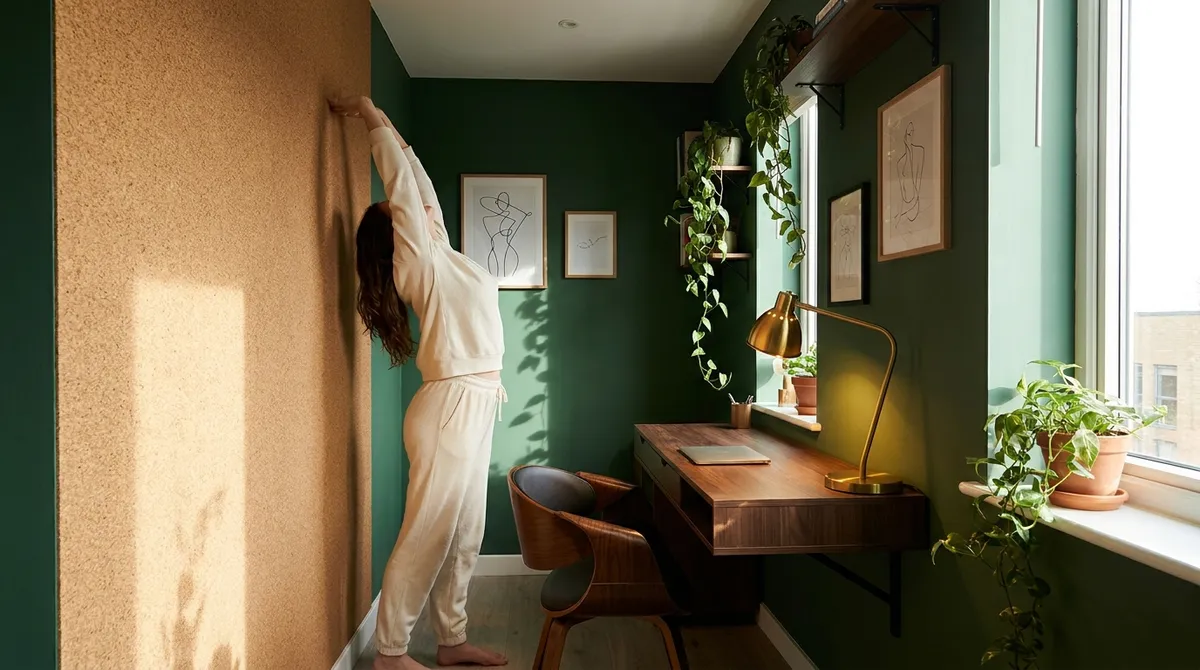
Begin by noticing the transitions: getting out of bed, entering your car, reaching for your laptop, leaning over the sink. These are the hidden moments when the spine is most vulnerable. Practicing segmental movement—rolling from side to sitting when getting out of bed, hinging from the hips rather than rounding the back when leaning forward—protects your spine during these “in-between” phases far more than a single perfect sitting posture ever will.
Curate your environment so that neutral alignment is the path of least resistance. Place frequently used items (laptop, kettle, reading material) within a comfortable reach zone that does not require twisting or prolonged forward bending. Align screens at eye level wherever you tend to use them—desk, kitchen counter, or bedside table. Over time, your day becomes a sequence of neutral, low-friction postures rather than a series of spinal compromises.
Insight 2: Micro-Elevation: Subtle Adjustments that Outsmart Prolonged Sitting
Ergonomics is often misinterpreted as “finding the right position and holding it.” In reality, the spine thrives on micro-variation. The most refined ergonomic setup is one that encourages discreet, frequent movement.
Integrate “micro-elevations” into your seated life. Instead of standing for long, fatiguing periods, elevate your posture in brief, polished intervals: stand for phone calls, raise your desk slightly for short reading sessions, or use a footrest that allows you to alternate foot positions and subtly shift pelvic alignment. These are not grand gestures; they are quiet recalibrations that prevent static loading of the spinal discs and surrounding muscles.
Even within a seated posture, think of your body as adjustable architecture. Adjust lumbar support slightly every hour, change the angle of recline a few degrees, or alternate between a chair with back support and a more active, upright perch. Your goal is to avoid any single posture becoming your default prison. Quality ergonomics respects the spine’s preference for gentle, constant adaptation.
Insight 3: The “Support Triangle”: Harmonizing Chair, Desk, and Floor
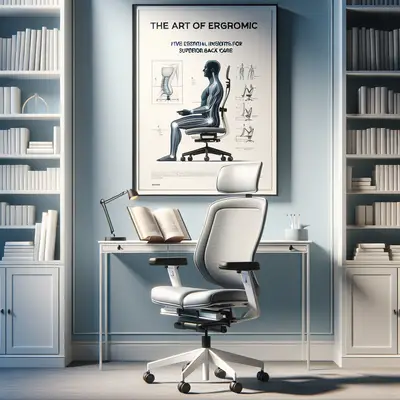
Most people think of ergonomic seating as a chair choice. In practice, seating is a relationship between three anchors: chair, desk, and floor. When these three elements are harmonized, the spine can assume an elegant neutrality with minimal muscular strain.
Begin with the floor. Your feet should rest fully supported—no dangling, no perching on chair legs. If they do not comfortably meet the floor, a footrest (or a stable, low platform) becomes essential, not optional. Secure lower extremity support allows the pelvis to settle evenly, reducing the tendency to cross legs, tuck one foot beneath you, or lean asymmetrically.
Next, refine chair height so that your hips are just slightly above your knees. This open angle at the hips facilitates a more natural lumbar curve. Finally, adjust desk or keyboard height so the elbows rest near a 90-degree angle with shoulders relaxed—not lifted, not rounded forward. When chair, desk, and floor are synchronized, the spine no longer has to “fight” for alignment; it is supported by a stable architectural triangle.
For those with existing back issues, this triad becomes non-negotiable. Compromising one element—such as a desk that is too high or a seat that is too low—forces the spine to compensate, often in ways that aggravate existing pain patterns.
Insight 4: Ergonomic Zoning at Home: Curating Spaces for Different Backs
Modern life has blurred the boundaries between work, rest, and leisure—especially at home. This makes a single “good chair” insufficient for refined back care. Instead, think in terms of ergonomic zoning: distinct micro-environments, each designed for a specific type of spinal demand.
Your focused work zone should prioritize upright alignment and stable support: a proper chair, correctly positioned screen, and consistent lighting to reduce forward head posture. A reading or contemplation zone might feature a more reclined setup with well-positioned lumbar and neck support, allowing you to rest the spine while still keeping it aligned. A relaxation or media zone can incorporate semi-reclined positions, but with attention to symmetry—balanced cushions, even support along the spine, and avoidance of habitual leaning into one side of the sofa.
If you live with back issues, reserve slouch-prone furniture for brief intervals, not extended use. That deep, soft sofa may be inviting, but without structured support, it often leaves the lumbar spine suspended and the neck pitched forward. Compensate with firm pillows at the lower back and under the arms, or limit time in that zone and transition to a more supportive chair once the novelty of comfort gives way to subtle strain.
By assigning different activities to different zones, you avoid the common trap of working, eating, and relaxing in the same, often compromising, posture.
Insight 5: Ergonomics as a Ritual of Feedback, Not a One-Time Setup
The most exclusive form of ergonomic wisdom is not a product; it is a feedback ritual. Instead of treating your setup as “finished,” consider it a living arrangement, continuously informed by your body’s responses.
Schedule brief, deliberate check-ins throughout the day: morning, mid-day, evening. During each, scan for early signs of strain—tightness at the base of the skull, dull ache near the shoulder blades, heaviness in the lower back, tingling in the legs or hands. These are invitations to adjust, not inconveniences to endure. Subtle modifications—raising a screen a few centimeters, softening arm support, repositioning the pelvis in the chair—can redirect the trajectory of pain before it escalates.
Refine your awareness of timelines. Pain or fatigue that appears within 20–30 minutes of assuming a posture suggests that something in your environment or alignment is miscalibrated. Discomfort that emerges later in the day may signal cumulative loading, indicating a need for more frequent breaks or greater variety in positions.
This ritual extends beyond the workspace. Notice how your back feels in the car after longer drives, on certain restaurant chairs, or when lounging at a friend’s home. Over time, you learn which postures and surfaces are worth modifying, and you become more comfortable requesting small adjustments—an extra cushion, a different chair—without apology. This is not fussiness; it is refined self-advocacy for a spine that you intend to serve you gracefully for decades.
Conclusion
Truly elevated ergonomics is not about surrounding yourself with expensive equipment; it is about orchestrating your environment so that your spine is consistently met with respect. When you design a neutral spine pathway through your day, employ micro-elevations instead of static postures, align the support triangle of chair–desk–floor, curate ergonomic zones at home, and treat ergonomics as an ongoing feedback ritual, you shift from reacting to pain to preempting it with quiet intelligence.
For those living with back issues, these details are not indulgences; they are the difference between merely coping and living with composed, sustainable comfort. Ergonomics, at its most sophisticated, is an art of restraint: thoughtful, minimal adjustments that allow your spine to feel unobtrusively, reliably supported.
Sources
- National Institute of Neurological Disorders and Stroke – Low Back Pain Fact Sheet - Overview of causes, risk factors, and strategies relevant to posture and spinal loading
- Occupational Safety and Health Administration (OSHA) – Computer Workstations eTool - Detailed guidance on chair, desk, and equipment adjustment for healthy alignment
- Mayo Clinic – Back Pain: Prevention - Practical strategies for posture, daily movement, and environment modifications
- Harvard Health Publishing – Smart Sitting Posture - Evidence-based discussion of sitting mechanics and how small ergonomic shifts reduce strain
- Cleveland Clinic – Ergonomics: How to Make Your Workspace Comfortable - Clinical recommendations on workspace design, microbreaks, and posture variety
Key Takeaway
The most important thing to remember from this article is that this information can change how you think about Ergonomics.