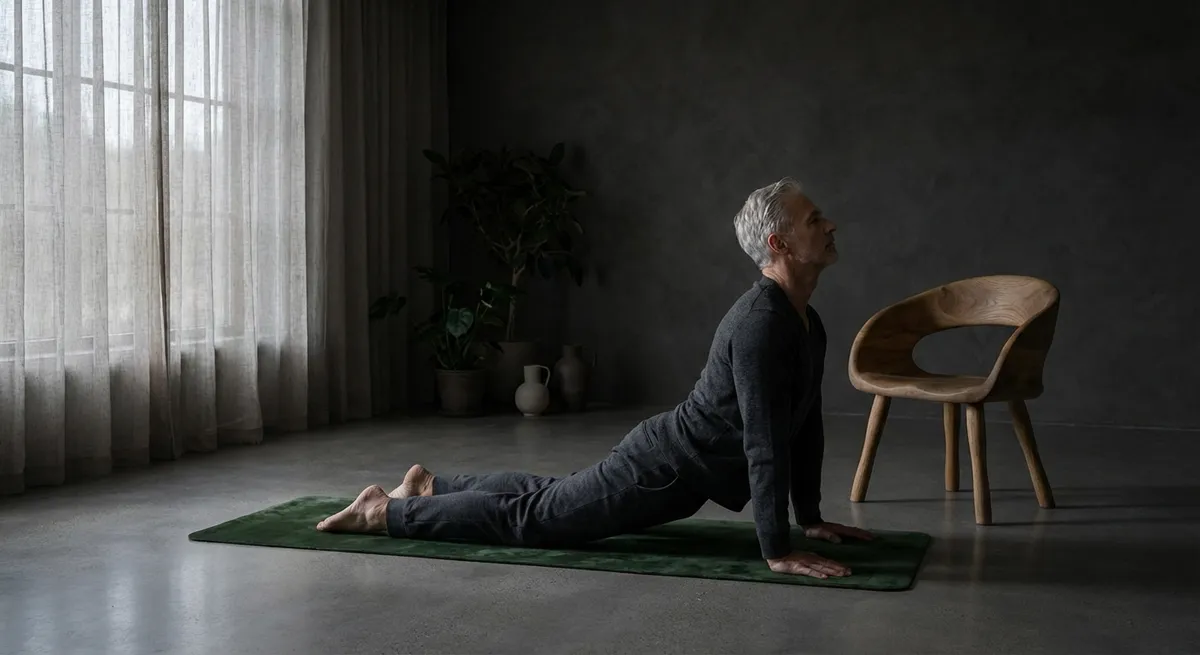
Back care is no longer a matter of “quick fixes” and generic routines. For those who expect more from their bodies—and from their wellness strategies—exercise therapy becomes less about sweat and more about precision, longevity, and intentional refinement. It is the quiet discipline behind an elegant, pain-resilient spine: structured, measured, and exquisitely tailored to the way you actually live and move.
In this exploration of exercise therapy for back health, we move beyond surface-level advice and into five exclusive insights that sophisticated back-care seekers consistently overlook. Each insight is designed not just to reduce pain, but to elevate the way you inhabit your body.
The Signature Baseline: Treating Your Back Like a Bespoke Garment
Most exercise plans treat the spine as if it were interchangeable from one person to the next. A premium approach acknowledges that your back is more akin to a tailored suit—its ideal "fit" is utterly personal.
A refined exercise therapy plan starts with a functional baseline: not simply “flexible” or “strong,” but precisely how you sit, stand, hinge, walk, and breathe. Subtle asymmetries—one hip slightly higher, a shoulder sitting marginally forward, a habitual twist when you stand from a chair—often explain why a generic program fails to deliver lasting relief.
A clinician or exercise therapist with a discerning eye will observe the way your spine behaves under low load: slow bodyweight squats, gentle forward bends, supported single-leg stands, and controlled trunk rotations. These micro-assessments reveal your unique movement signature. From there, exercises cease to be random selections and become carefully calibrated corrections.
For someone with a history of disc irritation, for example, the priority may be reducing end-range flexion and building stiffness around the lumbar spine. For another with spinal stenosis, the emphasis might shift toward flexion-based comfort positions and hip mobility. The sophistication lies not in complexity, but in the accuracy with which the program reflects your specific spinal story.
Precision Over Intensity: When Fewer Reps Deliver Greater Relief
In high-end physical preparation, it is not the volume that distinguishes a superior program—it is the precision. The same is true with exercise therapy for the back: the spine often responds best to measured, low-load, high-quality repetition.
Rather than exhausting yourself with endless core routines, a sophisticated approach prioritizes exercises that feel controlled, replicable, and calm. Think of the “big three” stabilization exercises popularized in spine research (such as the modified curl-up, side plank variations, and bird-dog), performed with immaculate technique, slow tempo, and no pain spike.
The goal is neuromuscular clarity: teaching the body exactly which muscles to recruit, when, and to what degree. Ten deliberate, clean repetitions with impeccable alignment may do more for your back than fifty rushed repetitions that reinforce compensation and tension. Over time, this precision not only reduces pain but also upgrades your movement vocabulary—how efficiently you stabilize when you lift a suitcase, rotate to reach a shelf, or descend the stairs.
For those accustomed to performance training or intense workouts, this recalibration can be confronting. Yet a premium back-care routine understands that the spine frequently heals not through maximal effort, but through meticulous, repeatable precision.
The Micro-Rituals That Quiet Chronic Load
Exclusive back care is often found not in the main workout, but in what happens between sessions—the “invisible hours” where chronic micro-load accumulates. This is where exercise therapy becomes a series of elegant micro-rituals woven discreetly into your day.
Instead of long, disruptive routines, think of 30–90 second movement breaks:
- A brief hip-hinge mobility drill every time you step away from your desk
- Two slow, controlled spinal decompression stretches after long calls or flights
- A focused, three-breath abdominal bracing sequence before lifting anything substantial
- Gentle thoracic rotations after extended screen time to “reset” upper back tension
These micro-practices refine how your nervous system perceives and manages load. Rather than allowing stiffness and compression to climb silently throughout the day, you apply small, intelligent interruptions—like fine-tuning a high-performance instrument before it drifts too far out of tune.
This is the essence of sophisticated back care: not heroic sessions followed by neglect, but consistent, nearly invisible interventions that prevent your spine from accumulating the kind of strain that later demands urgent correction.
The Underestimated Axis: Hips and Ribcage as Back Care Allies
Refined exercise therapy acknowledges that the spine rarely misbehaves alone. Two often-overlooked regions—the hips and ribcage—quietly dictate how generously or harshly load is shared through your back.
Tight, underperforming hips can force the lumbar spine to move more than it should whenever you bend, rotate, or step. Similarly, a rigid or collapsed ribcage can limit thoracic rotation and extension, subtly pushing compensatory movement into the lower back and neck. In premium back programs, hip and ribcage work is not a warm-up formality; it is a strategic priority.
Practically, this might include:
- Controlled hip mobility drills (such as 90–90 transitions, hip airplanes, or supported lunges) aimed at restoring graceful, powerful motion at the ball-and-socket joint.
- Thoracic extension and rotation work over a foam roller, in quadruped positions, or in standing, to reintroduce fluidity through the mid-back without forcing end-range motion.
- Breathing practices that expand the lower ribcage laterally and posteriorly, improving diaphragm function and reducing superficial neck and back tension.
By liberating hips and ribcage, you reduce the spine’s need to “overwork” in everyday movement. The result is a more balanced distribution of stress: the back is supported not only by its own musculature, but by a refined orchestra of adjacent structures performing their roles with precision.
The Nervous System Lens: Teaching Your Back to Feel Safe Again
One of the most exclusive insights in modern back exercise therapy is that pain is not solely a tissue problem—it is also a nervous system narrative. When the back has been painful for a while, the nervous system can become overly protective, interpreting even modest movements as threatening.
A sophisticated program doesn’t simply strengthen or stretch; it deliberately re-educates the nervous system to trust movement again.
This is done through “graded exposure”—carefully selected exercises that:
- Stay just below the threshold of significant pain flare
- Are repeated consistently enough for the body to experience them as safe
- Progress in range, load, or complexity only as comfort and confidence increase
For example, a person fearful of forward bending may begin with partial hip hinges, supported by a countertop, focusing on a relaxed neck and controlled breathing. As their nervous system realizes that this movement is not dangerous, the range and independence of the motion can increase. Over time, what once triggered alarm becomes an ordinary, unremarkable action.
When combined with slow, diaphragmatic breathing, attention to calm facial muscles, and a deliberate absence of “bracing out of fear,” exercise becomes a conversation with the nervous system, not a battle against it. This is the subtle frontier of advanced back care: reshaping not only how the spine moves, but how the brain interprets those movements.
Conclusion
Back exercise therapy can be loud—filled with aggressive stretching, heavy lifting, or complex routines—or it can be quiet, deliberate, and exacting. The sophisticated path opts for the latter.
By approaching your spine as a bespoke system—assessed individually, trained with precision, supported by micro-rituals, liberated through the hips and ribcage, and soothed at the nervous system level—you transform exercise from a chore into a refined practice of self-stewardship.
This is the true luxury in back care: not a life free from all physical demands, but a life in which your spine is prepared, resilient, and quietly confident in the face of them.
Sources
- National Institute of Neurological Disorders and Stroke – Low Back Pain Fact Sheet - Overview of causes, treatments, and current understanding of low back pain
- Mayo Clinic – Back Pain: Self-Care - Practical guidance on movement, exercise, and self-management strategies
- Harvard Health Publishing – Protect Your Back with the “Big Three” Exercises - Discussion of spine-stabilizing exercises and their role in back health
- Cleveland Clinic – Exercise and Back Pain - Explanation of how specific exercise strategies support pain relief and function
- American College of Physicians – Noninvasive Treatments for Acute, Subacute, and Chronic Low Back Pain - Clinical guideline emphasizing exercise and non-pharmacologic therapies
Key Takeaway
The most important thing to remember from this article is that this information can change how you think about Exercise Therapy.