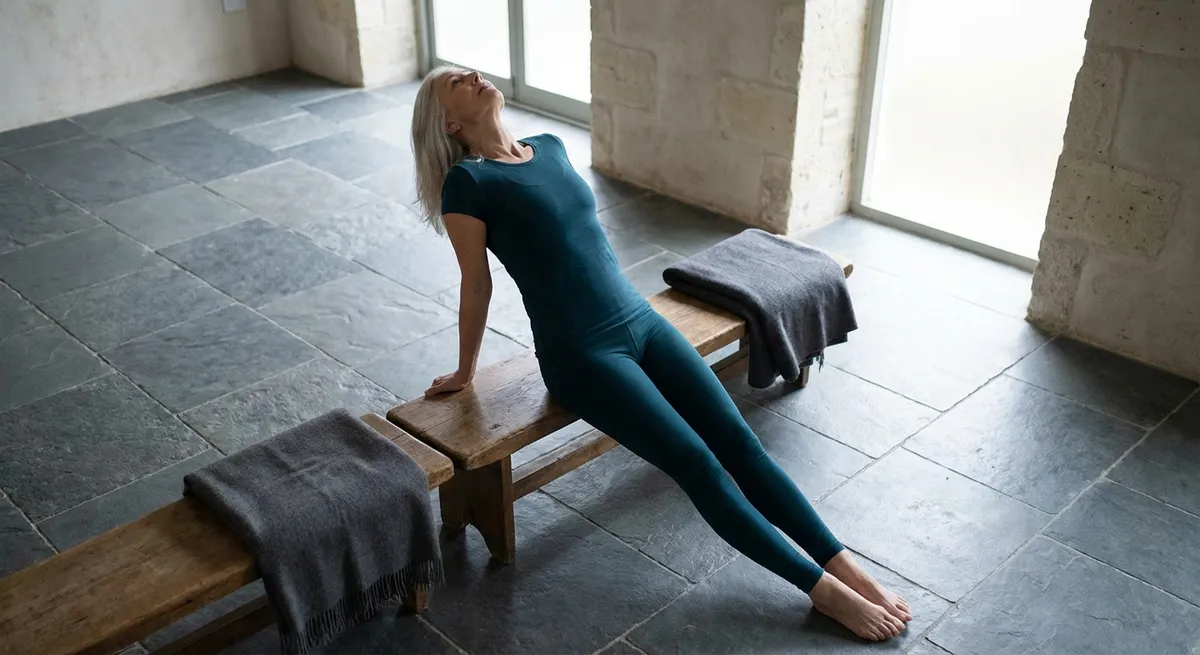
Back pain rarely announces itself politely. It interrupts, insists, and—if left unmanaged—begins to dictate the terms of one’s day. Exercise therapy offers a more composed arrangement: an intelligent, steadily progressive way to restore authority to your own spine. For those accustomed to demanding the best—from environments, experiences, and themselves—back care must be neither improvised nor generic. It should feel curated, precise, and quietly effective.
Below are five exclusive, practice-level insights into exercise therapy for the back—subtleties often missed in standard advice, yet deeply appreciated by those who live with a discerning awareness of their bodies.
Beyond “Strengthening”: Training the Back for Adaptability, Not Just Power
The common language of “strengthening the core” is an oversimplification. The back does not merely require strength; it requires adaptability—the ability to transition seamlessly between stiffness and softness, stability and mobility, support and surrender.
Refined exercise therapy approaches the back as an adaptive system rather than a single muscle group to be “fixed.” Instead of focusing solely on heavy planks or aggressive extensions, a sophisticated program layers in:
- Low-load, high-awareness movements that teach the deep stabilizers (such as the multifidus and transverse abdominis) to respond smoothly to subtle shifts.
- Variable-position practice—standing, seated, sidelying, kneeling—to ensure the back is conditioned for the realities of daily life, not just the controlled environment of a mat or gym.
- Direction-specific loading, so the back learns to manage bending, rotating, and side-bending in progressively more complex ways, rather than simply “avoiding” movement.
When exercise is designed for adaptability, you are not just stronger—you are better prepared. The spine becomes less surprised by modern life: long flights, unfamiliar mattresses, demanding workdays, and unplanned physical efforts feel less like threats and more like manageable variations.
The Micro-Margin Advantage: How 5% Adjustments Transform Back Outcomes
For the back, the difference between irritation and relief often hides in the smallest margins: a few degrees of hip angle, a minor adjustment to breathing, a subtle reorientation of gaze. Exercise therapy at a higher standard of care takes these micro-margins seriously.
Consider a simple hip hinge or partial deadlift pattern. A generic version might emphasize “keep the back straight.” A refined version observes:
- Hip vs. lumbar movement: Is the fold occurring at the hip line, or is the lower back quietly over-dominating?
- Load path: Is the weight (or even body weight) traveling closer to midfoot, or drifting toward the toes, subtly increasing spinal demand?
- Muscular tone: Are the shoulders gripping, jaw clenched, or breath held, turning a potentially therapeutic movement into a stress rehearsal?
A 5% correction—bringing the hips slightly back, softening the ribs, or adjusting the foot stance—can dramatically reduce strain on irritated spinal structures while preserving the strength and conditioning benefits. Over weeks and months, these fine-tuned adjustments accumulate into less pain, fewer flare-ups, and more confident movement.
For individuals accustomed to precision in other aspects of life—tailored garments, acoustically considered spaces, optimized schedules—this micro-marginal perspective on movement feels not only appropriate, but necessary.
Tempo, Not Just Reps: The Quiet Power of Time Under Tension
Repetition counts are an easy metric—but tempo is where refinement lives. Two people can “do 10 repetitions” of an exercise, yet their backs experience entirely different realities depending on the tempo of each phase.
Thoughtfully structured exercise therapy uses time under tension as a deliberate therapeutic tool:
- Slow eccentrics (the controlled lowering phase) train the spine’s supporting system to manage load while lengthening—essential for daily tasks like lowering into a chair, setting luggage down, or descending stairs.
- Brief pauses at the most challenging point build confidence and stability, teaching the back that it can remain composed even in positions that once felt threatening or vulnerable.
- Unhurried transitions between movements prevent the nervous system from interpreting exercise as an emergency and instead reinforce a pattern of calm, controlled engagement.
This considered approach transforms exercise from a checklist into a dialogue with your back. Rather than rushing through movements to “get them done,” tempo invites presence. Over time, this fosters a spine that is not only physically stronger, but neurologically more at ease—less reactive, more trusting, and better regulated.
Strategic Variability: Curating Movement Like a High-End Wardrobe
Just as a refined wardrobe is built on interchangeable, well-chosen pieces rather than a cluttered collection, a sophisticated exercise therapy program is curated rather than crowded. Variety is not random; it is strategic.
High-value variability in back exercise therapy respects a few key principles:
- Movement families instead of endless exercises: hinging, squatting, lunging, anti-rotation, gentle rotation, supported extension, controlled flexion. Within each, variations are introduced gradually—not to entertain, but to broaden capacity.
- Rotation and side-bending used intelligently, not reflexively avoided. Unless specific medical guidance dictates otherwise, the spine benefits from gentle, graded exposure to twisting and lateral movement rather than life-long restriction.
- Environment as a therapeutic tool: practicing in different settings—on a firm mat, a slightly softer surface, by a wall, near a stable back of a chair—challenges balance, feedback, and proprioception without increasing risk.
The result is a “capsule collection” of movements that can be rotated across the week, adjusted for symptoms, energy, and schedule, and maintained long term without feeling stale or burdensome. It’s not about doing more; it’s about doing the right kind of different.
For those whose days are dense with obligations, this curated minimalism is essential: just enough complexity to be effective, but never so much that the plan becomes unsustainable.
The Polished Ritual: Designing an Exercise Practice You Will Actually Keep
The most advanced exercise strategy is irrelevant if it exists only in theory. What separates aspirational back care from truly elevated practice is ritual—embedding exercise therapy into the day with the same quiet non-negotiability as teeth brushing or skincare.
Elevated adherence is less about willpower and more about design:
- Anchor moments: pairing your 10–15 minute back sequence with an existing daily constant—after your morning shower, following your first coffee, or directly after shutting the laptop at day’s end.
- Pre-decided “A” and “B” plans: an “A” routine for normal days and a shorter “B” routine (perhaps a 5-minute, ultra-gentle version) for travel, fatigue, or flare-up days. This preserves continuity without self-critique.
- Visual cues and environment: a neatly folded mat in a dedicated corner, a bookmarked video, a simple checklist—signals that this is not improvisation, but part of a considered lifestyle.
Over time, this ritualization shifts exercise therapy from “something my physio told me to do” into a personal standard of care—a way of maintaining your back with the same thoughtful attention you devote to your work, your surroundings, and your wellbeing as a whole.
Conclusion
Exercise therapy for the back is often presented as a list of exercises and generic rules. But for those who value refinement, the real gift lies in the subtleties: adaptability over brute strength, micro-adjustments over rigid instructions, tempo over mere repetition, curated variability over chaos, and ritual over sporadic effort.
A spine cared for in this way does more than hurt less. It moves with a kind of quiet assurance—a resilient grace that supports not only comfort, but also the freedom to live, work, travel, and enjoy life without the back perpetually “on the brink.” When exercise therapy is practiced as quiet mastery, your back becomes not a vulnerability to manage, but an asset to rely on.
Sources
- [American Physical Therapy Association – Exercise for Chronic Pain](https://www.apta.org/patient-care/interventions/exercise) – Overview of how structured exercise and physical therapy support pain management and function.
- [National Institute of Neurological Disorders and Stroke – Low Back Pain Fact Sheet](https://www.ninds.nih.gov/health-information/disorders/low-back-pain) – Evidence-based discussion of causes, treatments, and the role of activity in managing back pain.
- [Harvard Health Publishing – How to Ease Back Pain Through Exercise](https://www.health.harvard.edu/pain/how-to-ease-back-pain-through-exercise) – Practical explanation of why controlled, specific exercises improve back pain and mobility.
- [Mayo Clinic – Back Pain: Self-care](https://www.mayoclinic.org/diseases-conditions/back-pain/in-depth/back-pain/art-20044269) – Guidance on lifestyle, activity, and exercise strategies for back pain relief and prevention.
- [National Institute for Health and Care Excellence (NICE) – Low Back Pain and Sciatica in Over 16s](https://www.nice.org.uk/guidance/ng59) – Clinical guideline highlighting the recommended role of exercise and physical activity in back pain management.
Key Takeaway
The most important thing to remember from this article is that this information can change how you think about Exercise Therapy.