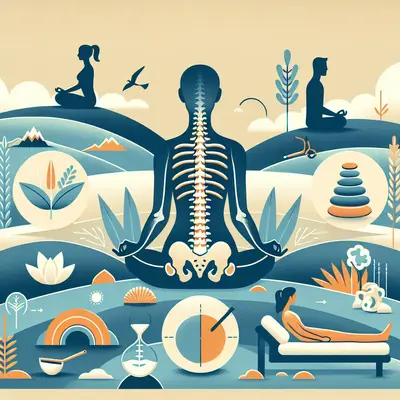
Back health is often treated as damage control—addressed only when pain interrupts a meeting, a workout, or a flight. Yet for many discerning professionals, a well-cared-for spine is becoming a quiet asset: it influences how we sit at the boardroom table, how we travel, how we age, and even how we sleep. This is not about perfectionist posture or aggressive fitness challenges. It is about a more refined standard of care—intelligent, discreet, and sustainable.
Below are five exclusive, often overlooked insights that elevate back care from reactive “fixes” to a more deliberate, almost architectural approach to how you inhabit your body.
1. Treat Your Spine Like a Long-Term Investment, Not a Short-Term Repair
Most people frame back care around episodes of pain: a flare-up before a deadline, an acute strain after moving luggage, a stiff neck after a long flight. The question becomes, “How do I fix this, quickly?” A more elevated perspective asks, “What am I building over the next decade?”
Your spine is both structure and system: bones, discs, ligaments, muscles, fascia, and nerves working in concert. Small, repeated compromises—subtle slouching at the laptop, sustained static sitting, inadequate deep core support—create a kind of “interest” on your neglect, paid later as stiffness, fatigue, or disc issues.
Reframing back care as a long-term asset shifts your daily choices. Instead of a sporadic stretch when pain appears, you create micro-habits that preserve spinal integrity: changing positions every 30–45 minutes, maintaining baseline strength in your deep abdominal and gluteal muscles, and protecting your sleep quality as if it were a professional priority. Over months and years, these small choices compound, slowly redefining how your back feels and performs.
2. Posture Is Not a Pose—It’s a Dynamic Conversation with Gravity
The classic notion of “good posture” is static: shoulders back, chest open, spine straight. In practice, holding any one position too long—even a textbook one—creates fatigue and stiffness. Elevated back care abandons the fantasy of a single “correct” posture and instead cultivates postural adaptability.
Think of posture as a dynamic conversation with gravity rather than a frozen shape. Your spine is engineered for subtle, continuous adjustment: tiny shifts of your pelvis, micro-movements of your ribs, gentle engagement and release of support muscles. When you freeze into one position, those support systems tire; when you move periodically, they remain responsive.
In daily life, this looks like:
- Gently tilting the pelvis forward and back while seated, allowing the lumbar spine to alternate between neutral and slightly flexed/extended.
- Rotating the ribcage a few degrees left and right every so often, maintaining mid-back mobility.
- Allowing yourself to sit in different postures across an hour—upright, slightly reclined, perched forward briefly—rather than forcing a single “formal” position.
This approach respects that your spine is living architecture, not rigid scaffolding. It does not need one ideal configuration; it needs range, responsiveness, and circulation.
3. Your Breathing Pattern Quietly Shapes Your Spinal Support
Breath is typically filed under “stress management,” but for refined back care, it belongs squarely in structural support. The way you breathe changes how your ribs move, how your diaphragm descends, how your abdominal wall engages, and ultimately, how your spine is stabilized.
Shallow, upper-chest breathing often accompanies tension: lifted shoulders, tight neck, and a subtly compressed mid-back. Over time, this pattern can reduce rib mobility and encourage the spine to stiffen in compensation. By contrast, diaphragmatic breathing invites expansion across the ribs, a gentle lengthening of the spine, and more distributed support from the deep core.
A sophisticated back-care practice might include:
- Three-dimensional breathing: Inhaling so the breath expands not only forward into the chest, but also laterally into the sides of the ribs and subtly into the low back. This encourages more balanced movement of the thoracic spine.
- Exhalation with support: On exhale, allowing the lower abdomen to draw in gently—not forcefully—creating a corset-like support that stabilizes the lumbar spine without rigid bracing.
- Breath-aware transitions: Coordinating breath with motion—exhaling as you stand from a chair or lift a bag, inhaling as you lengthen and prepare. This turns breathing into a structural ally rather than a background reflex.
When breath becomes deliberate, it subtly rewires how you carry tension and support your spine, especially during stress or high-focus work.
4. Precision Wins Over Intensity in Spine-Friendly Movement
Many people assume that protecting the back requires either aggressive strengthening or complete rest. In reality, the spine prefers measured, precise progression. The muscles that best protect it—deep abdominals, multifidi, pelvic floor, gluteals—respond far more to control and consistency than to maximal effort.
A refined approach avoids theatrics. Rather than heavy, rushed movements that the body must survive, it favors slow, well-organized actions the body can integrate. This might mean:
- Performing smaller, slower movements with meticulous alignment rather than chasing range at all costs.
- Prioritizing hinge patterns (like a hip hinge) that spare the lumbar discs over repeated rounded bending.
- Starting with low load and high form quality after episodes of back pain, reintroducing complexity gradually rather than “testing” the spine with sudden intensity.
This philosophy mirrors high-end craftsmanship: no rushed finishes, no shortcuts. You are teaching your muscles and nervous system exactly how to support your spine, then reinforcing that lesson repeatedly until it becomes your default.
5. Recovery Rituals: Curating How Your Spine Ends the Day
Most back-care advice focuses on daytime ergonomics, yet the hours after work profoundly shape how your spine recovers. The spine, like any sophisticated system, benefits from a deliberate “shutdown” process—something far more intentional than collapsing onto the sofa with a device.
Thoughtful evening rituals can include:
- Decompression moments: A few minutes lying on your back with knees bent and feet on the floor (or calves supported on a chair), allowing the spine to lengthen and the hip flexors to soften. This is a quiet reset for a day spent in chairs or on your feet.
- Gentle mobility, not stretching extremes: Light rotations, cat–cow movements, or pelvic tilts to encourage fluidity without forcing end-range positions for already-fatigued tissues.
- Sleep surface discernment: Not merely “firm” vs. “soft,” but asking: does the mattress support your natural curves without creating pressure points? Does your pillow height keep the neck aligned with the rest of the spine, whether you sleep on your back or side?
- Digital boundaries: Reducing late-night scrolling not just for mental rest but to avoid sustained, forward-head posture that strains the neck and upper back before sleep.
These rituals send a clear signal to your nervous system: the day is complete, the spine can release its seen and unseen bracing. Over time, this can reduce morning stiffness, improve perceived sleep quality, and make your back feel less “worn” by the end of the week.
Conclusion
Elevated back care is not a single device, a single stretch, or a single appointment. It is an ongoing standard—how you breathe, how you transition between positions, how you move, and how you let your spine recover. When you treat your back as a quiet asset instead of a recurring problem, your daily habits take on new significance.
The spine rewards this discretion. It does not need dramatic interventions; it needs consistent, intelligent respect. Over time, that respect translates into something deeply valuable: a body that supports your ambitions without constantly demanding your attention.
Sources
- National Institute of Neurological Disorders and Stroke – Low Back Pain Fact Sheet – Overview of causes, risk factors, and approaches to managing low back pain
- Harvard Health Publishing – 4 Ways to Turn Good Posture Into Less Back Pain – Discusses dynamic posture and its role in back comfort
- Mayo Clinic – Back Pain: Self-Management – Evidence-based strategies for daily back care and activity modification
- Cleveland Clinic – Diaphragmatic Breathing – Explains the mechanics and benefits of diaphragmatic breathing for posture and tension
- NIH MedlinePlus – Choosing a Mattress for Back Support – Guidance on mattress characteristics that support spinal alignment and reduce back strain
Key Takeaway
The most important thing to remember from this article is that this information can change how you think about Back Health.